Senator Harold Hitz Burton
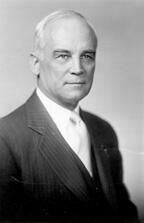
Here you will find contact information for Senator Harold Hitz Burton, including email address, phone number, and mailing address.
| Name | Harold Hitz Burton |
| Position | Senator |
| State | Ohio |
| Party | Republican |
| Status | Former Representative |
| Term Start | January 3, 1941 |
| Term End | December 31, 1945 |
| Terms Served | 1 |
| Born | June 22, 1888 |
| Gender | Male |
| Bioguide ID | B001150 |
About Senator Harold Hitz Burton
Harold Hitz Burton served as a Senator from Ohio in the United States Congress from 1941 to 1945. A member of the Republican Party, Harold Hitz Burton contributed to the legislative process during 1 term in office.
Harold Hitz Burton’s service in Congress occurred during a significant period in American history. As a member of the Senate, Harold Hitz Burton participated in the democratic process and represented the interests of constituents.
Harold Hitz Burton (June 22, 1888 – October 28, 1964) was an American politician and lawyer. He served as the 45th mayor of Cleveland, Ohio, as a U.S. Senator from Ohio, and as an associate justice of the Supreme Court of the United States. Born in Boston, Burton practiced law in Cleveland after graduating from Harvard Law School. After serving in the United States Army during World War I, Burton became active in Republican Party politics and won election to the Ohio House of Representatives. After serving as the mayor of Cleveland, Burton won election to the United States Senate in 1940. After the retirement of Associate Justice Owen J. Roberts, President Harry S. Truman successfully nominated Burton to the Supreme Court. Burton served on the Court until 1958, when he was succeeded by Potter Stewart. Burton was known as a dispassionate, pragmatic, somewhat plodding jurist who preferred to rule on technical and procedural rather than constitutional grounds. He was also seen as an affable justice who helped ease tension on the court during an extremely acrimonious time. He wrote the majority opinion in Joint Anti-Fascist Refugee Committee v. McGrath (1951) and Lorain Journal Co. v. United States (1951). He also helped shape the Court’s unanimous decision in Brown v. Board of Education (1954).