Representative Harold R. Collier
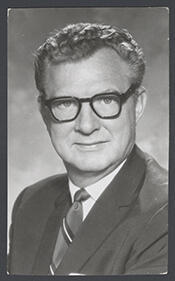
Here you will find contact information for Representative Harold R. Collier, including email address, phone number, and mailing address.
| Name | Harold R. Collier |
| Position | Representative |
| State | Illinois |
| District | 6 |
| Party | Republican |
| Status | Former Representative |
| Term Start | January 3, 1957 |
| Term End | January 3, 1975 |
| Terms Served | 9 |
| Born | December 12, 1915 |
| Gender | Male |
| Bioguide ID | C000629 |
About Representative Harold R. Collier
Harold Reginald Collier (December 12, 1915 – January 17, 2006) was a Republican member of the United States House of Representatives from Illinois who served nine consecutive terms in Congress from 1957 to 1975. His congressional career spanned a period of major political and social change in the United States, during which he was known as a fiscal conservative and a legislator respected for his ability to broker compromises across party lines.
Collier was born and raised in Lansing, Michigan, on December 12, 1915. He later moved to Illinois, where he attended Morton College in Cicero. He graduated from Morton College and entered the publishing field, joining the company that created Life magazine and working in its editorial department. This early experience in communications and publishing helped shape his skills in public relations and messaging, which he would later apply in both business and politics.
In 1941, Collier began what would become a decade-long career as a marketing executive with the Match Corporation of America. He remained with the company for ten years, gaining experience in corporate management and marketing during the World War II and immediate postwar years. In 1951, he transitioned into both local public service and a new professional role, being elected to the Berwyn, Illinois, city council while simultaneously beginning work as public relations director for McAlear Manufacturing. These dual roles reflected his growing engagement in civic affairs and his continued involvement in the private sector.
Collier’s political ambitions expanded to the state level in 1952, when he ran unsuccessfully for the office of Illinois Secretary of State. Undeterred by this defeat, he remained active in local government and, in 1953, was elected Township Supervisor of Berwyn Township, Illinois. His tenure as township supervisor further established his reputation as a capable local official and provided a platform for his eventual entry into national politics.
In 1957, Collier was elected to the United States House of Representatives from Illinois as a Republican, beginning a congressional career that would last until 1975. Serving during a significant period in American history marked by the Cold War, the civil rights movement, and substantial domestic policy debates, he participated actively in the legislative process and represented the interests of his Illinois constituents over nine terms in office. He became a longtime member of the influential House Ways and Means Committee, where he focused on tax, budgetary, and economic issues. A committed fiscal conservative, Collier was a strong advocate of a balanced federal budget and was widely regarded by colleagues in both parties as a legislator skilled at finding compromise ground between opposing sides on complex issues.
Collier’s voting record on civil rights and environmental legislation reflected both support for key civil rights measures and reservations about certain expansions of federal authority. He voted in favor of the Civil Rights Acts of 1957, 1960, 1964, and 1968, aligning himself with landmark legislation aimed at ending segregation and discrimination. However, he voted against the Voting Rights Act of 1965, did not vote on the Twenty-fourth Amendment to the U.S. Constitution, which abolished the poll tax in federal elections, and opposed the Endangered Species Act of 1973. These positions placed him within the more conservative wing of the Republican Party on some social and regulatory issues, even as he maintained a reputation for pragmatism and compromise in committee work and fiscal policy.
In 1975, after eighteen years in the House of Representatives, Collier retired from Congress. Following his retirement, he moved to West Palm Beach, Florida. He lived there during his later years, remaining out of public office but connected to a family that continued to serve in federal government. His son, Calvin J. Collier, served a term as chairman of the Federal Trade Commission in the 1970s, extending the Collier family’s involvement in national public service. Harold Reginald Collier died in West Palm Beach on January 17, 2006, closing a long life that combined business leadership, local governance, and nearly two decades of congressional service.