Representative Harold Giles Hoffman
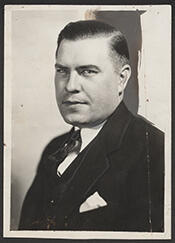
Here you will find contact information for Representative Harold Giles Hoffman, including email address, phone number, and mailing address.
| Name | Harold Giles Hoffman |
| Position | Representative |
| State | New Jersey |
| District | 3 |
| Party | Republican |
| Status | Former Representative |
| Term Start | December 5, 1927 |
| Term End | March 3, 1931 |
| Terms Served | 2 |
| Born | February 7, 1896 |
| Gender | Male |
| Bioguide ID | H000685 |
About Representative Harold Giles Hoffman
Harold Giles Hoffman (February 7, 1896 – June 4, 1954) was an American businessman and Republican Party politician who served as a United States Representative from New Jersey and as the 41st Governor of New Jersey. Born on February 7, 1896, he became active in public life in the early twentieth century and emerged as a prominent figure in state and national politics. Over the course of his career, he held a series of elective and appointive offices, including service in the New Jersey General Assembly, the mayoralty of South Amboy, a seat in the United States House of Representatives, and the governorship.
Hoffman’s early political career developed at the local and state levels in New Jersey. He represented Middlesex County in the New Jersey General Assembly, where he gained experience in legislative work and built a reputation within the Republican Party. He also served as mayor of South Amboy, New Jersey, a position that gave him direct responsibility for municipal administration and further increased his visibility as a public official. These roles laid the groundwork for his subsequent rise to higher office and helped establish his base in central New Jersey.
Hoffman was elected to the United States House of Representatives as a Republican and served two terms representing New Jersey’s 3rd congressional district, which then comprised Middlesex, Monmouth, and Ocean counties. His congressional service extended from 1927 to 1931. During this period, he participated in the legislative process in the House of Representatives and represented the interests of his constituents at a time of significant economic and political change in the United States, including the late years of the Roaring Twenties and the onset of the Great Depression. As a member of the Republican Party, he contributed to national debates and took part in the democratic process that shaped federal policy in those years.
After leaving Congress, Hoffman continued to advance in New Jersey politics. In 1934, he initially considered challenging incumbent United States Senator Hamilton Fish Kean but was persuaded instead to seek the Republican nomination for Governor of New Jersey. In the Republican primary, he won a majority of the vote over State Senators Emerson L. Richards and Joseph G. Wolber and Judge Robert Carey, securing the party’s nomination. In the general election, he faced William L. Dill, his predecessor as commissioner of motor vehicles and a political client of powerful Jersey City Democratic boss Frank Hague. The campaign was relatively low-key, with Hoffman avoiding strong, detailed positions on many issues while both candidates accused each other of being aligned with political “bossism.” Hoffman won in an upset, becoming the first Republican elected Governor of New Jersey outside of a presidential election year since 1907. His victory led some observers to accuse Hague of having “sold out” Dill to secure Hoffman’s election, and Hoffman was sometimes branded a “Hague Republican,” although his personal popularity made him a potential contender for national office.
Hoffman served as the 41st Governor of New Jersey from 1935 to 1938. His administration was marked by controversy, particularly over his support for the adoption of a state sales tax, a measure that provoked significant public and political opposition. He also became embroiled in public debate over his involvement in the Lindbergh kidnapping case, in which his actions and interventions attracted widespread attention and criticism. These controversies, combined with the complex political alliances of the era, shaped the public perception of his governorship and influenced his standing within the Republican Party and the broader electorate.
Following his term as governor, Hoffman remained active in state affairs. By 1940, he had maneuvered himself into an appointment as executive director of the New Jersey Unemployment Compensation Commission, a position that kept him engaged with state administration and labor and economic issues. That same year, he attempted to return to the governor’s office, seeking the Republican nomination once more. On this occasion, he enjoyed the strong and open support of Frank Hague, whose backing had long been a subject of controversy among reform-minded Republicans. Hoffman was defeated in the Republican primary by Robert C. Hendrickson, a candidate associated with the “Clean Government” movement. Hoffman then refused to support Hendrickson in the general election, and Hendrickson went on to lose to Democrat Charles Edison.
In his later years, Hoffman also appeared in national radio and television entertainment programs, reflecting his continuing public profile beyond elective office. On June 12, 1948, he was a guest panelist on the joke-themed radio program “Stop Me If You’ve Heard This One,” broadcast on the short-lived ABC network. He appeared on the ABC program “That Reminds Me” in 1948 as well. On February 2, 1950, he was one of four panelists on the debut episode of the television game show “What’s My Line?” and he returned to the program for another appearance on February 16, 1950. In 1953, he served as a panelist on the NBC radio joke-telling program “Can You Top This?” These appearances underscored his continuing recognition as a public figure even after his major political career had ended.
Hoffman’s final years were overshadowed by serious legal and ethical difficulties. At the time of his death, he was under investigation for embezzlement involving both a bank with which he was associated and the state government. Before his death, he confessed these acts to his daughter. Harold Giles Hoffman died on June 4, 1954. His career, which had encompassed service in the New Jersey General Assembly, the mayoralty of South Amboy, two terms in the United States House of Representatives from 1927 to 1931, and the governorship of New Jersey from 1935 to 1938, left a complex legacy in the political history of New Jersey and the United States.