Representative Harold Ambrose Patten
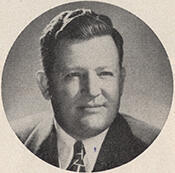
Here you will find contact information for Representative Harold Ambrose Patten, including email address, phone number, and mailing address.
| Name | Harold Ambrose Patten |
| Position | Representative |
| State | Arizona |
| District | 2 |
| Party | Democratic |
| Status | Former Representative |
| Term Start | January 3, 1949 |
| Term End | January 3, 1955 |
| Terms Served | 3 |
| Born | October 6, 1907 |
| Gender | Male |
| Bioguide ID | P000107 |
About Representative Harold Ambrose Patten
Harold Ambrose Patten (October 6, 1907 – September 6, 1969) was a Democratic Representative in the United States House of Representatives from Arizona, serving three consecutive terms in Congress from 1949 to 1955. His congressional service occurred during a significant period in American history in the early Cold War era, during which he participated in the legislative process and represented the interests of his Arizona constituents.
Patten was born in Husted, El Paso County, Colorado, on October 6, 1907. In 1916, he moved with his family to Tucson, Arizona, which would remain the principal center of his personal and professional life. Growing up in the developing Southwest, he was educated in Arizona’s public schools before enrolling at the University of Arizona. He graduated from the University of Arizona in 1930, laying the academic foundation for a career that initially focused on education and public recreation.
Following his graduation, Patten began his professional life in Tucson’s school system. He served as a coach and teacher of physical education at Tucson High School in 1931 and 1932, reflecting an early interest in youth development and community health. From 1933 to 1939, he was director of recreation for the city of Tucson and the city schools, overseeing programs that promoted organized sports and recreational activities during the difficult years of the Great Depression. In 1939 and 1940, he advanced to become the State director of recreation for Arizona, a position in which he helped coordinate recreational initiatives on a statewide basis.
With the approach of World War II, Patten entered military service. In August 1940, he joined the United States Army as a first lieutenant with the Seventh Cavalry Regiment. In 1941, he transferred to the Army Air Corps, where he would spend thirty-one months on foreign service in Africa and Italy during the war. His overseas duty placed him in key theaters of the Allied campaign, and he rose in rank as he gained experience. Patten was discharged from active duty as a major on November 21, 1945, but he continued his association with the military as a member of the Air Force Reserve. He ultimately retired from the Air Force Reserve as a lieutenant colonel on July 1, 1960, marking two decades of combined active and reserve military service.
After returning to civilian life, Patten settled in Phoenix, Arizona, where he worked as a life insurance agent from 1946 to 1948. His involvement in business and his longstanding ties to Arizona communities helped prepare him for elective office. A member of the Democratic Party, he entered politics and was elected to the Eighty-first Congress, and subsequently reelected to the Eighty-second and Eighty-third Congresses. He served as a Representative from Arizona in the United States Congress from January 3, 1949, to January 3, 1955. During these three terms in office, he contributed to the legislative process, participated in the democratic deliberations of the House of Representatives, and represented the interests of his constituents during a period marked by postwar economic expansion and the early tensions of the Cold War. Patten chose not to be a candidate for renomination in 1954, concluding his continuous service in the House at the end of the Eighty-third Congress.
Following his departure from Congress, Patten resumed his career in the insurance field, returning to private business while remaining engaged in public affairs. In 1961, he sought to reenter national politics and was a candidate for the Democratic nomination to fill a vacancy in the Eighty-seventh Congress from Arizona, but he was defeated for the nomination and did not return to the House. He continued to work in insurance and public service-related endeavors, maintaining his connection to civic life in the West.
In 1965, Patten accepted a federal appointment that drew on his earlier experience in recreation and youth programs. He was appointed to head a Job Corps Center in Oregon, part of the War on Poverty initiatives of the 1960s. In this capacity, he organized and directed a center at the Malheur National Wildlife Refuge and served as director of Center offices in Portland, Oregon, overseeing training and support programs for young people seeking education and employment opportunities. His work with the Job Corps extended his long-standing commitment to public service, youth development, and community improvement.
Harold Ambrose Patten died in Tucson, Arizona, on September 6, 1969. In a final act reflecting his connection to education and science in his home state, he willed his body to the University of Arizona College of Medicine for research purposes. His career encompassed service as an educator, recreation administrator, military officer, insurance professional, and three-term Democratic Representative from Arizona, and his life remained closely tied to the development and public institutions of Arizona.