Representative Harold Himmel Velde
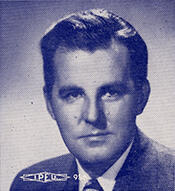
Here you will find contact information for Representative Harold Himmel Velde, including email address, phone number, and mailing address.
| Name | Harold Himmel Velde |
| Position | Representative |
| State | Illinois |
| District | 18 |
| Party | Republican |
| Status | Former Representative |
| Term Start | January 3, 1949 |
| Term End | January 3, 1957 |
| Terms Served | 4 |
| Born | April 1, 1910 |
| Gender | Male |
| Bioguide ID | V000082 |
About Representative Harold Himmel Velde
Harold Himmel Velde (April 1, 1910 – September 1, 1985) was a Republican American political figure from Illinois who served as a Representative in the United States Congress from 1949 to 1957. Born in Parkland, Tazewell County, Illinois, he grew up in central Illinois and attended the public schools of East Peoria. His early years in a largely rural and industrial region of the state helped shape his understanding of the concerns of working- and middle-class constituents that he would later represent in Congress.
Velde pursued higher education at Bradley Polytechnic Institute (now Bradley University) in Peoria, Illinois, and later studied law at the University of Illinois College of Law in Urbana. He was admitted to the bar in 1937 and began the practice of law in Pekin, Illinois. His legal training and early practice provided him with experience in the application of state and federal law, which would become central to his later work in both law enforcement and legislative oversight.
Before entering Congress, Velde built a career in public service and law enforcement. He served as an agent of the Federal Bureau of Investigation during World War II, working in a period when the FBI was expanding its domestic security and counterintelligence activities. After his FBI service, he returned to Illinois and resumed the practice of law. His combination of legal expertise and investigative experience contributed to his reputation as a firm anti-communist and an advocate of internal security measures during the early Cold War era.
Velde was elected as a Republican to the United States House of Representatives from Illinois’s 18th congressional district in 1948 and took office on January 3, 1949. He served four consecutive terms, remaining in the House until January 3, 1957. His service in Congress occurred during a significant period in American history, encompassing the early Cold War, the Korean War, and the domestic debates over communism and civil liberties. As a member of the House of Representatives, Harold Himmel Velde participated in the democratic process, contributed to the legislative work of the chamber, and represented the interests of his central Illinois constituents.
During his tenure in Congress, Velde became most widely known for his role on the House Un-American Activities Committee (HUAC). While United States Congressman for Illinois’s 18th congressional district, he served as chairman of HUAC between 1953 and 1955. In that capacity, he oversaw investigations into alleged communist influence in government, labor, and cultural institutions, reflecting the broader national climate of anti-communist suspicion. His chairmanship placed him at the center of contentious debates over national security, individual rights, and the proper scope of congressional investigative power, and it made him a prominent figure in the legislative response to perceived subversive activities.
After choosing not to seek renomination in 1956, Velde left Congress at the conclusion of his fourth term in January 1957. He returned to Illinois and resumed the practice of law, remaining active in legal and civic affairs. Although no longer in elective office, his congressional record—particularly his leadership of the House Un-American Activities Committee—continued to define his public reputation in the years that followed.
Harold Himmel Velde died on September 1, 1985, in Sun City, Maricopa County, Arizona. He was interred in Glendale, Arizona. His career spanned local legal practice, federal investigative work, and four terms in the U.S. House of Representatives, during which he played a notable role in the legislative and investigative responses to the domestic challenges of the early Cold War period.