Representative Harrison Henry Atwood
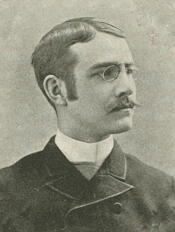
Here you will find contact information for Representative Harrison Henry Atwood, including email address, phone number, and mailing address.
| Name | Harrison Henry Atwood |
| Position | Representative |
| State | Massachusetts |
| District | 10 |
| Party | Republican |
| Status | Former Representative |
| Term Start | December 2, 1895 |
| Term End | March 3, 1897 |
| Terms Served | 1 |
| Born | August 26, 1863 |
| Gender | Male |
| Bioguide ID | A000336 |
About Representative Harrison Henry Atwood
Harrison Henry Atwood (August 26, 1863 – October 22, 1954) was an American architect and politician who represented Boston, Massachusetts, in the United States House of Representatives from 1895 to 1897 and served for several nonconsecutive terms in the Massachusetts House of Representatives. A member of the Republican Party, he was also supported by the Progressive Party during his later service in the state legislature. His single term in Congress took place during a significant period in American political and economic history, and he participated in the legislative process as a representative of his Boston constituents.
Atwood was born on August 26, 1863, at the home of his grandmother in North Londonderry, Vermont. Shortly thereafter he became associated with Boston, where he attended the public schools. He pursued the study of architecture and established himself professionally in that field in Boston. His early training and practice as an architect laid the foundation for a career that combined technical expertise in building and design with an active role in municipal and state politics.
Before entering national office, Atwood became deeply involved in local Republican politics and public service. From 1888 to 1894 he was a member of, and secretary to, the Boston Republican City Committee, helping to organize and guide party activities in the city. From 1889 to 1890 he served as City Architect of Boston, a position in which he designed several notable public buildings. Among his works were the Bowditch School, the Congress Street Fire Station, and the Harvard Avenue Fire Station, all of which were later listed on the National Register of Historic Places. In addition to these civic structures, Atwood designed several churches for the Roman Catholic Archdiocese of Boston, reflecting both the breadth of his architectural practice and the rapid urban growth of Boston in the late nineteenth century.
Atwood was elected as a Republican to the Fifty-fourth Congress, serving from March 4, 1895, to March 3, 1897. In that election he defeated incumbent Democrat Michael J. McEttrick, securing a seat in the United States House of Representatives as a representative from Massachusetts. During his one term in Congress, he contributed to the legislative process and participated in the democratic governance of the nation, representing the interests of his Boston constituents at a time of industrial expansion and evolving national policy debates. He was also a member of the Republican State Committee, reflecting his continuing engagement in party affairs at the state level. An unsuccessful candidate for renomination in 1896 to the Fifty-fifth Congress, he left national office after a single term.
Following his departure from Congress, Atwood resumed his architectural practice in Boston. At the same time, he maintained an active role in state politics. He served multiple nonconsecutive terms in the Massachusetts House of Representatives, returning to the legislature in 1915, 1917, 1918, 1923, 1924, 1927, and 1928. In these later years he was aligned with the Republican Party but also received support from the Progressive Party, illustrating his appeal to reform-minded voters during the Progressive Era. His repeated elections to the Massachusetts House underscored his continued influence in state affairs and his reputation as both a public servant and professional architect.
Atwood sought a return to national office in 1918 as a candidate for election to the Sixty-sixth Congress, but he was unsuccessful. After this defeat he again devoted himself primarily to his architectural work in Boston, continuing a career that had begun decades earlier and had produced a number of significant civic and religious buildings. In April 1938 he moved from Boston to Wellesley Hills, Massachusetts, while retaining his long-standing connections to the city where he had spent most of his professional and political life.
Harrison Henry Atwood died in Boston on October 22, 1954. He was interred in Forest Hills Cemetery in the Forest Hills neighborhood of Boston. His life combined professional accomplishment in architecture with extensive service in municipal, state, and national government, including his term as a United States Representative from Massachusetts from 1895 to 1897 and his several nonconsecutive terms in the Massachusetts House of Representatives.