Senator Harrison A. Williams Jr.
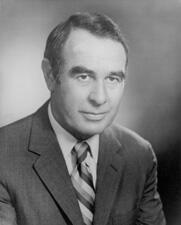
Here you will find contact information for Senator Harrison A. Williams Jr., including email address, phone number, and mailing address.
| Name | Harrison A. Williams Jr. |
| Position | Senator |
| State | New Jersey |
| Party | Democratic |
| Status | Former Representative |
| Term Start | January 3, 1953 |
| Term End | March 11, 1982 |
| Terms Served | 14 |
| Born | December 10, 1919 |
| Gender | Male |
| Bioguide ID | W000502 |
About Senator Harrison A. Williams Jr.
Harrison Arlington “Pete” Williams Jr. (December 10, 1919 – November 17, 2001) was an American politician and lawyer who represented New Jersey in the United States House of Representatives from 1953 to 1957 and in the United States Senate from 1959 to 1982. A member of the Democratic Party, he served six terms in Congress and became the first Democratic senator in the history of New Jersey to be elected four times. His long tenure in Congress coincided with a significant period in American history, during which he contributed to major social welfare, labor, and transportation legislation, but his career ended in scandal following his conviction in the Abscam bribery investigation.
Williams was born in Plainfield, New Jersey, the son of Harrison Arlington Williams and Isabel Lamson. He graduated from Oberlin College in 1941. After college he engaged in newspaper work in Washington, D.C., and pursued studies at the Edmund A. Walsh School of Foreign Service at Georgetown University. His studies were interrupted in 1941 when he was mandated to active duty as a seaman in the United States Naval Reserve during World War II. He became a naval aviator, serving in the United States Navy and rising to the rank of lieutenant, junior grade, before his discharge in 1945.
Following his military service, Williams was briefly employed in the steel industry before turning to the study of law. He graduated from Columbia Law School in 1948, was admitted to the bar, and commenced the practice of law in New Hampshire. In 1949 he returned to his hometown of Plainfield, New Jersey, where he continued to practice law. He entered electoral politics in the early 1950s, running unsuccessfully for the New Jersey General Assembly in 1951 and for city councilman in 1952, efforts that helped establish his profile in local Democratic politics.
Williams entered national politics when he was elected as a Democrat to the United States House of Representatives in a special election in 1953, representing New Jersey. He was re-elected in 1954 but was defeated for re-election in 1956. In 1958 he successfully sought a seat in the United States Senate from New Jersey and took office in 1959. He was re-elected to the Senate in 1964, 1970, and 1976, defeating Republican David A. Norcross in his 1976 bid, and thereby became the first Democratic senator from New Jersey to win four terms. Over the course of his Senate career, he represented the interests of his New Jersey constituents while participating actively in the broader legislative process during an era marked by the civil rights movement, the Great Society programs, and evolving federal roles in labor and transportation policy.
Known familiarly as “Pete,” Williams became particularly associated with social welfare, labor, safety, and urban transit issues. He was instrumental in the passage of the Employee Retirement Income Security Act (ERISA), which established federal standards to protect worker pensions and other retirement benefits. He played a key role in the enactment of the Federal Coal Mine Health and Safety Act of 1969, designed to improve working conditions and safety in the coal mining industry. Williams also helped secure legislation that created the Occupational Safety and Health Administration (OSHA), significantly expanding federal oversight of workplace safety. In the field of transportation, he had a major role in passage of the Urban Mass Transportation Act of 1964, the first federal law to provide substantial mass transportation assistance to states and cities, and he was recognized for his support of urban transit projects in New Jersey, including assistance for the construction of the Metropark train station, which was renamed Harrison A. Williams Metropark Station in 1979 in his honor. In addition, he sponsored the 1968 Williams Act, which regulated tender offers and strengthened protections for investors in corporate takeover situations. From 1967 through 1971, he served as chairman of the United States Senate Special Committee on Aging, focusing on issues affecting older Americans.
Williams’s long Senate career came to an abrupt end as a result of the Abscam scandal. By 1981, he was a resident of Westfield, New Jersey, when he was implicated in an undercover sting operation conducted by the Federal Bureau of Investigation. On May 1, 1981, he was convicted of bribery and conspiracy for accepting bribes in the Abscam operation. The Senate Committee on Ethics subsequently recommended that he be expelled from the Senate, condemning his conduct as “ethically repugnant.” Before the full Senate could vote on his expulsion, Williams resigned his seat on March 11, 1982. His resignation ended his service in the Senate, where he had served from 1959 to 1982, following his earlier service in the House of Representatives from 1953 to 1957.
Following his conviction, Williams was sentenced to three years in federal prison and fined $50,000. He became the first United States senator in more than 80 years to serve time in prison, entering the federal system as Inmate #06089-050. He served two years in prison and was released on January 31, 1986, after which he completed the remainder of his sentence at a halfway house. The Metropark station, which had borne his name since 1979, had its designation changed following his conviction, and his public reputation remained overshadowed by the scandal. Williams later became a member of the board of directors of the halfway house where he had served part of his sentence. He sought a presidential pardon from President Bill Clinton, but his request was denied.
In his later years, Williams lived in Bedminster Township, New Jersey. He died of cancer and heart ailments at St. Clare’s Hospital in Denville, New Jersey, on November 17, 2001, at the age of 81. His career remains notable both for his substantial legislative achievements in areas such as pension protection, workplace safety, and mass transportation, and for the dramatic fall from office that made him one of the most prominent federal officials convicted in a political corruption scandal of the late twentieth century.