Senator Harry Flood Byrd
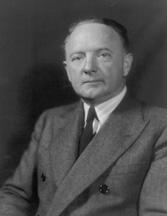
Here you will find contact information for Senator Harry Flood Byrd, including email address, phone number, and mailing address.
| Name | Harry Flood Byrd |
| Position | Senator |
| State | Virginia |
| Party | Democratic |
| Status | Former Representative |
| Term Start | March 9, 1933 |
| Term End | November 10, 1965 |
| Terms Served | 7 |
| Born | June 10, 1887 |
| Gender | Male |
| Bioguide ID | B001208 |
About Senator Harry Flood Byrd
Harry Flood Byrd served as a Senator from Virginia in the United States Congress from 1933 to 1965. A member of the Democratic Party, Harry Flood Byrd contributed to the legislative process during 7 terms in office.
Harry Flood Byrd’s service in Congress occurred during a significant period in American history. As a member of the Senate, Harry Flood Byrd participated in the democratic process and represented the interests of constituents.
Harry Flood Byrd Sr. (June 10, 1887 – October 20, 1966) was an American newspaper publisher, politician, and leader of the Democratic Party in Virginia for four decades as head of a political faction that became known as the Byrd Organization. Byrd served as Virginia’s governor from 1926 until 1930, then represented the state as a U.S. senator from 1933 until 1965 and is the longest serving senator from Virginia with his tenure lasting for over 32 years and 8 months. He came to lead the conservative coalition in the Senate, and opposed President Franklin D. Roosevelt, largely blocking most liberal legislation after 1937. His son Harry Jr. succeeded him as U.S. senator, but ran as an Independent following the decline of the Byrd Organization. Byrd succeeded to what had been the Virginia Democratic Party organization of U.S. senator Thomas Staples Martin, who died in 1919. Elected the 50th governor of Virginia in 1925, initially Byrd reorganized and modernized Virginia’s government. His political machine dominated state politics for much of the first half of the 20th century. Byrd was vehemently opposed to racial desegregation of the public schools, and was the leader of massive resistance, a campaign of opposition to the U.S. Supreme Court decisions in Brown v. Board of Education that led to closure of some public schools in Virginia in the 1950s. Students who were denied their education in several Virginia counties became known as the “lost generation”. According to Clarence M. Dunnaville Jr., Byrd was a racist and avowed white separatist. Although Byrd paid his black and white workers similarly, he was vehemently opposed to racial desegregation even early in the New Deal, and later opposed Presidents Harry S. Truman and John F. Kennedy as well as losing presidential candidate Adlai Stevenson, despite all being fellow Democrats, because unlike Byrd they opposed racial discrimination within the federal workforce. The Byrd Organization also benefited from limiting the political participation of blacks and poor whites in Virginia by means of poll taxes and literacy tests, but managed to defeat opposition ranging from New Deal governor James H. Price to gubernatorial and senatorial candidate Francis Pickens Miller. Although Byrd never announced himself as a presidential candidate, he received votes in the 1956 presidential election and 15 electoral votes in the 1960 election. In 1966, Byrd died at the age of 79 from a brain tumor, after being in a coma for four months.