Senator Harry Pulliam Cain
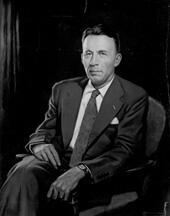
Here you will find contact information for Senator Harry Pulliam Cain, including email address, phone number, and mailing address.
| Name | Harry Pulliam Cain |
| Position | Senator |
| State | Washington |
| Party | Republican |
| Status | Former Representative |
| Term Start | December 31, 1946 |
| Term End | January 3, 1953 |
| Terms Served | 2 |
| Born | January 10, 1906 |
| Gender | Male |
| Bioguide ID | C000021 |
About Senator Harry Pulliam Cain
Harry Pulliam Cain (January 10, 1906 – March 3, 1979) was an American politician who served as a United States Senator from Washington as a Republican from 1946 to 1953. He is mainly remembered for his conservative and often highly controversial views as a member of the Senate and as a friend and supporter of Senator Joseph McCarthy, as well as for his later reputation as a defender of civil liberties. Over the course of his public life he described himself as a political pragmatist whose positions shifted with circumstances, and he became known as a community activist and moderate Republican until his death in 1979.
Cain’s service in Congress occurred during a significant period in American history, encompassing the immediate post–World War II years, the onset of the Cold War, and the early stages of domestic anti-communist investigations. Elected in 1946, he represented the state of Washington in the United States Senate and contributed to the legislative process during two terms in office, participating in debates over foreign policy, national security, and postwar economic adjustment. As a member of the Senate, Harry Pulliam Cain participated in the democratic process and represented the interests of his constituents, while gaining national attention for his outspoken conservatism and alignment with McCarthy on issues of internal security and alleged subversion.
Before entering the Senate, Cain had built his political base in local government in Washington State. He served as the 23rd mayor of Tacoma, Washington, a position that gave him executive experience and visibility in regional politics. His tenure as mayor, which came during and immediately after World War II, helped establish his reputation as an energetic and sometimes controversial figure, willing to take strong positions on public issues. This local prominence and his identification with Republican Party principles in the Pacific Northwest laid the groundwork for his successful campaign for the United States Senate in the 1946 election.
During his Senate career, Cain became identified with the conservative wing of the Republican Party. He was an early and vocal supporter of Senator Joseph McCarthy and the broader anti-communist investigations that characterized the early 1950s, a stance that contributed to his national profile and to the controversy surrounding his name. At the same time, he took part in the routine work of the Senate, engaging in committee activities and legislative deliberations that affected both Washington State and the nation. His rhetoric and positions during this period reflected the intense ideological conflicts of the early Cold War, and his record in office was often cited by contemporaries as emblematic of the era’s political polarization.
Following the end of his Senate term in 1953, Cain’s public career took a notable turn. During the Eisenhower administration he became widely recognized as a defender of the civil liberties of individuals accused of being security risks, challenging what he came to see as excesses in the government’s internal security and loyalty programs. This advocacy marked a departure from his earlier alignment with McCarthy-style anti-communism and contributed to his later reputation as a more moderate Republican voice. In his post-Senate years he remained active in public affairs and community issues, working as a community activist and maintaining a presence in political debates at both the local and national levels.
Reflecting on his long and sometimes contradictory public life, Cain offered a self-assessment in a 1972 interview that captured the complexity of his career. He described himself as being “basically a political pragmatist – from time to time and for different reasons a conservative, militant, liberal, moderate, purist, radical and now and again what some call a populist.” Acknowledging that his career had been known for its inconsistencies, he said, “The record consists of doing the best I could when confronted by any situation demanding action.” Harry Pulliam Cain continued to be involved in political and civic matters as a moderate Republican until his death on March 3, 1979, leaving a legacy marked by both controversy and a later commitment to civil liberties.