Representative Harry Clifford Canfield
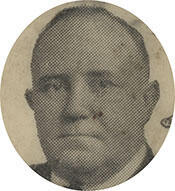
Here you will find contact information for Representative Harry Clifford Canfield, including email address, phone number, and mailing address.
| Name | Harry Clifford Canfield |
| Position | Representative |
| State | Indiana |
| District | 4 |
| Party | Democratic |
| Status | Former Representative |
| Term Start | December 3, 1923 |
| Term End | March 3, 1933 |
| Terms Served | 5 |
| Born | November 22, 1875 |
| Gender | Male |
| Bioguide ID | C000114 |
About Representative Harry Clifford Canfield
Harry Clifford Canfield (November 22, 1875 – February 9, 1945) was an American educator, businessman, and Democratic politician who served five terms as a U.S. Representative from Indiana from 1923 to 1933. His decade in Congress coincided with a significant period in American history, spanning the prosperity of the 1920s and the onset of the Great Depression, during which he participated in the legislative process and represented the interests of his Indiana constituents in the U.S. House of Representatives.
Canfield was born near Moores Hill, Dearborn County, Indiana, on November 22, 1875. He was raised in southeastern Indiana and attended the local public schools, reflecting the rural educational environment of the late nineteenth century. Seeking further education, he enrolled at Moores Hill College in Moores Hill, Indiana, an institution that served many students from the region, and later attended Central Normal College in Danville, Indiana, which was known for training teachers. He also pursued business studies at Vorhies Business College in Indianapolis, Indiana, thereby combining pedagogical and commercial training that would shape his subsequent professional life.
Following his formal education, Canfield began his career as an educator. He taught school in Dearborn County from 1896 to 1898, contributing to local public education at a time when rural schools were central to community life. His experience as a teacher provided him with firsthand knowledge of the needs and concerns of families and communities in his part of Indiana, experience that would later inform his public service.
In 1899, Canfield moved to Batesville in neighboring Ripley County, Indiana, where he embarked on a career in business. He engaged in the manufacture of furniture, a major industry in Batesville and the surrounding region, and became involved in the jobbing, or wholesale distribution, of furniture as well. Over time he broadened his interests to include farming and banking, establishing himself as a businessman with ties to both industry and agriculture. This combination of educational, industrial, and agricultural experience gave him a broad perspective on the economic life of his district.
Canfield entered national politics as a member of the Democratic Party and was elected to the U.S. House of Representatives as a Democrat to the Sixty-eighth Congress and to the four succeeding Congresses, serving from March 4, 1923, to March 3, 1933. During these five consecutive terms, he took part in the democratic process in Washington, D.C., contributing to the legislative work of the House at a time marked by post–World War I adjustments, the economic expansion of the 1920s, and the challenges posed by the stock market crash of 1929 and the early years of the Great Depression. As a representative from Indiana, he worked to represent the interests of his constituents, including those in the manufacturing, agricultural, and banking sectors with which he was personally familiar.
After a decade in Congress, Canfield sought to continue his service but was an unsuccessful candidate for renomination in 1932. With the conclusion of his congressional career on March 3, 1933, he returned to private life in Batesville. Drawing on his earlier experience, he resumed his involvement in the furniture manufacturing business there, remaining active in the local economy and community in the years following his departure from public office.
Harry Clifford Canfield died in Batesville, Indiana, on February 9, 1945. He was interred in the First Methodist Episcopal Cemetery, reflecting his ties to the local religious and civic community. His life encompassed roles as an educator, businessman, and legislator, and his decade of service in Congress placed him at the center of national policymaking during a transformative era in American history.