Representative Harry Luther Gandy
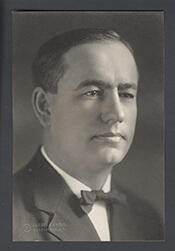
Here you will find contact information for Representative Harry Luther Gandy, including email address, phone number, and mailing address.
| Name | Harry Luther Gandy |
| Position | Representative |
| State | South Dakota |
| District | 3 |
| Party | Democratic |
| Status | Former Representative |
| Term Start | December 6, 1915 |
| Term End | March 3, 1921 |
| Terms Served | 3 |
| Born | August 13, 1881 |
| Gender | Male |
| Bioguide ID | G000037 |
About Representative Harry Luther Gandy
Harry Luther Gandy (August 13, 1881 – August 15, 1957) was an American newspaperman, rancher, and Democratic politician who served three terms as a U.S. Representative from South Dakota from 1915 to 1921. Over the course of his public career, he combined experience in journalism, agriculture, and business with legislative service during a significant period in American history, representing the interests of his constituents in the U.S. House of Representatives.
Gandy was born in Churubusco, Whitley County, Indiana, on August 13, 1881. He attended the Smith Township public schools in Whitley County, receiving his early education in the local school system. In 1901, he graduated from Tri-State College in Angola, Indiana, an institution that prepared him for a career in both business and public life. His Midwestern upbringing and education provided the foundation for his later work in journalism, ranching, and politics on the Great Plains.
By 1907, Gandy had moved west to Rapid City, South Dakota, where he soon entered the newspaper business. He became publisher of the Wasta, South Dakota, Gazette in 1910, a position he held until 1918. At the same time, beginning in 1910, he owned and operated a working cattle ranch near Wasta, maintaining that enterprise until 1945. His dual roles as newspaperman and rancher gave him close ties to the agricultural and rural communities of western South Dakota and helped establish his reputation as a local leader.
Gandy’s formal political career began in state government. In 1911, he was appointed to the South Dakota State Senate, where he gained experience in legislative affairs. Two years later, in 1913, President Woodrow Wilson appointed him receiver of public moneys at the United States land office in Rapid City, a federal position he held until his election to Congress. Through this office he dealt directly with land and settlement issues that were central to the development of South Dakota, further enhancing his familiarity with the concerns of homesteaders, ranchers, and small-town residents.
A member of the Democratic Party, Gandy was elected to the U.S. House of Representatives as the representative of South Dakota’s Third Congressional District and served three consecutive terms from March 4, 1915, to March 3, 1921. His service in Congress occurred during a significant period in American history, encompassing World War I and its aftermath. As a member of the House of Representatives, he participated in the democratic process, contributed to the legislative work of the chamber, and represented the interests of his constituents from western South Dakota. After three terms in office, he was an unsuccessful candidate for reelection to a fourth term in 1920.
Following his departure from Congress, Gandy returned to South Dakota and resumed agricultural pursuits on his ranch near Wasta. In 1923, he moved to Washington, D.C., where he began a new phase of his career in the coal industry. That year he became executive secretary of the National Coal Association, serving as a lobbyist and industry representative in the nation’s capital until 1930. From 1930 to 1937, he continued his work in the coal sector with the Pittston Company, a member of the National Coal Association, applying his legislative experience and knowledge of federal policy to corporate and industry affairs.
In 1937, Gandy left Pittston to become chairman of the Bituminous Coal Producers Board in Cincinnati, Ohio, a position he held until 1940. He then spent his remaining working years in executive advisory roles for the Elk River Coal & Lumber Company and the Buffalo Creek & Gauley Railroad Company in Widen, West Virginia. These positions reflected his continued involvement in resource-based industries and transportation, linking his earlier public service with long experience in private-sector leadership. He retired from active business life in the mid-twentieth century.
Harry Luther Gandy died on August 15, 1957, in retirement at Los Gatos, California. He was interred in Mountain View Cemetery in Rapid City, South Dakota, returning in death to the state where he had built his career as a newspaperman, rancher, and member of Congress.