Representative Harry Alfred Hanbury
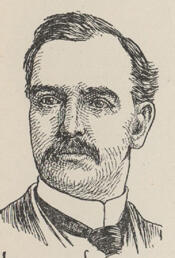
Here you will find contact information for Representative Harry Alfred Hanbury, including email address, phone number, and mailing address.
| Name | Harry Alfred Hanbury |
| Position | Representative |
| State | New York |
| District | 4 |
| Party | Republican |
| Status | Former Representative |
| Term Start | December 2, 1901 |
| Term End | March 3, 1903 |
| Terms Served | 1 |
| Born | January 1, 1863 |
| Gender | Male |
| Bioguide ID | H000143 |
About Representative Harry Alfred Hanbury
Harry Alfred Hanbury (January 1, 1863 – August 22, 1940) was a Republican member of the United States House of Representatives from New York who served one term in Congress from 1901 to 1903. His career spanned business, engineering, and public service during a period of rapid industrial and commercial expansion in the United States.
Hanbury was born in Bristol, England, on January 1, 1863. He immigrated to the United States with his parents at an early age, settling in New York. Raised in the growing metropolis, he attended the public schools of New York City and completed his secondary education at the Boys’ High School in New York City. His early life in an immigrant family in one of the nation’s principal commercial centers helped shape his later interests in trade, industry, and maritime affairs.
After finishing his education, Hanbury entered mercantile life in New York, beginning a business career that would remain closely tied to industry and manufacturing. He established ironworks and later founded a foundry and machine works in Brooklyn, New York, positioning himself within the city’s expanding industrial base. Through these enterprises he became engaged in mechanical engineering and ship reconstruction in Brooklyn, work that connected him directly to the maritime and shipping activities that were central to New York’s economy at the turn of the twentieth century.
Hanbury became active in Republican Party politics in New York State as his business interests grew. He served as a delegate to Republican State conventions in 1896, 1898, 1900, 1902, 1906, and 1914, participating in the formulation of party platforms and the selection of candidates during an era marked by debates over tariffs, industrial regulation, and America’s expanding role in world affairs. His repeated selection as a delegate reflected his standing within the party and his ties to the commercial and industrial communities of New York.
In the political sphere, Hanbury was elected as a Republican to the Fifty-seventh Congress and served as a U.S. Representative from New York from March 4, 1901, to March 3, 1903. During this single term in the House of Representatives, he participated in the legislative process at a time when the nation was addressing issues arising from industrialization, overseas expansion following the Spanish-American War, and the regulation of commerce. As a member of the House, he represented the interests of his New York constituents and contributed to the deliberations of the national legislature, bringing to Congress the perspective of a businessman and engineer familiar with shipping and manufacturing.
After leaving Congress, Hanbury continued his public service in a federal administrative role closely aligned with his professional background. He was appointed United States shipping commissioner for the port of New York and served in that capacity from March 1903 to November 1909. In this position he was involved in overseeing aspects of maritime labor and shipping operations in one of the busiest ports in the world, at a time when transatlantic trade and immigration were at high levels. His work as shipping commissioner complemented his earlier experience in ship reconstruction and mechanical engineering and underscored his long-standing connection to maritime commerce.
In his later years, Hanbury remained associated with his business and engineering interests, particularly in Brooklyn, where his foundry, machine works, and related enterprises had been based. He died in Methuen, Massachusetts, on August 22, 1940. Following his death, he was interred in Greenwood Cemetery in Brooklyn, New York, returning in burial to the city where he had been educated, built his career, and launched his public life.