Representative Harry Garner Haskell
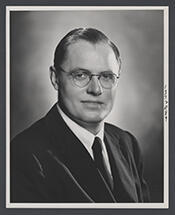
Here you will find contact information for Representative Harry Garner Haskell, including email address, phone number, and mailing address.
| Name | Harry Garner Haskell |
| Position | Representative |
| State | Delaware |
| District | At-Large |
| Party | Republican |
| Status | Former Representative |
| Term Start | January 3, 1957 |
| Term End | January 3, 1959 |
| Terms Served | 1 |
| Born | May 27, 1921 |
| Gender | Male |
| Bioguide ID | H000318 |
About Representative Harry Garner Haskell
Harry Garner “Hal” Haskell Jr. (May 27, 1921 – January 16, 2020) was an American businessman and Republican politician from Delaware who served as a member of the United States House of Representatives from 1957 to 1959 and as mayor of Wilmington, Delaware, from 1969 to 1973. A member of the Republican Party, he contributed to the legislative process during one term in Congress and later played a prominent role in the civic and political life of his state.
Haskell was born on May 27, 1921, and grew up in Delaware, where his family and personal ties rooted him in the state he would later represent. His early years coincided with the interwar period and the Great Depression, experiences that shaped the generation of leaders who came of age during World War II and the postwar era. These formative decades provided the backdrop for his later interest in public service, business, and civic affairs.
Educated in institutions that prepared him for both business and public life, Haskell developed the skills that would support his dual career as a businessman and politician. His education, combined with his Delaware upbringing, positioned him to engage effectively with the economic and political issues facing his community in the mid‑twentieth century. This background helped him navigate the increasingly complex relationship between government, industry, and local constituencies in the years following World War II.
Before and alongside his political career, Haskell was active in business, establishing himself as an American businessman at a time when Delaware’s economy was diversifying and modernizing. His work in the private sector informed his views on fiscal policy, economic development, and the role of government in supporting growth and stability. This experience contributed to his credibility as a Republican officeholder who emphasized responsible governance and attention to the practical concerns of employers and workers.
Haskell’s congressional service began when he was elected as a Republican to the United States House of Representatives from Delaware, serving one term from 1957 to 1959. His tenure in Congress occurred during a significant period in American history, marked by the early stages of the civil rights movement, Cold War tensions, and domestic debates over economic and social policy. As a member of the House of Representatives, Harry Garner Haskell participated in the democratic process and represented the interests of his Delaware constituents, contributing to the legislative process and engaging with national issues from the perspective of his state.
After leaving Congress, Haskell remained an influential figure in Delaware politics and public life. His most prominent later office was as mayor of Wilmington, Delaware, a position he held from 1969 to 1973. His mayoralty coincided with a turbulent era for many American cities, as local governments confronted challenges related to urban development, social change, and public safety. As mayor, he brought his business background and prior legislative experience to bear on municipal governance, working to address the needs of Wilmington’s residents and to guide the city through a period of transition.
In his later years, Haskell continued to be recognized as a significant Republican leader and public figure in Delaware, remembered both for his single term in the United States House of Representatives and for his service as mayor of Wilmington. Harry Garner “Hal” Haskell Jr. died on January 16, 2020, closing a long life that spanned nearly a century and encompassed business leadership, congressional service, and municipal governance during some of the most consequential decades in modern American history.