Representative Harry Libbey
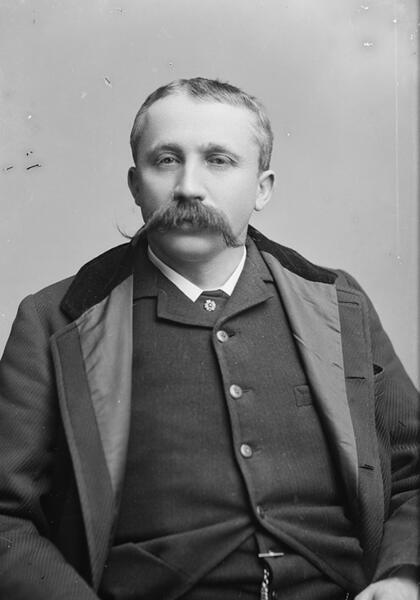
Here you will find contact information for Representative Harry Libbey, including email address, phone number, and mailing address.
| Name | Harry Libbey |
| Position | Representative |
| State | Virginia |
| District | 2 |
| Party | Republican |
| Status | Former Representative |
| Term Start | December 3, 1883 |
| Term End | March 3, 1887 |
| Terms Served | 2 |
| Born | November 22, 1843 |
| Gender | Male |
| Bioguide ID | L000298 |
About Representative Harry Libbey
Harrison “Harry” Libbey (November 22, 1843 – September 30, 1913) was a U.S. Representative from Virginia’s 2nd congressional district who served two terms in the United States House of Representatives from 1883 to 1887. A member of the Republican Party during part of his political career, he played an active role in the legislative process in a period of significant political realignment in Virginia and the post-Reconstruction South.
Libbey was born on November 22, 1843, in Wakefield, New Hampshire. He attended the common schools there, receiving a basic formal education typical of rural New England in the mid-nineteenth century. As a young man, he left his native state and, in 1863, during the Civil War, moved south to Virginia, where he settled in Hampton. His relocation to Hampton marked the beginning of a long association with the economic and political life of Elizabeth City County and the surrounding region.
After settling in Virginia, Libbey engaged in mercantile pursuits, establishing himself in local business. He later became involved in the oyster industry, an important sector of the Tidewater economy, which further rooted him in the commercial life of the Hampton area. His growing prominence in the community led to his appointment in 1869 as one of the presiding justices of Elizabeth City County, Virginia, a position that gave him judicial responsibilities and increased his visibility in local public affairs.
Libbey’s political career developed alongside the shifting party landscape in Virginia during the late nineteenth century. Initially associated with the Readjuster movement, which sought to restructure Virginia’s prewar debt and broaden political participation, he was elected as a Readjuster to the Forty-eighth Congress. In the 1882 election, he won a seat in the U.S. House of Representatives from Virginia’s 2nd congressional district by defeating Republican John Frederick Dezendorf and Democrat Richard C. Marshall, securing 49.68 percent of the vote. He took office on March 4, 1883. By the time of his reelection campaign in 1884, Libbey ran as a Republican and was reelected to the Forty-ninth Congress as a member of the Republican Party, again representing the 2nd district. In that race he defeated Democrat Richard C. Marshall a second time, increasing his margin and winning 58.3 percent of the vote.
During his tenure in Congress, which extended from March 4, 1883, to March 3, 1887, Libbey served through two consecutive terms. As a member of the House of Representatives, he participated in the democratic process and represented the interests of his constituents from Virginia’s Tidewater region at a time when issues of economic development, federal spending, and the legacy of Reconstruction were central to national debate. His service in Congress occurred during a significant period in American history, as the country continued to adjust to the political, social, and economic changes following the Civil War and Reconstruction. Although detailed records of his specific legislative initiatives are limited, his role as a Readjuster-turned-Republican reflected the broader realignment of political forces in Virginia during the 1880s.
After leaving Congress in 1887, Libbey remained active in Republican politics and local affairs in Hampton. He continued his involvement in business, including the oyster industry, and served as chairman of the Republican county committee, helping to organize and direct party activities at the local level. His standing in the community and within the Republican Party led to his appointment as postmaster of Hampton, Virginia, on January 18, 1907. In that federal position he oversaw postal operations in the town, a role he held for more than six years.
Libbey served as postmaster until his death in Hampton on September 30, 1913. He was interred in St. John’s Cemetery, reflecting his long residence and deep ties to the Hampton community. His career, spanning mercantile enterprise, local judicial service, congressional representation, and federal appointment, illustrated the opportunities and complexities of political life in Virginia during the late nineteenth and early twentieth centuries.