Representative Harry E. Mitchell
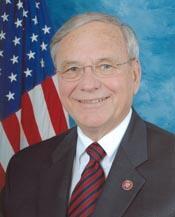
Here you will find contact information for Representative Harry E. Mitchell, including email address, phone number, and mailing address.
| Name | Harry E. Mitchell |
| Position | Representative |
| State | Arizona |
| District | 5 |
| Party | Democratic |
| Status | Former Representative |
| Term Start | January 4, 2007 |
| Term End | January 3, 2011 |
| Terms Served | 2 |
| Born | July 18, 1940 |
| Gender | Male |
| Bioguide ID | M001167 |
About Representative Harry E. Mitchell
Harry Everett Mitchell (born July 18, 1940) is an American politician and educator who served as a U.S. Representative from Arizona, representing the 5th congressional district from January 3, 2007, until January 3, 2011. A member of the Democratic Party, he served two terms in the United States House of Representatives during a significant period in American history, contributing to the legislative process and representing the interests of his constituents in a district that traditionally leaned Republican.
Mitchell was born and raised in Tempe, Arizona. He attended local schools and graduated from Tempe High School, the institution with which he would later be professionally associated for much of his career. He went on to attend Arizona State University in nearby Tempe, earning a bachelor’s degree in political science in 1962. Continuing his education while pursuing public service, he later received a Master of Public Administration degree from Arizona State University in 1980. His early life and education in Tempe established a long-standing connection to the community that would define his political career.
Following his undergraduate studies, Mitchell embarked on a career in education. From 1964 to 1992, he taught at Tempe High School, his alma mater, where he became a well-known figure to generations of students. He also served as a professor, further extending his involvement in education and public affairs. His experience as a teacher and educator informed his later political positions, particularly in areas related to public education and local governance.
Mitchell entered electoral politics in 1970, when he successfully ran for a seat on the at-large Tempe City Council. He was re-elected to the council in 1974. In 1978, he ran for mayor of Tempe and won a majority of the votes in the primary election, thereby avoiding a runoff. Mitchell went on to win every subsequent mayoral election by wide margins, serving as mayor until his retirement from that office in 1994. Under his leadership, Tempe experienced significant growth and development, and his long tenure made him one of the city’s most prominent political figures. In recognition of his service, a large statue of Mitchell stands just off Mill Avenue, adjacent to City Hall and other buildings that comprise the Harry E. Mitchell Municipal Complex.
After retiring as mayor in 1994, Mitchell sought statewide office as Arizona Superintendent of Public Instruction, a constitutionally mandated position responsible for overseeing Arizona’s public schools. He pursued the Democratic nomination but narrowly lost in the primary, an outcome he later attributed in part to his inexperience in partisan statewide races. The Democratic nominee went on to lose the general election. Mitchell returned to elective office four years later, winning a seat in the Arizona Senate, where he represented Tempe and parts of southern Scottsdale. Although his legislative district was considered a swing district, he consistently secured clear majorities in successive elections. He ran his state legislative campaigns under Arizona’s Clean Elections law, which provides public financing to candidates who agree to certain spending limits and disclosure requirements. Facing term limits, he ran his final campaign for the Arizona Senate in 2004.
With his state legislative service nearing its end, Mitchell shifted to party leadership. In 2005, after Arizona Democratic Party chairman Jim Pederson stepped down to run for the United States Senate, Mitchell ran unopposed for chair of the Arizona Democratic Party. He was elected to that post on August 20, 2005. As state party chair, he oversaw much of the early organizational groundwork for the 2006 election cycle. Under his leadership, Democrats recaptured the Tucson City Council from years of Republican control on February 1, 2006, signaling growing Democratic strength in the state. His role as party chair placed him at the center of strategic planning for the midterm elections that would soon open the door to his own congressional campaign.
In the spring of 2006, a poll commissioned by the Arizona Democratic Party and the Democratic Congressional Campaign Committee (DCCC) was leaked, showing that incumbent Republican Representative J. D. Hayworth would face a competitive race against several potential Democratic challengers in Arizona’s 5th congressional district. The Cook Political Report rated the district a “Toss-Up,” despite its traditional Republican lean (R+5). Mitchell was urged by several Arizona political figures and by Representative Rahm Emanuel, then head of the DCCC, to enter the race. He stepped down as state party chairman on April 7, 2006, and formally entered the congressional race on April 10. Within less than two weeks, he raised $213,209 for his campaign, and by the end of June 2006 he had nearly $700,000 on hand. An October 16 SurveyUSA poll showed Hayworth leading Mitchell by only 48 percent to 45 percent, and on October 27, 2006, the Arizona Republic, which had previously endorsed Hayworth, endorsed Mitchell instead. Over the final weeks of the campaign, polling indicated a steady increase in Mitchell’s support.
On November 7, 2006, election night, most national and state news organizations projected Mitchell as the winner, though Hayworth initially refused to concede, citing outstanding absentee and early ballots. As the count continued, Hayworth failed to make the gains he anticipated. He conceded on November 14, and Mitchell formally acknowledged his victory on November 22. Mitchell ultimately prevailed by more than 8,000 votes. When he took office on January 3, 2007, he became the first Anglo Democrat to represent a significant portion of Phoenix in Congress since Representatives Sam Coppersmith and Karan English left office in 1995. He was reelected in 2008 with 53 percent of the popular vote, defeating Republican challenger David Schweikert, the former Maricopa County treasurer.
During his tenure in the U.S. House of Representatives from 2007 to 2011, Mitchell served on several key committees. He was a member of the Committee on Science and Technology, where he sat on the Subcommittee on Technology and Innovation. He also served on the Committee on Transportation and Infrastructure, with assignments to the Subcommittee on Aviation, the Subcommittee on Highways and Transit, and the Subcommittee on Water Resources and Environment. In addition, he was a member of the Committee on Veterans’ Affairs, serving on its Subcommittee on Oversight and Investigations. A member of the Blue Dog Coalition, Mitchell was identified with a centrist, fiscally moderate approach that emphasized bipartisanship and cooperation across party lines. His voting record reflected this orientation: he supported legislation widely backed by Democrats, such as expansions of the State Children’s Health Insurance Program and the 2009 economic stimulus plan, but also expressed support for extending the Bush-era tax cuts. Although he voiced reservations about aspects of the Patient Protection and Affordable Care Act, he ultimately voted in favor of the legislation. As a “matter of principle,” he declined health coverage under the Federal Employees Health Benefits Program and instead relied on Medicare.
In 2010, Mitchell faced a rematch in the 5th district against David Schweikert. The district’s Republican tilt, combined with national political headwinds for Democrats, made his reelection bid difficult. Analysts noted that the district had been carried by President George W. Bush in 2004 but not by Barack Obama in 2008, and CQ Politics rated the race a toss-up. Former Alaska Governor Sarah Palin publicly identified Mitchell as a target, calling for his replacement by a “common sense conservative.” In the general election, Schweikert defeated Mitchell, ending his two-term service in Congress on January 3, 2011. Mitchell was later mentioned as a potential candidate for the U.S. House in 2012 in his old territory, which had been renumbered as the 9th congressional district and made somewhat more competitive, but he ultimately decided not to run.
In his later life, Mitchell remained closely identified with Tempe and with Arizona public affairs. He and his wife, Marianne, had two children. Their son, Mark Mitchell, followed in his father’s footsteps in local politics and served as mayor of Tempe. Public service extended more broadly through the family: Mitchell’s brother, Robert Mitchell, served as mayor and council member of Casa Grande, Arizona, and his grandfather, William W. Mitchell Sr., served as a state legislator. Harry Mitchell is a Catholic. Marianne Mitchell died on May 27, 2019, at the age of 78, following a years-long battle with Alzheimer’s disease, as announced by the city of Tempe on May 29, 2019.