Representative Harry Emerson Rowbottom
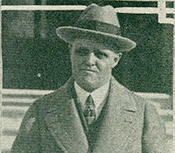
Here you will find contact information for Representative Harry Emerson Rowbottom, including email address, phone number, and mailing address.
| Name | Harry Emerson Rowbottom |
| Position | Representative |
| State | Indiana |
| District | 1 |
| Party | Republican |
| Status | Former Representative |
| Term Start | December 7, 1925 |
| Term End | March 3, 1931 |
| Terms Served | 3 |
| Born | November 3, 1884 |
| Gender | Male |
| Bioguide ID | R000474 |
About Representative Harry Emerson Rowbottom
Harry Emerson Rowbottom (November 3, 1884 – March 22, 1934) was an American businessman and Republican politician who represented Indiana in the United States House of Representatives from 1925 to 1931. He was elected to Congress in 1924 from Indiana’s 1st congressional district and served three consecutive terms before his defeat in 1930. His career in national politics, which unfolded during a significant period in American history marked by postwar adjustment and the onset of the Great Depression, ended abruptly after his conviction for accepting bribes.
Rowbottom was born in Aurora, Dearborn County, Indiana, on November 3, 1884. In 1885 he moved with his parents to Ludlow, Kentucky, a community just across the Ohio River from Cincinnati. He attended the common schools there and graduated from Ludlow High School in 1901. Seeking further education, he enrolled at Kentucky State College in Lexington (now the University of Kentucky), which he attended from 1902 to 1904, laying the groundwork for a career in business and accounting.
After leaving Kentucky State College, Rowbottom entered the private sector. From 1904 to 1907 he worked in the sale of lubricating oils, gaining early experience in commerce and industry. He then pursued formal business training at Cincinnati Business College, from which he graduated in 1907 with a focus on accountancy. Following his graduation, he was employed as an auditor in Cincinnati, Ohio, from 1907 to 1910 and in Chicago, Illinois, from 1910 to 1912. In 1913 he moved to Evansville, Indiana, an industrial and commercial center in the southwestern part of the state, where he became chief clerk for the Indiana Refining Company. He held that position from 1913 to 1918, establishing himself as a businessman and administrator.
Rowbottom entered public life during the World War I era. In 1918 he was elected to the Indiana House of Representatives and served two consecutive terms from 1919 to 1923. His tenure in the state legislature coincided with a turbulent period in American society, including the end of World War I and the Red Summer of 1919, and with the rise of the second Ku Klux Klan in Indiana politics. Like many prominent Indiana Republicans of the time, Rowbottom sought and received the Klan’s electoral support and openly boasted of his membership in the organization, reflecting the influence the Klan exerted in state and local elections during the early 1920s.
With the backing of the Ku Klux Klan, Rowbottom ran for Congress in 1924 as a Republican and was elected to the United States House of Representatives, defeating Democratic incumbent William E. Wilson in Indiana’s traditionally Democratic 1st congressional district. His victory, achieved despite Wilson’s strong public reputation and Rowbottom’s comparatively poor standing, was regarded as a major political upset and part of a broader Klan-supported Republican sweep in Indiana. In that same election cycle, Klan leader D. C. Stephenson was widely believed to have played a central role in securing the nomination of Republican gubernatorial candidate Edward L. Jackson, underscoring the extent of Klan influence in the state.
As a member of the House of Representatives, Rowbottom participated in the legislative process during three terms in office, serving in the Sixty-ninth, Seventieth, and Seventy-first Congresses from March 4, 1925, to March 3, 1931. A member of the Republican Party, he represented the interests of his constituents in Evansville and the surrounding region during a period marked by economic expansion in the 1920s and the initial shock of the Great Depression at the decade’s end. He was re-elected in 1926 and 1928, but in the 1930 election, as the Great Depression deepened and public opinion turned against the Republican Party and the administration of President Herbert Hoover, Rowbottom was defeated for re-election to the Seventy-second Congress, ending his formal congressional service.
Rowbottom’s political career was soon overshadowed by scandal. During his final term in office, he was indicted on charges of accepting bribes in exchange for securing appointments to positions in the United States Postal Service. In 1931 he was found guilty, convicted of accepting bribes, and sentenced to one year and one day in prison, a conviction that abruptly terminated his political career and placed him among the American federal politicians convicted of crimes. He served his sentence at the United States Penitentiary in Leavenworth, Kansas.
After his release, Rowbottom returned to Evansville, Indiana, where he lived out the remainder of his life away from public office. He died in Evansville on March 22, 1934. Harry Emerson Rowbottom was interred in Locust Hill Cemetery in Evansville, closing the life of a businessman-turned-legislator whose rise and fall reflected both the political currents and the ethical controversies of his era.