Representative Harry Irving Thayer
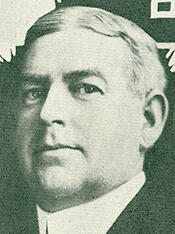
Here you will find contact information for Representative Harry Irving Thayer, including email address, phone number, and mailing address.
| Name | Harry Irving Thayer |
| Position | Representative |
| State | Massachusetts |
| District | 8 |
| Party | Republican |
| Status | Former Representative |
| Term Start | December 7, 1925 |
| Term End | March 4, 1927 |
| Terms Served | 1 |
| Born | September 10, 1869 |
| Gender | Male |
| Bioguide ID | T000146 |
About Representative Harry Irving Thayer
Harry Irving Thayer (September 10, 1869 – March 10, 1926) was a Republican member of the United States House of Representatives from Massachusetts who served during the Sixty-ninth Congress. He was born in Pembroke, Plymouth County, Massachusetts, on September 10, 1869. Raised in southeastern Massachusetts, he attended the public schools of nearby Hanover, reflecting the typical New England common-school education of the period. His early life in a region closely tied to manufacturing and trade helped shape his later involvement in the leather and shoe industries, which were major components of the Massachusetts economy in the late nineteenth and early twentieth centuries.
After completing his public schooling, Thayer entered the leather business, a field in which he would build a prominent and influential career. He became an organizer and later president of the Thayer-Ross Company, a firm engaged in the leather trade. Through this work he gained extensive experience in industrial and commercial affairs at a time when American manufacturing was rapidly expanding. His leadership abilities and business acumen led to broader responsibilities within the industry, and he emerged as a significant figure in regional and national trade organizations.
Thayer’s prominence in the leather trade was further demonstrated by his service as president of the New England Shoe and Leather Association, an important regional body representing one of New England’s key manufacturing sectors. In addition, he served as president of the Tanners’ Council of the United States, a national organization that coordinated the interests of tanners and related businesses across the country. In these roles he was involved in addressing issues such as tariffs, trade policy, labor conditions, and industrial standards, and he became well known as a spokesman for the concerns of manufacturers and merchants in his field.
His success in business and trade associations naturally led Thayer into more direct political activity within the Republican Party. By the early 1920s he had become an active party leader in Massachusetts, and in 1924 he served as a delegate to the Republican National Convention. That convention, which nominated President Calvin Coolidge, a fellow New Englander, underscored the influence of Massachusetts Republicans in national politics during the decade. Thayer’s participation reflected both his standing within the party and his growing interest in public service at the federal level.
Building on this political engagement, Thayer was elected as a Republican to the Sixty-ninth Congress, representing a Massachusetts district in the United States House of Representatives. He took his seat on March 4, 1925, entering Congress during a period of economic growth and relative political stability in the aftermath of World War I. As a member of the House of Representatives, Harry Irving Thayer participated in the democratic process and represented the interests of his constituents, contributing to the legislative work of the chamber during his one term in office. His background in industry and trade informed his perspective on economic and commercial legislation, and he served as part of the Republican majority that supported the policies of the Coolidge administration.
Thayer’s service in Congress occurred during a significant period in American history, marked by debates over taxation, business regulation, and America’s role in international affairs. Although his tenure was brief, he was part of the broader Republican effort to promote policies favorable to business development and economic expansion in the 1920s. He continued to serve in the House until his death in office, placing him among the members of the United States Congress who died while still serving between 1900 and 1949.
Harry Irving Thayer died in Wakefield, Massachusetts, on March 10, 1926, while still a sitting member of Congress. His death brought an abrupt end to his congressional career after just over a year of service. He was interred in Lakeside Cemetery, leaving a legacy as a businessman-turned-legislator who rose from the New England leather trade to national office and participated in the governance of the country during the Coolidge era.