Representative Harry White
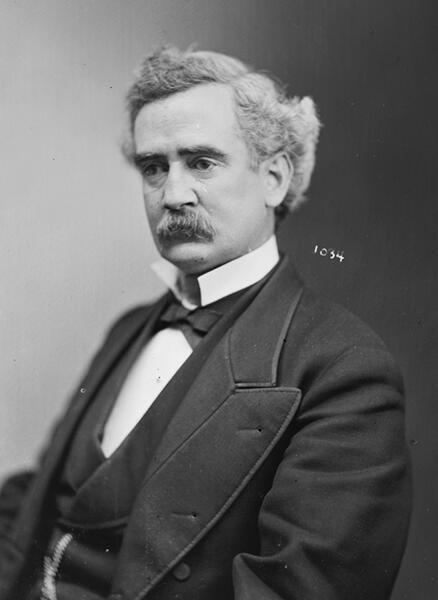
Here you will find contact information for Representative Harry White, including email address, phone number, and mailing address.
| Name | Harry White |
| Position | Representative |
| State | Pennsylvania |
| District | 25 |
| Party | Republican |
| Status | Former Representative |
| Term Start | October 15, 1877 |
| Term End | March 3, 1881 |
| Terms Served | 2 |
| Born | January 12, 1834 |
| Gender | Male |
| Bioguide ID | W000373 |
About Representative Harry White
Harry White was born on January 12, 1834, in Indiana, Indiana County, Pennsylvania. He was a lifelong resident of Pennsylvania and became closely identified with the civic and political life of his native region. Raised in a period of rapid national expansion and intensifying sectional conflict, his early years in western Pennsylvania helped shape the political convictions that would later define his public career as a Republican officeholder.
White received his early education in the local schools of Indiana, Pennsylvania, and pursued further study that prepared him for the legal profession. He studied law, was admitted to the bar, and established himself as an attorney in Indiana, Pennsylvania. His legal training and growing reputation in the community provided a natural pathway into public service and politics at both the state and national levels.
Before entering the United States Congress, Harry White built a substantial political career in Pennsylvania. A member of the Republican Party, he served in the Pennsylvania State Senate, where he took part in the legislative affairs of the Commonwealth during and after the Civil War era. His work in state politics, combined with his legal background, positioned him as a prominent Republican figure in western Pennsylvania and laid the groundwork for his subsequent election to federal office.
White was elected as a Republican Representative from Pennsylvania to the United States House of Representatives and served from March 4, 1877, to March 3, 1881, encompassing two consecutive terms in the Forty-fifth and Forty-sixth Congresses. His service in Congress occurred during a significant period in American history, as the nation moved from the immediate aftermath of Reconstruction into the Gilded Age, marked by industrial growth, political realignment, and evolving debates over federal power and economic policy. As a member of the House of Representatives, Harry White contributed to the legislative process, participated in the democratic governance of the country, and represented the interests of his Pennsylvania constituents in national deliberations.
During his tenure in Congress, White aligned with the Republican Party’s general commitments of the era, which included support for economic development, the protection of industry, and the preservation of the Union’s wartime achievements. While specific committee assignments and individual bills associated with him are less prominently recorded than those of some contemporaries, his role as a voting member of the House placed him within the central legislative currents of the late 1870s and early 1880s, a time of contested presidential elections, financial readjustment after the Panic of 1873, and ongoing debates over civil service reform and veterans’ issues.
After concluding his service in the House of Representatives in 1881, Harry White returned to Pennsylvania and resumed his legal and civic activities in Indiana, Pennsylvania. He remained a respected figure in his community, identified with the Republican cause and with the generation of leaders who had guided the state and nation through the Civil War and its long aftermath. His later years were spent largely in private life, though his earlier legislative work at both the state and federal levels continued to shape his public reputation.
Harry White died on June 23, 1920, in Indiana, Indiana County, Pennsylvania. He was laid to rest in his home community, closing a life that spanned from the Jacksonian era through World War I. Remembered primarily as a Pennsylvania politician and as a Republican Representative in the United States Congress from 1877 to 1881, his career reflects the trajectory of a nineteenth-century American lawyer-statesman who moved from local prominence to state leadership and ultimately to national legislative service.