Representative Harry Benjamin Wolf
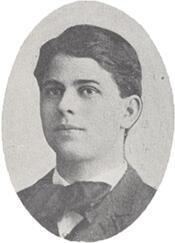
Here you will find contact information for Representative Harry Benjamin Wolf, including email address, phone number, and mailing address.
| Name | Harry Benjamin Wolf |
| Position | Representative |
| State | Maryland |
| District | 3 |
| Party | Democratic |
| Status | Former Representative |
| Term Start | December 2, 1907 |
| Term End | March 3, 1909 |
| Terms Served | 1 |
| Born | June 16, 1880 |
| Gender | Male |
| Bioguide ID | W000674 |
About Representative Harry Benjamin Wolf
Harry Benjamin Wolf (June 16, 1880 – February 17, 1944) was an American politician, lawyer, and Democratic Congressman from Maryland. Born in Baltimore, Maryland, he was the son of Jacob Wolf and Mollie Furstenberg Wolf and had two siblings. Raised in modest circumstances, Wolf attended the public schools of Baltimore and worked from a young age to help support himself. He was a paperboy and sold fruit on the streets, and later, together with his brother, purchased a horse and wagon to sell bananas bought on the waterfront to local shopkeepers, an enterprise that earned them a significant sum and reflected his early aptitude for business and initiative.
Wolf pursued higher education in law and enrolled in the law department of the University of Maryland, Baltimore. He graduated in 1901 and was admitted to the bar the same year. Immediately thereafter, he commenced the practice of law in Baltimore, specializing in criminal cases. In addition to his legal work, he engaged in the real estate business and hotel-property investments and was involved in creating a successful ferry company, further broadening his professional and financial interests.
Wolf entered public life in Maryland state politics in the early twentieth century. A member of the Democratic Party, he served as a member of the Maryland House of Delegates from 1906 to 1908. His legislative service at the state level helped establish his reputation within Baltimore and the broader Democratic organization. During this period he continued to practice law and maintain his business ventures, combining legal advocacy with growing political responsibilities.
Building on his state legislative experience, Wolf was nominated by the local section of the Democratic Party for a seat in the United States House of Representatives. He was elected as a Democrat to the Sixtieth Congress and served as a Representative from Maryland from March 4, 1907, to March 3, 1909. His single term in Congress occurred during a significant period in American history marked by progressive-era reforms and debates over economic regulation and social policy. As a member of the House of Representatives, Harry Benjamin Wolf participated in the legislative process, represented the interests of his Maryland constituents, and contributed to the work of the Democratic Party in the national legislature. He was an unsuccessful candidate for reelection in 1908 to the Sixty-first Congress, losing to Republican John Kronmiller.
After leaving Congress, Wolf resumed the practice of law in Baltimore and continued to pursue his other business interests in real estate, hotel properties, and transportation. Over the ensuing years he became a well-known criminal lawyer. However, aspects of his later legal career were marked by serious controversy. From 1911, Wolf, along with other lawyers, was involved in a scheme to obtain cheaper domestic labor for prominent Baltimore families by using writs of habeas corpus to secure the release of mentally challenged inmates from the Rosewood Center. Once released into the custody of these families, the individuals were often subjected to mistreatment, paid little or nothing, and in some cases abandoned in the streets or exposed to conditions that led to illness or death. This exploitation was later denounced by psychiatrist Leo Kanner in 1937, casting a harsh light on the practice and on Wolf’s role in it.
Wolf’s legal career further deteriorated in the early 1920s. In 1922, he defended 19-year-old Walter Socolow, one of five persons arrested for the murder of William Norris. Although Socolow was found guilty by the jury, Wolf managed to save him from hanging by conspiring with one of Socolow’s accomplices to destroy the confession of another accomplice who had turned state’s evidence. The scheme was eventually uncovered, and Wolf was found guilty of obstructing justice. As a result, he was disbarred, fined, and placed on probation, a dramatic fall from prominence for a former member of Congress and once-successful attorney.
In his personal life, Wolf married a woman named Sara, and the couple had four sons: Frederick S. Wolf, Edwin J. Wolf, Harry B. Wolf Jr., and Alan M. Wolf. Sara survived her husband by two decades and died on August 12, 1964. Wolf was active in Jewish communal and fraternal life and was named grand master of the Independent Order of B’rith Shalom, reflecting his standing within segments of Baltimore’s Jewish community. He has been noted in listings of Jewish members of the United States Congress, underscoring his place in the broader history of Jewish participation in American political life.
Harry Benjamin Wolf died in Baltimore on February 17, 1944. He was interred in the Hebrew Friendship Cemetery in Baltimore, Maryland, closing a life that encompassed early entrepreneurial success, state and national political office, a prominent and ultimately scandal-ridden legal career, and active involvement in civic and fraternal organizations.