Representative Harry Chapman Woodyard
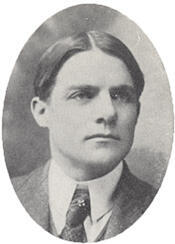
Here you will find contact information for Representative Harry Chapman Woodyard, including email address, phone number, and mailing address.
| Name | Harry Chapman Woodyard |
| Position | Representative |
| State | West Virginia |
| District | 4 |
| Party | Republican |
| Status | Former Representative |
| Term Start | November 9, 1903 |
| Term End | March 4, 1927 |
| Terms Served | 9 |
| Born | November 13, 1867 |
| Gender | Male |
| Bioguide ID | W000737 |
About Representative Harry Chapman Woodyard
Harry Chapman Woodyard (November 13, 1867 – June 21, 1929) was a Republican politician from West Virginia who served nine terms as a United States Representative between 1903 and 1927. He was born in Spencer, Roane County, West Virginia, where he spent much of his life and later built his business and political career. Raised in a rural community during the post–Civil War era, he attended the common schools of the area, receiving a basic formal education typical of the time.
After completing his schooling, Woodyard entered private enterprise and became a businessman in Spencer. He engaged in the wholesale grocery and lumber businesses, activities that connected him closely with the commercial and agricultural life of his region. His success in business and his familiarity with local economic concerns helped establish his reputation in the community and provided a foundation for his entry into public service.
Woodyard’s political career began at the state level. A member of the Republican Party, he was elected to the West Virginia Senate in 1898. His service in the state legislature brought him wider recognition within the party and among voters, and it positioned him for a bid for national office at the turn of the twentieth century. By the early 1900s he had become a prominent Republican figure in his district, combining his legislative experience with his background in business.
In 1902, Woodyard was elected as a Republican to the Fifty-eighth Congress and to the three succeeding Congresses, serving from March 4, 1903, to March 3, 1911, as a Representative from West Virginia. During this period he sat in the House of Representatives in the 58th through 61st United States Congresses, participating in the legislative process during a significant era of American political and economic change, including the Progressive Era reforms. He represented the interests of his constituents in West Virginia and contributed to the work of the House over four consecutive terms. His candidacy for re-election in 1910 was unsuccessful, temporarily interrupting his congressional service.
Woodyard returned to Congress several years later. Following the death of Representative Hunter H. Moss, Jr., he was elected to the Sixty-fourth Congress to fill the resulting vacancy. He then won re-election to the Sixty-fifth, Sixty-sixth, and Sixty-seventh Congresses, serving from November 7, 1916, to March 3, 1923. In this second extended period of service, he again represented West Virginia during a consequential time that encompassed World War I and the immediate postwar years. Over the course of these terms he served in the 64th through 67th United States Congresses, continuing his role in the national legislative process. He was an unsuccessful candidate for re-election in 1922 to the Sixty-eighth Congress.
Woodyard’s final term in the House began after his election in 1924. He was chosen once more as a Republican to represent his West Virginia district in the Sixty-ninth Congress and served from March 4, 1925, to March 3, 1927. In total, his service in the House of Representatives spanned the 58th through 61st, 64th through 67th, and 69th Congresses, amounting to nine terms in office. His long, though intermittently interrupted, tenure placed him among the more enduring Republican figures from West Virginia in the early twentieth century.
After deciding not to be a candidate for re-election to the Seventieth Congress, Woodyard left national office and resumed his former business pursuits in Spencer, returning to the wholesale grocery and lumber enterprises that had anchored his early career. He remained in his hometown until his death. Harry Chapman Woodyard died in Spencer, West Virginia, on June 21, 1929, and was buried in the Spencer Mausoleum, closing a life marked by sustained engagement in both commerce and public service at the state and national levels.