Representative Harry McLeary Wurzbach
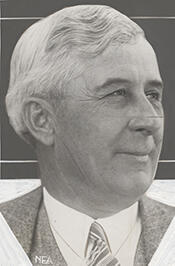
Here you will find contact information for Representative Harry McLeary Wurzbach, including email address, phone number, and mailing address.
| Name | Harry McLeary Wurzbach |
| Position | Representative |
| State | Texas |
| District | 14 |
| Party | Republican |
| Status | Former Representative |
| Term Start | April 11, 1921 |
| Term End | March 3, 1933 |
| Terms Served | 6 |
| Born | May 19, 1874 |
| Gender | Male |
| Bioguide ID | W000775 |
About Representative Harry McLeary Wurzbach
Harry McLeary Wurzbach (May 19, 1874 – November 6, 1931) was an American attorney and politician who served as a Representative from Texas in the United States Congress from 1921 to 1933. A member of the Republican Party, he was the first Republican elected to the United States House of Representatives from Texas since Reconstruction to be elected for more than two terms. Representing Texas’s 14th congressional district, he served multiple terms and became the only Republican from Texas serving in Congress during this period. He was also the first Republican member of Congress from Texas who had been born in the state.
Wurzbach was born in San Antonio, Texas, on May 19, 1874, into a family of German heritage, part of the substantial German American community that had settled in central Texas in the nineteenth century. Growing up in a region shaped by both Anglo-American and German immigrant influences, he was exposed early to the political and social currents of a state still adjusting to the aftermath of the Civil War and Reconstruction. These formative years in a diverse cultural environment helped shape his later political identity and his understanding of the concerns of local constituents.
Wurzbach pursued higher education in Texas, studying law and preparing for a legal career at a time when the state was undergoing rapid political and economic change. After completing his legal studies and being admitted to the bar, he began practicing law, establishing himself as an attorney in central Texas. His legal training provided the foundation for his later public service, both at the county level and in the national legislature, and positioned him to engage with the complex legal and constitutional issues that arose in Texas during the early twentieth century.
After moving to Seguin, the seat of Guadalupe County, Wurzbach immediately became active in local politics. He was elected Guadalupe County prosecuting attorney, serving from 1900 to 1902. In 1902 he ran as a Democrat for the office of County Judge, the chief administrative officer of a Texas county, but was defeated. Reflecting later that he had “seen the error of my ways,” he aligned himself with the Republican Party and ran again for County Judge as a Republican. He was elected and served as County Judge of Guadalupe County from 1904 to 1910. The 1910 campaign was personally bitter, and shortly after the election he resigned the office and returned to his law practice. His shift from the Democratic to the Republican Party occurred against the backdrop of a Democrat-dominated Texas political system that was working systematically to maintain one-party control.
The political environment in which Wurzbach built his career was shaped by the efforts of the Democratic-dominated Texas legislature to consolidate power and limit opposition. Beginning in 1901, the legislature adopted a poll tax, which had the intended effect of almost eliminating voting by Black citizens, as well as many Latinos and poor whites. In addition, Texas adopted white primaries, further restricting access to the electoral process. Black voters, who had been loyal Republicans since emancipation and the passage of constitutional amendments granting citizenship and suffrage, were effectively disfranchised. From roughly 1890 to 1910, Texas followed other former Confederate states in passing new constitutions, constitutional amendments, and laws that disfranchised Black voters and many others, thereby establishing a one-party Democratic state. Wurzbach’s emergence and persistence as a Republican officeholder in this environment underscored both the rarity and the difficulty of his political position.
Within this challenging context, Wurzbach was elected to the United States House of Representatives as a Republican from Texas’s 14th congressional district, beginning his congressional service in 1921. He contributed to the legislative process during six terms in office, participating in the democratic process and representing the interests of his constituents at the national level. He was re-elected to the Sixty-eighth, Sixty-ninth, and Seventieth Congresses, serving continuously from 1921 to 1929. His repeated re-election made him the first Republican from Texas since Reconstruction to serve more than two terms in the House of Representatives, a notable achievement given the overwhelming Democratic dominance in the state.
After a brief interruption in his service, Wurzbach was again elected in 1930 to the Seventy-second Congress, returning to represent the 14th district. During this final term, he continued to serve as the sole Republican member of the Texas congressional delegation, maintaining his role as a minority-party voice from a one-party state. He remained in office until his death on November 6, 1931, dying in service to his district and the nation. His career marked an important chapter in the history of the Republican Party in Texas and illustrated the complexities of political life in the South during the era of disfranchisement and one-party rule.