Representative Hatton William Sumners
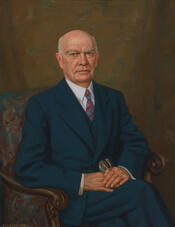
Here you will find contact information for Representative Hatton William Sumners, including email address, phone number, and mailing address.
| Name | Hatton William Sumners |
| Position | Representative |
| State | Texas |
| District | 5 |
| Party | Democratic |
| Status | Former Representative |
| Term Start | April 7, 1913 |
| Term End | January 3, 1947 |
| Terms Served | 17 |
| Born | May 30, 1875 |
| Gender | Male |
| Bioguide ID | S001072 |
About Representative Hatton William Sumners
Hatton William Sumners (May 30, 1875 – April 19, 1962) was a Democratic Congressman from the Dallas, Texas, area who represented Texas in the United States House of Representatives for seventeen consecutive terms from March 4, 1913, to January 3, 1947. Over the course of his long tenure, he rose to become chairman of the powerful House Judiciary Committee and played a central role in major constitutional, judicial, and administrative developments in the first half of the twentieth century.
Sumners was born near Fayetteville, Lincoln County, Tennessee, on May 30, 1875, the second of three children of William A. Sumners and Anna Elizabeth Walker Sumners. He grew up on a farm in Lincoln County and attended local schools, experiencing the rural, post–Civil War South that shaped many of his views on government and society. In 1893, at the age of eighteen, he moved to Garland, Texas, near Dallas, at a time when Dallas was emerging as a booming business and industrial center. Seeking a legal career without formal law school, he persuaded Dallas City Attorney Alfred P. Wozencraft in 1895 to allow him to “read law” in his office, a common path to the bar in that era. Sumners was admitted to the Texas bar in 1897 and commenced the practice of law in Dallas.
Sumners quickly entered public life through local legal and political reform efforts. In 1900 he was elected prosecuting attorney of Dallas County, serving two nonconsecutive terms. As prosecutor he undertook a vigorous campaign against gambling, drinking, and vice in Dallas, bringing charges against gamblers and exposing voting irregularities. These efforts cost him politically, and he was not re-elected in 1902. Undeterred, he continued his campaign against gambling and electoral abuses, influencing state legislation aimed at reforming the system. His persistence and growing reputation for reform led to his re-election as Dallas County prosecutor. Rather than remain indefinitely in that office, he accepted the presidency of the district and county attorneys’ association of Texas in 1906 and 1907, where he continued to campaign against betting interests and to build a statewide profile as a law-enforcement reformer.
In 1912, Sumners ran successfully for an at-large Texas seat in the Sixty-third Congress as a Democrat, taking office on March 4, 1913. He was the first of the 132 freshmen members of that Congress to secure passage of a bill through the House, legislation that made Dallas a port of entry for United States Customs, underscoring his early effectiveness as a legislator and his focus on advancing the economic interests of his district. In 1914 he ran for and won the seat from Texas’s 5th congressional district, which then included Dallas, Ellis, Rockwall, Hill, and Bosque counties, and he continued to represent that area until his retirement. Throughout his service, he was a member of the Democratic Party and participated actively in the legislative process during a period that encompassed World War I, the Great Depression, the New Deal, and World War II.
Sumners became known as a lifelong defender of states’ rights and a strong proponent of what he regarded as local responsibility in government. He frequently expressed concern about the growth of federal power, declaring that “there are but two sorts of government – a government by the people and a government the voice of which comes from the top downward,” and warning that in the United States “more and more, the voice of the government is spoken in Washington downward to the people.” His commitment to states’ rights shaped his controversial opposition in the 1920s to the Dyer Anti-Lynching Bill, introduced by a Republican congressman from Missouri. On the House floor, Sumners argued that the bill’s sponsors lacked adequate statistics to justify making lynching a federal crime, contended that such legislation would increase racial mob violence, and insisted it was unconstitutional and an encroachment on state sovereignty. He asserted that the measure “would mark the greatest advance toward the obliteration of the states as independent governmental agencies which has yet been registered by any expression of legislative or public attitude,” and that it “strikes at the very heart of state sovereignty and the sense of local responsibility.” In the same debate, speaking while African Americans watched from the House gallery, he employed racist stereotypes, stating of Black Americans that “only a short time ago… their ancestors roamed the jungles of Africa in absolute savagery…[Y]ou do not know where the beast is among them. Somewhere in that black mass of people is the man who would outrage your wife or your child, and every man who lives in the country knows it.” These remarks reflected both his racial views at the time and his determination to resist federal civil-rights legislation in the name of states’ rights.
Over time, Sumners’s stance on lynching evolved in ways that remained grounded in his preference for state and local action. Less than a decade after his fight against the Dyer Bill, he wrote in response to lynchings in Mississippi in 1931 that “what we want to do is to have a meeting to oppose lynchings in Mississippi and to see if we can get Mississippi to do something about it, and if we can get other states to become more effective in suppressing lynchings.” In 1937, following the lynchings of Roosevelt Townes and Robert McDaniels in Mississippi, he declined an invitation to speak to the Mississippi Council of Southern Women for the Prevention of Lynching, explaining that his appearance might be misconstrued as opposition to anti-lynching legislation rather than opposition to lynching itself. He urged that “everything should indicate that you are trying to stop mob violence and that this is the whole purpose of the meeting.” In a sharply worded telegram to the governor of Mississippi, he condemned the lynchings as “as dastardly a crime as cowardice could devise and brutality execute” and warned that such events undermined the argument that states could govern themselves effectively. He insisted that Mississippi could not escape becoming “an accessory after the fact” unless it brought the lynchers and complicit officers “to speedy and adequate punishment,” adding that “the turning over of a prisoner, regardless of the crime charged against him, for execution by some agency other than that provided by the laws of the country is a confession of unfitness to govern.” In 1945, after the lynching of Jesse James Payne in Madison, Florida, while Payne was in the custody of Sheriff Lonnie T. Davis, Sumners again responded forcefully, warning Florida Governor Millard Caldwell that if the reported facts were true, the sheriff was guilty not only of dereliction of duty but of “a direct assault upon the sovereignty of the state.”
Within the House, Sumners became one of the most influential members on legal and constitutional questions. He served on the Judiciary Committee for many years and was regularly appointed to investigate allegations of corruption among federal judges. He sat on the impeachment committees for three federal judges—George W. English, Harold Louderback, and Halsted L. Ritter—helping to shape the House’s role in judicial discipline. In 1924 he developed a close working relationship with Chief Justice William Howard Taft and assisted in securing passage of a major amendment to the federal judicial code, known as the “Judges Bill,” which restructured the Supreme Court’s docket and enhanced its control over the cases it heard. Sumners appeared before the Supreme Court several times on behalf of Congress, including in the Pocket Veto Case of 1928, the McCracken Contempt Case of 1934, and the Municipal Bankruptcy Act Case of 1936, further cementing his reputation as an authority on constitutional law. He became chairman of the House Judiciary Committee in 1932, a post he would hold through much of the New Deal era. In 1934 he drafted a constitution for the Philippines as that territory moved toward greater self-government, and he was credited with helping to bring a Federal Reserve Bank to Dallas, enhancing the city’s financial stature. A loyal Democrat, he supported much of President Franklin D. Roosevelt’s New Deal legislation, even as he remained wary of what he saw as excessive centralization of power.
Sumners’s most famous break with Roosevelt came over the president’s 1937 proposal to expand the United States Supreme Court, widely known as the “court-packing” plan. After the Court had invalidated key New Deal measures, Roosevelt sought authority to appoint additional justices. As Judiciary Committee chairman, Sumners initially worked discreetly against the plan, reportedly telling colleagues, “Boys, here’s where I cash in my chips,” a remark later interpreted by some historians as a pledge to use his influence with the president to “help straighten things out.” Ultimately he came out openly against the proposal. Along with two other prominent Texans—Vice President John Nance Garner and Senator Thomas T. Connally—Sumners led the congressional fight against the court plan, viewing it as a symbolic reach for unlimited executive power. He used his position to prevent the reorganization bill from coming before his committee, thereby blocking it from reaching the House floor, and he traveled around the country delivering speeches in defense of constitutional government and the independence of the judiciary. The bill never emerged from his committee, and the plan failed. Although he faced two serious opponents in the 1938 election, he was re-elected and thereafter did not encounter significant electoral challenges.
During World War II and the immediate postwar years, Sumners continued to exercise substantial influence over the legal framework of the federal government. He introduced the War Powers Act of 1941, which granted President Roosevelt expanded authority to prosecute the war more efficiently; the measure passed both houses of Congress and was signed into law within three days, reflecting the urgency of the international crisis and Sumners’s legislative skill. As chairman of the Judiciary Committee, he also oversaw the passage of the Administrative Procedure Act, which became law on June 11, 1946. That statute established uniform procedures for federal administrative agencies in proposing and adopting regulations and granted the judiciary broad oversight over agency actions, becoming a foundational element of modern administrative law. Throughout his seventeen terms, Sumners was identified with the Miller group in Washington, a circle of conservative Democrats and Republicans who often cooperated on issues of fiscal and constitutional restraint.
In 1946, after more than three decades in Congress, Sumners announced that he would not seek re-election. He left office in January 1947, concluding a congressional career that had spanned from the Woodrow Wilson administration through the end of World War II. After returning to private life in Dallas, he became director of research for the Southwestern Legal Foundation, where he continued to engage with questions of law and public policy. In 1949 he established the Hatton W. Sumners Foundation, which has provided loans and scholarships to students and supported civic-education initiatives, including sponsorship of the Internet project “Vote Smart.” He was also known for his philanthropy toward organizations such as the YMCA, the American Red Cross, and his local church. In recognition of his contributions to law and public service, Sumners received an honorary doctor of laws degree from Southern Methodist University and was awarded the American Bar Association Medal. He authored a work titled The Private Citizen and His Democracy in 1959, reflecting his enduring interest in the relationship between individuals and their government.
Hatton William Sumners died in Dallas on April 19, 1962. Funeral services were held at Highland Park Methodist Church in Dallas, and he was interred in the Knights of Pythias Cemetery in Garland, Texas.