Representative Helen Gahagan Douglas
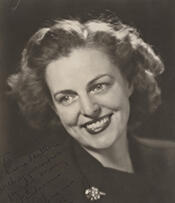
Here you will find contact information for Representative Helen Gahagan Douglas, including email address, phone number, and mailing address.
| Name | Helen Gahagan Douglas |
| Position | Representative |
| State | California |
| District | 14 |
| Party | Democratic |
| Status | Former Representative |
| Term Start | January 3, 1945 |
| Term End | January 3, 1951 |
| Terms Served | 3 |
| Born | November 25, 1900 |
| Gender | Female |
| Bioguide ID | D000454 |
About Representative Helen Gahagan Douglas
Helen Gahagan Douglas (born Helen Mary Gahagan; November 25, 1900 – June 28, 1980) was an American actress and politician who served as a Democratic Representative from California in the United States Congress from 1945 to 1951. Over three terms in the House of Representatives, she contributed to the legislative process during a significant period in American history, representing her constituents while championing civil rights, social welfare, and progressive causes.
Helen Mary Gahagan was born in Boonton, New Jersey, of Scotch-Irish descent. She was the eldest daughter of Lillian Rose (Mussen), a former schoolteacher, and Walter H. Gahagan, an engineer who owned a construction business in Brooklyn and a shipyard in Arverne, Queens. Raised Episcopalian, she grew up at 231 Lincoln Place in the Park Slope neighborhood of Brooklyn, New York, then an upper-middle-class area. She attended the Berkeley Carroll School, where she attracted favorable attention from Brooklyn critics through her performances in school plays. After an argument with her father, who did not consider acting a suitable occupation for a woman, she was sent to the Capen School for Girls in Northampton, Massachusetts.
Gahagan gained admittance to Barnard College of Columbia University as a member of the class of 1924. To the dismay of her father, she left Barnard after two years without completing her degree in order to pursue an acting career. In the 1920s she quickly found success on Broadway, becoming a well-known star in productions such as “Young Woodley” and “Trelawney of the Wells.” In 1927, at age 26, she set out to forge a new career as an opera singer; after two years of voice lessons she toured Europe, receiving critical praise that was unusual for an American singer at the time. Returning to Broadway in 1930, she starred in “Tonight or Never,” where she co-starred with actor Melvyn Douglas. The two married in 1931, with Helen retaining her maiden name; they had two children, Peter and Mary (Mary Helen, born in 1938).
In 1935 Gahagan Douglas went to Los Angeles to star in the Hollywood film “She,” playing Hash-a-Motep, queen of a lost city, in an adaptation of H. Rider Haggard’s novel. The film popularized the phrase “She who must be obeyed,” and her portrayal of the “ageless ice goddess” is widely credited with inspiring the Evil Queen in Walt Disney’s “Snow White and the Seven Dwarfs” (1937). While performing opera in Vienna in 1938, she found herself having coffee with a Nazi sympathizer, an encounter that so repelled her that she immediately returned to Los Angeles determined to oppose Nazism publicly. She and her husband joined the Hollywood Anti-Nazi League and in 1939 joined others in calling for a United States boycott of goods produced in Nazi Germany. Disliking the atmosphere of Hollywood and moved by the hardships she observed, particularly after the birth of her daughter in 1938, she began studying the plight of migrant workers and grew increasingly politically engaged. She became director of the John Steinbeck Committee, named for the author of “The Grapes of Wrath,” and by 1940 was serving as a national spokesperson for migrants.
Introduced more deeply to politics by her husband and inspired by the election of Franklin D. Roosevelt in 1932, Gahagan Douglas joined the Democratic Party and developed a close friendship with Franklin and Eleanor Roosevelt, with Eleanor serving as a political mentor. She held a series of public and party posts before entering Congress. She served on the national advisory committee of the Works Progress Administration and on the state committee of the National Youth Administration in 1939 and 1940, working alongside figures such as Mary McLeod Bethune. From 1940 to 1944 she was Democratic national committeewoman for California, vice chairwoman of the Democratic state central committee, and chairman of its women’s division. She sat on the board of governors of the California Housing and Planning Association in 1942 and 1943 and was appointed by President Roosevelt to the Voluntary Participation Committee of the Office of Civilian Defense. She was later appointed by President Harry S. Truman as an alternate United States delegate to the United Nations Assembly. In 1946 the National Association of Colored Women honored her for her role in interracial cooperation and for advancing race and gender equality.
In 1943 Democratic leaders, including President Roosevelt, urged Gahagan Douglas to run for Congress in the 1944 election for California’s 14th Congressional District, where Representative Thomas F. Ford was retiring. To broaden her appeal to more conservative voters, she began using her husband’s surname and campaigned as Helen Gahagan Douglas. As chairwoman of the California Democratic committee, she addressed the 1944 Democratic National Convention in Chicago; her widely noted speech elevated her national profile, prompting speculation that she might someday be considered for the vice presidency or even the presidency. In the fall of 1944 she was elected to the House of Representatives and subsequently won reelection twice, serving in the Seventy-ninth, Eightieth, and Eighty-first Congresses from January 1945 to January 1951. Her tenure in Congress coincided with the end of World War II, the beginning of the Cold War, and the early years of the postwar domestic realignment, and she participated fully in the democratic process on behalf of her California constituents.
During her three terms in the House, Gahagan Douglas became known for her strong advocacy of civil rights, protections for migrant workers, women’s issues, affordable housing, progressive taxation, and nuclear disarmament. She sponsored an anti-lynching bill in the face of Southern opposition and supported measures to improve labor conditions and social welfare. She also championed a controversial proposal to create a Franklin Delano Roosevelt National Forest to protect California redwoods from Sonoma County to the Oregon border, a measure opposed by local business interests concerned about the loss of taxable property. Her progressive record, including frequent alignment with liberal and New Deal–oriented policies, later became a focal point of attacks by her political opponents. On Capitol Hill, her personal life also attracted attention; her romantic relationship with fellow Representative Lyndon B. Johnson was an open secret in Washington political circles.
In 1950 Gahagan Douglas sought higher office by running for the United States Senate from California, even though incumbent Democrat Sheridan Downey was initially a candidate for a third term. State Democratic chairman William M. Malone advised her to wait until 1952 rather than challenge Downey and risk splitting the party, but she argued that Downey had neglected veterans and small growers and needed to be unseated. Downey ultimately withdrew before the primary and supported Manchester Boddy, publisher of the Los Angeles Daily News, against her. After Gahagan Douglas defeated Boddy in the Democratic primary, Downey endorsed the Republican nominee, Representative Richard M. Nixon. The primary and general election campaigns became emblematic of modern political vitriol. Boddy had labeled her “the Pink Lady” and said she was “pink right down to her underwear,” insinuating Communist sympathies. Nixon and his campaign revived and amplified these charges, comparing her voting record to that of Representative Vito Marcantonio of New York, a pro-Soviet member of the American Labor Party, to suggest she was a Communist “fellow traveler.” Nixon’s campaign manager, Murray Chotiner, printed 500,000 flyers on pink paper to reinforce the theme, later explaining that “the purpose of an election is not to defeat your opponent, but to destroy him.” Anti-Semitic surrogates were deployed to urge voters to reject her because her husband was Jewish. In response, Gahagan Douglas popularized a nickname for Nixon—“Tricky Dick,” apparently coined by Boddy—that became one of the most enduring monikers in American politics. Fellow Representative John F. Kennedy, who shared Nixon’s hard-line views on communism, quietly contributed money to Nixon’s campaign against her. In the general election Nixon defeated Gahagan Douglas by 2,183,454 votes (59 percent) to 1,502,507 (41 percent), one of the most bitterly fought races in California political history. Conservative Democrat Samuel W. Yorty, who later became a Republican, succeeded her in the House.
The 1950 Senate defeat effectively ended Gahagan Douglas’s electoral career, though she remained politically active. She later reflected that Nixon’s harsh tactics had been “completely unnecessary,” believing that she likely would have lost in any case, given the state’s increasingly conservative, anti-Communist electorate, the appeal of Nixon as a young family man to similarly situated voters, and the influx of oil-industry money backing her opponent. It was rumored that she might have received a political appointment in the Truman administration, but the controversy surrounding the Senate race made such an appointment politically untenable; Democratic National Committee vice chair India Edwards remarked that Gahagan Douglas could not have been appointed “dogcatcher.” In 1952 she returned to acting and in 1960 campaigned for John F. Kennedy in his successful presidential race against Nixon. She continued to advocate for the regulation and control of nuclear weapons for decades and remained a visible figure in liberal and peace-oriented causes.
In the 1960s and 1970s Gahagan Douglas’s earlier political battles took on renewed symbolic meaning. She was mentioned in Tom Lehrer’s 1965 satirical song “George Murphy,” which opened with the lines, “Hollywood’s often tried to mix / show business with politics / from Helen Gahagan / to Ronald Reagan,” underscoring her place in the lineage of entertainers-turned-politicians. President Lyndon B. Johnson, Kennedy’s successor and her former congressional colleague, appointed her as Special Ambassador to the inauguration of Liberian President William Tubman. However, her outspoken opposition to the Vietnam War strained and ultimately broke her relationship with Johnson. She campaigned for Senator George McGovern in his unsuccessful 1972 presidential bid to unseat Nixon and publicly called for Nixon’s removal from office during the Watergate scandal. During and after Watergate, bumper stickers reading “Don’t blame me, I voted for Helen Gahagan Douglas” appeared on cars in California, reflecting a retrospective reassessment of the 1950 Senate race. In October 1973 she was among the first women to appear on the cover of Ms. magazine, and in 1979 her alma mater, Barnard College, awarded her its highest honor, the Barnard Medal of Distinction.
Helen Gahagan Douglas died of breast and lung cancer on June 28, 1980, with her husband Melvyn Douglas at her side. Her passing prompted tributes from across the political spectrum. On August 5, 1980, Senator Alan Cranston of California eulogized her on the floor of the United States Senate, declaring that she was “one of the grandest, most eloquent, deepest-thinking people we have had in American politics” and that she stood “among the best of our 20th-century leaders, rivaling even Eleanor Roosevelt in stature, compassion and simple greatness.” A substantial collection of her papers, documenting both her artistic and political careers, is preserved at the Carl Albert Center, ensuring that her contributions to American public life and to the history of women in the United States House of Representatives remain accessible to scholars and the public.