Representative Helen Douglas Mankin
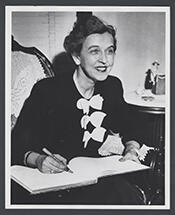
Here you will find contact information for Representative Helen Douglas Mankin, including email address, phone number, and mailing address.
| Name | Helen Douglas Mankin |
| Position | Representative |
| State | Georgia |
| District | 5 |
| Party | Democratic |
| Status | Former Representative |
| Term Start | January 3, 1945 |
| Term End | January 3, 1947 |
| Terms Served | 1 |
| Born | September 11, 1896 |
| Gender | Female |
| Bioguide ID | M000097 |
About Representative Helen Douglas Mankin
Helen Douglas Mankin (September 11, 1896 – July 25, 1956) was a 20th-century American lawyer and politician who became the second woman to represent Georgia in the United States House of Representatives. A member of the Democratic Party, she served part of one term in Congress from 1945 to 1947, entering the House in 1946 after winning a special election to fill the seat of a predecessor who had resigned. Her tenure in the House occurred during a significant period in American history, as the nation transitioned from World War II to the early postwar era, and she participated in the legislative process on behalf of her Georgia constituents.
Mankin was born on September 11, 1896, and came of age at a time when women were only beginning to gain formal political rights in the United States. Details of her early life, including her family background and upbringing, helped shape her later commitment to public service and civic engagement, although her public reputation would rest primarily on her legal and political achievements. Growing up in the South in the late nineteenth and early twentieth centuries, she witnessed the social and political constraints placed on women and minorities, experiences that informed her later advocacy for broader participation in the democratic process.
Pursuing higher education at a time when relatively few women entered the professions, Mankin prepared herself for a career in law. She studied in an era when women were still fighting for full access to legal education and the bar, and her eventual admission to practice law marked her as part of a pioneering generation of female attorneys. Her legal training provided the foundation for her later work in politics, equipping her with skills in analysis, argument, and statutory interpretation that would prove valuable in legislative service.
Before entering Congress, Mankin established herself as an American lawyer and became active in Georgia politics. Practicing law in the state, she gained experience with the legal issues affecting her community and developed a reputation that facilitated her entry into elective office. Her involvement in Democratic Party affairs and state and local political networks positioned her to seek higher office at a moment when the political landscape in Georgia was beginning, slowly, to open to women candidates. Through her legal practice and political activity, she built connections with voters and party leaders that would later support her congressional bid.
Mankin’s congressional service began when she won a special election in 1946 to fill a vacancy in the United States House of Representatives created by the resignation of her predecessor. As a Democrat representing Georgia, she served from 1945 to 1947 during the closing phase of the 79th Congress, participating in debates and votes that reflected the nation’s adjustment from wartime to peacetime conditions. In the House of Representatives, she contributed to the legislative process and represented the interests of her constituents, joining a very small number of women then serving in Congress and becoming only the second woman ever to represent Georgia at the federal level. Her presence in the House underscored the gradual expansion of women’s roles in national politics and provided a model for later female officeholders from the state.
During her time in Congress, Mankin’s work was shaped by the pressing issues of the mid-1940s, including veterans’ readjustment, economic reconversion, and the early stages of the United States’ postwar international commitments. As a member of the House, she participated in the democratic process at a time when the federal government was redefining its responsibilities at home and abroad. Although her service was limited to part of one term, she used her position to advocate for her district and to demonstrate that women could serve effectively in national legislative office.
After leaving Congress in 1947, Mankin remained identified with public service and Georgia politics. Drawing on her legal background and congressional experience, she continued to engage with civic and political affairs, maintaining her interest in the issues that had brought her into public life. Her career, which combined law and elective office, reflected the broader mid-twentieth-century trend of professionally trained women entering the political arena and seeking to influence policy at the state and national levels.
Helen Douglas Mankin died on July 25, 1956. Her life and career left a legacy as a trailblazing female lawyer and legislator from Georgia, remembered for her role as the state’s second woman member of the United States House of Representatives and for her participation in the nation’s democratic institutions during a pivotal era in American history.