Representative Hendrick Bradley Wright
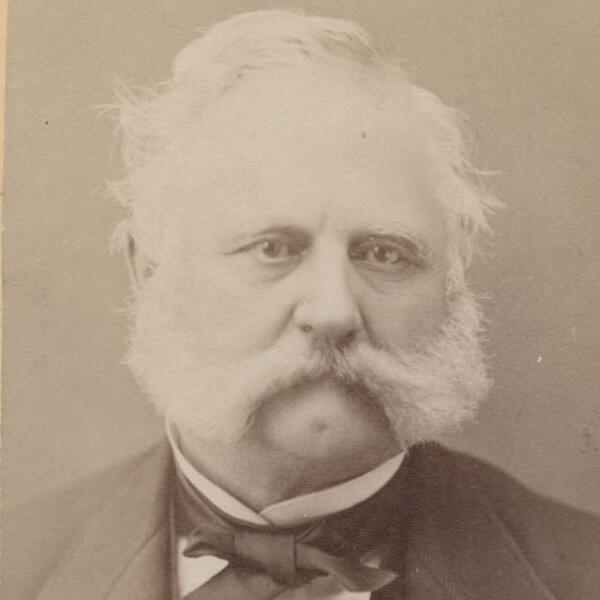
Here you will find contact information for Representative Hendrick Bradley Wright, including email address, phone number, and mailing address.
| Name | Hendrick Bradley Wright |
| Position | Representative |
| State | Pennsylvania |
| District | 12 |
| Party | National Greenbacker |
| Status | Former Representative |
| Term Start | December 5, 1853 |
| Term End | March 3, 1881 |
| Terms Served | 4 |
| Born | April 24, 1808 |
| Gender | Male |
| Bioguide ID | W000761 |
About Representative Hendrick Bradley Wright
Hendrick Bradley Wright (April 24, 1808 – September 2, 1881) was a Democratic and Greenback member of the U.S. House of Representatives from Pennsylvania who served as a Representative from Pennsylvania in the United States Congress from 1853 to 1881. Born in Plymouth, Luzerne County, Pennsylvania, he came of age in the early decades of the nineteenth century in a region shaped by the growth of anthracite coal mining and evolving commercial activity. His early life in northeastern Pennsylvania helped form the local and economic perspectives he later carried into public service, particularly his concern for the interests of working people and small producers.
Wright pursued a legal education and was admitted to the bar, establishing himself as an attorney in Luzerne County. Through his legal practice he became a prominent figure in local affairs, gaining experience in the application of state and federal law that would later inform his legislative work. His professional standing and engagement with community issues naturally led him into politics, where he aligned initially with the Democratic Party, then a dominant force in Pennsylvania and national politics.
Building on his legal and local political experience, Wright entered national public life as a Democrat and was elected to the U.S. House of Representatives as a Representative from Pennsylvania. His service in Congress occurred during a significant period in American history, encompassing the turbulent years leading up to and following the Civil War, as the nation grappled with sectional conflict, Reconstruction, and the transformation of its financial and industrial systems. Over the course of his career, he served four terms in office, participating actively in the legislative process and the broader democratic debate over the direction of the country.
During his early congressional service, Wright represented the interests of his Pennsylvania constituents in matters affecting commerce, infrastructure, and the rapidly industrializing economy of the state. As a member of the House of Representatives, he participated in the democratic process and represented the interests of constituents whose livelihoods were closely tied to mining, transportation, and local enterprise. His work in Congress reflected the concerns of a region undergoing economic change and social adjustment in the mid-nineteenth century.
In the later phase of his career, Wright became associated with the National Greenbacker Party, also known as the Greenback Party, which emerged in the post–Civil War era in response to national debates over currency, credit, and the monetary system. As a member of the National Greenbacker Party, Hendrick Bradley Wright contributed to the legislative process during his four terms in office by advocating policies that favored an expanded paper currency and financial measures intended to ease the burdens on farmers, laborers, and debtors. His shift from the Democratic Party to the Greenback movement reflected broader political realignments of the period, as economic issues came to the forefront of national politics.
Throughout his years in Congress, from 1853 to 1881, Wright’s service spanned multiple administrations and major national crises, including the Civil War and Reconstruction, and extended into the era of industrial consolidation and financial controversy that followed. His long tenure gave him a sustained role in shaping federal policy during a time when questions of union, civil rights, economic development, and monetary policy were intensely contested. He remained an active participant in legislative deliberations, bringing the perspective of his Pennsylvania district to national debates.
Hendrick Bradley Wright died on September 2, 1881, closing a public career that had stretched across some of the most consequential decades in American history. His life and work reflected the evolution of nineteenth-century American politics from Jacksonian democracy through the Civil War and into the age of industrial and financial reform, and he is remembered as a figure who bridged Democratic and Greenback traditions while consistently representing the interests of his constituents in Pennsylvania.