Senator Henry Fountain Ashurst
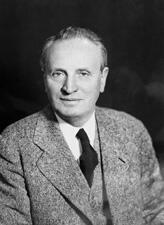
Here you will find contact information for Senator Henry Fountain Ashurst, including email address, phone number, and mailing address.
| Name | Henry Fountain Ashurst |
| Position | Senator |
| State | Arizona |
| Party | Democratic |
| Status | Former Representative |
| Term Start | March 27, 1912 |
| Term End | January 3, 1941 |
| Terms Served | 5 |
| Born | September 13, 1874 |
| Gender | Male |
| Bioguide ID | A000319 |
About Senator Henry Fountain Ashurst
Henry Fountain Ashurst (September 13, 1874 – May 31, 1962) was an American Democratic politician and one of the first two United States Senators from Arizona, serving from 1912 to 1941. Over the course of five terms in office, he became known as one of the Senate’s most colorful and eloquent figures, earning national attention for his oratorical skill, his self-proclaimed inconsistency, and his distinctive, often humorous approach to politics. A member of the Democratic Party, Ashurst contributed to the legislative process during a significant period in American history, spanning World War I, the interwar years, and the New Deal era, and he represented the interests of his Arizona constituents throughout nearly twenty-nine years in the Senate.
Ashurst was born near Winnemucca, Humboldt County, Nevada, on September 13, 1874, and moved with his family as a child to the Arizona Territory, where he grew up in a frontier environment. Largely self-educated, he developed an early fascination with public life and formed a childhood ambition to serve in the United States Senate. At the age of nineteen, he was appointed turnkey at the county jail in Flagstaff, Arizona Territory. While working at the jail, he began reading Blackstone’s Commentaries, an experience that sparked his interest in the law and laid the foundation for his later legal and political career. His early years in the territory were marked by a variety of manual and clerical jobs that helped support his pursuit of education and professional advancement.
Ashurst’s formal education was pieced together over several years while he worked to support himself. After his initial employment in Flagstaff, he worked at a local lumber yard and studied law at night. In 1895 he traveled to California, working as a lumberjack in the Los Angeles area and later as a hod carrier in San Francisco. Returning briefly to Flagstaff, he then enrolled at Stockton Business College (now Humphreys College) in Stockton, California, from which he graduated in 1896. Ashurst was admitted to the bar in 1897 and began practicing law in Williams, Arizona Territory. Seeking to strengthen his legal training, he later attended the University of Michigan Law School for a year beginning in 1903, completing his formal legal education while already engaged in public life in Arizona.
Ashurst entered politics soon after beginning his law practice. In 1897 he was elected to the Arizona Territorial House of Representatives and was re-elected in 1899, becoming the territory’s youngest speaker. In 1902 he won election to the Arizona Territorial Senate, further establishing his reputation as a capable and ambitious young legislator. From 1905 to 1908 he served as district attorney of Coconino County, a position that gave him practical experience in law enforcement and public administration. In 1908 he moved to Prescott, Arizona, continuing his legal and political activities. Ashurst’s personal life was closely intertwined with his political career: in 1904 he married Elizabeth McEvoy Reno, an Irish-born widow with one child from her first marriage who had come to Flagstaff to establish and manage a Weather Bureau station. She became his principal political adviser and confidante until her death on November 1, 1939.
As Arizona moved toward statehood, Ashurst played a central role in shaping its basic law. In 1911 he presided over Arizona’s constitutional convention, a pivotal event in the territory’s transition to statehood. During the convention he carefully avoided becoming embroiled in the most divisive political fights over controversial constitutional provisions, a strategy that preserved his standing and positioned him favorably for higher office. With the admission of Arizona as a state in 1912, the new state legislature elected Ashurst as one of Arizona’s first two United States Senators. He took office on April 2, 1912, alongside Marcus A. Smith. He was easily re-elected in 1916 by popular vote, and again in 1922, 1928, and 1934, serving five full terms and nearly twenty-nine years in the Senate. Only in the Republican landslide year of 1928 was his margin of victory less than ten percent; in 1934 he won re-election by forty-six percent, underscoring his enduring popularity with Arizona voters.
During his long tenure in Congress, Ashurst’s service coincided with major national and international developments, and he held influential committee chairmanships. In his early years in the Senate he was a strong supporter of President Woodrow Wilson’s administration and served as chairman of the Committee on Indian Affairs from 1914 to 1919, a post of particular importance to a Western state with significant Native American populations. After the Democrats lost control of the Senate in 1918 and the presidency in 1920, Ashurst emerged as a critic of Republican leaders and policies. When the Democrats regained control of the Senate in 1932, he became chairman of the powerful Judiciary Committee, serving in that role until he left the Senate in 1941. In these capacities he played a part in shaping legislation on Indian affairs, judicial matters, and key aspects of New Deal and constitutional policy. Throughout his Senate career, he emphasized service to his constituents, once explaining that Arizonans sent him to Washington not because they were preoccupied with “grave questions of international policy,” but because they wanted help with practical concerns such as pensions and jobs for their sons. He routinely read and responded to correspondence from Arizona, while generally ignoring letters and telegrams from other states.
Ashurst’s legislative record and public persona were marked by a deliberate and often theatrical inconsistency that became a defining feature of his career. Time magazine famously described his Senate service as “the longest U.S. theatrical engagement on record.” He was noted for his sesquipedalian vocabulary and his love of public speaking, which earned him a reputation as one of the Senate’s greatest orators. Among the nicknames he acquired were “the Dean of Inconsistency,” “Five-Syllable Henry,” and the “Silver-Tongued Sunbeam of the Painted Desert.” He took pride in his variable voting record, going so far as to appoint himself “Dean of Inconsistency” and to award mock “Degrees of Inconsistency” to fellow senators whose voting patterns he considered suitably irregular. He often carried tracts explaining the virtue and necessity of inconsistency, which he handed to critics who challenged his shifting positions. Examples of his reversals included advocating Prohibition and later voting to allow 3.2 percent beer, voting both for and against the Eighteenth Amendment, and casting four votes on veterans’ bonuses—two in favor and two against—about which he quipped that being “fifty per cent right” was a good record for a politician.
Some of Ashurst’s most notable actions in the Senate highlighted both his influence and his penchant for contradiction. During the 1936 presidential campaign he denounced rumors that President Franklin D. Roosevelt planned to reorganize the Supreme Court by “whittling, chiseling, indirection, circumlocution, periphrasis, and house-that-Jack-built tactics,” calling the rumored court-packing plan “a prelude to tyranny.” Yet when Roosevelt introduced the Judiciary Reorganization Bill of 1937, Ashurst became its formal sponsor and declared, “I’m for it, it’s a step in the right direction. It will be enacted into law immediately.” Once the bill was before his Judiciary Committee, however, he delayed hearings under the motto, “No haste, no hurry, no waste, no worry,” holding the measure in committee for 165 days. Opponents of the bill credited him as instrumental in its defeat. When a constituent later congratulated him on his stand, Ashurst replied, “Dear Madame: Which stand?” His oratorical skills could themselves affect legislative outcomes, as on January 21, 1914, when he delivered a three-hour speech in support of the Nineteenth Amendment for women’s suffrage, consuming the time available for a vote and thereby delaying its passage.
Ashurst’s rhetorical gifts were widely admired, and several of his speeches became part of Senate lore. His most celebrated address came on June 15, 1935, when he delivered a stinging denunciation of Senator Huey Long on the Senate floor, a harangue that Time described as “one of the most devastating speeches the chamber ever heard.” Other notable addresses included his remarks on U.S. entry into World War I in 1917, his arguments concerning a proposed tariff on imported copper in 1932, and his speech on the 1937 nomination of Hugo Black to the United States Supreme Court. Senator Barry Goldwater of Arizona so admired Ashurst’s oratory that he compiled fourteen of his speeches into a volume titled Speeches of Henry Fountain Ashurst of Arizona. When informed of the collection, Ashurst characteristically replied, “But, Barry, I made over 5,000 of them,” underscoring both his prolific output and his sense of humor about his own loquacity. During his many re-election campaigns he often employed the line, “Praise undeserved is scandal in disguise,” and his typical technique was to confess his faults and shortcomings to voters while praising his opponents. In the 1934 campaign he told constituents, “If you don’t send me back to the Senate, you’ll have an old broken down politician on your hands, and you don’t want that.”
After nearly three decades in the Senate, Ashurst’s political career came to an end when he sought re-election in 1940 and was defeated in the Democratic primary by Ernest McFarland. Following his loss, he delivered a widely noted farewell address to the Senate in a chamber crowded with senators and representatives. Reflecting on the experience of electoral defeat, he observed that in the first half-hour after losing, one imagines “that the earth has slipped from beneath your feet and that the stars above your head have paled and faded, and in your heart you wonder how the Senate will do without you, and how the country will get along without you.” But, he continued, “within another hour, there comes a peace and joy to be envied by the world’s greatest philosopher.” Ashurst left office in January 1941, closing a congressional career that had begun with Arizona’s admission to the Union and encompassed five full Senate terms. He lived for more than two decades after his retirement, remaining a figure of historical interest for his role in Arizona’s early statehood and for his distinctive style in the United States Senate, until his death on May 31, 1962.