Representative Scotty Baesler
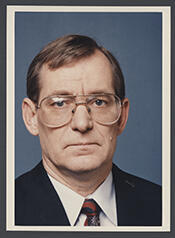
Here you will find contact information for Representative Scotty Baesler, including email address, phone number, and mailing address.
| Name | Scotty Baesler |
| Position | Representative |
| State | Kentucky |
| District | 6 |
| Party | Democratic |
| Status | Former Representative |
| Term Start | January 5, 1993 |
| Term End | January 3, 1999 |
| Terms Served | 3 |
| Born | July 9, 1941 |
| Gender | Male |
| Bioguide ID | B000028 |
About Representative Scotty Baesler
Henry Scott “Scotty” Baesler (born July 9, 1941) is an American Democratic politician and attorney who represented Kentucky’s 6th Congressional District, including Lexington, Richmond, and Georgetown, in the United States House of Representatives from January 3, 1993, to January 3, 1999. A member of the Democratic Party and often identified with the moderate Blue Dog Coalition, he previously served as mayor of Lexington from 1982 to 1993 and built a career focused on government operations and politics, economics and public finance, education, and agriculture and food policy. Over three terms in Congress, he contributed to the legislative process through work on agriculture, budget, and veterans’ issues and by sponsoring and supporting key legislation such as the Fairness for Working Families Act, the LEAF Act, and the National Domestic Violence Victim Notification Act.
Baesler was born in Lexington, Fayette County, Kentucky, and grew up in a family deeply involved in tobacco farming, an experience that would later shape his political priorities. He attended the University of Kentucky, where he distinguished himself both academically and athletically. He earned a bachelor’s degree in accounting in 1963 and remained at the university to study law, receiving a J.D. in 1966. While an undergraduate, Baesler played basketball for the University of Kentucky Wildcats under legendary coach Adolph Rupp and served as team captain in 1963. Over his final two seasons, he averaged 10.3 points, 4 rebounds, and 3 assists per game, and shot 83 percent from the free-throw line, earning a reputation as a steady and disciplined player.
After completing law school, Baesler was admitted to the bar and began practicing law in Lexington while simultaneously working on his family’s tobacco farm. This dual experience as an attorney and active tobacco farmer later made him unique among members of Congress, as he was the only U.S. Representative of his era to have also been a tobacco farmer. From 1967 to 1973, he served as an administrator for the Fayette County Legal Aid Administration, a nonprofit organization providing free legal services to indigent persons facing criminal charges. His work in legal aid reflected an early commitment to access to justice and public service. In his personal life, Baesler married Alice “Alice” Baesler, a fellow University of Kentucky graduate, in 1963. Their marriage lasted 60 years until her death in 2023, and the couple had two children, Dudley Scott and Ashley Baesler. Baesler has described himself as an Independent Christian and a moderate in his political outlook.
Baesler’s formal political career began in local government in Lexington. He was elected vice mayor of Lexington, serving from 1974 to 1978, where he gained experience in municipal administration and urban policy. In 1978 he was elected a district court judge in Fayette County, a position he held until 1982. As a district court judge, he presided over a wide range of cases, further deepening his understanding of the legal system and community issues. In 1981, Baesler successfully ran for mayor of Lexington, assuming office in 1982. He served as mayor for 11 years, from 1982 to 1993, during which time he became chairman of the Kentucky Economic Planning Commission. In these roles he was involved in economic development initiatives, long-term planning, and efforts to modernize Lexington’s infrastructure and public services.
In 1991, Baesler sought statewide office, entering a four-way Democratic primary for governor of Kentucky. He received 149,352 votes and finished second to Brereton Jones, who went on to win the general election by more than 200,000 votes over Republican Larry Hopkins. The gubernatorial race raised Baesler’s profile across the state and set the stage for his subsequent bid for federal office. In 1992, after Representative Larry J. Hopkins declined to seek an eighth term in Congress, Baesler ran for the open seat in Kentucky’s 6th Congressional District. Running as a Democrat, he won the general election with 61 percent of the vote against Republican Charles Ellinger, beginning his service in the U.S. House of Representatives on January 3, 1993.
During his three terms in Congress, from 1993 to 1999, Baesler was frequently associated with the Blue Dog Coalition, a group of moderate and conservative Democrats who believed the party had moved too far to the left and emphasized fiscal responsibility and centrist policies. His core policy interests included government operations and politics, economics and public finance, education, agriculture and food, and public health. He served on the House Committee on Agriculture, where he was a member of the Nutrition and the Foreign Agriculture and Risk Management and Specialty Crops subcommittees. In that capacity he worked to protect and support the agricultural sector, particularly the tobacco industry and family farmers, drawing on his own background as a tobacco farmer. He also served on the House Veterans’ Affairs Committee, including the Hospitals and Health Care Subcommittee, addressing issues related to veterans’ medical care and benefits. From 1997 to 1999 he was a member of the House Budget Committee, participating in debates over federal spending, deficit reduction, and long-term fiscal policy.
Baesler sponsored and co-sponsored a number of notable legislative initiatives. Among his most prominent efforts were the proposed amendment to H.R. 3769 (105th Congress), the Fairness for Working Families Act, which addressed tax and economic issues affecting working families; H.R. 3867 (105th Congress), the LEAF Act, which focused on providing financial aid and educational opportunities for working tobacco farmers affected by declining tobacco production; and H.R. 4860 (105th Congress), the National Domestic Violence Victim Notification Act, which sought to amend the Violence Against Women Act of 1994 by establishing a national domestic violence victim notification system. He also vocally supported the Bipartisan Campaign Integrity Act of 1997, aimed at limiting excessive soft money campaign spending by interest groups and political parties. In addition, Baesler co-sponsored legislation on public health, taxation, and national security, and opposed certain tobacco tax increases proposed by the Clinton administration. He criticized Surgeon General Joycelyn Elders’ efforts to outlaw tobacco use and her advocacy for the legalization of marijuana, reflecting his alignment with the interests of tobacco growers and a more traditional approach to drug policy.
Baesler successfully defended his congressional seat in subsequent elections. In 1996, running as an incumbent, he defeated Republican challenger Ernie Fletcher by a vote of 125,999 to 100,231. In 1998, he chose not to seek re-election to the House and instead ran for the U.S. Senate seat being vacated by retiring Democratic Whip Wendell Ford. Baesler won the Democratic primary by a margin of 4.9 percentage points over Louisville businessman Charlie Owen and Lieutenant Governor Steve Henry. In the general election, however, he was narrowly defeated by Republican Representative Jim Bunning, losing by just 0.6 percentage points in one of the closest Senate races of that cycle. After leaving Congress on January 3, 1999, Baesler attempted to return to the House in 2000, running again for his former 6th District seat. By then, Ernie Fletcher had been elected to the seat in 1998, and Baesler challenged him in the general election, seeking to regain his old position.
In his later life, Baesler has remained identified as a moderate Democrat and Independent Christian, known for his pragmatic approach to governance and his advocacy for agriculture, particularly tobacco farmers, as well as for fiscal responsibility and campaign finance reform. His long career in public service—from legal aid administrator and local judge to vice mayor, mayor, and three-term U.S. Representative—has been documented in the Biographical Directory of the United States Congress and through his voting record and public appearances, including coverage by national media and C-SPAN.