Representative Henry Towne Bannon
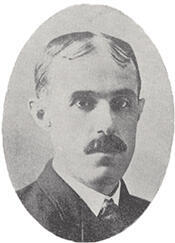
Here you will find contact information for Representative Henry Towne Bannon, including email address, phone number, and mailing address.
| Name | Henry Towne Bannon |
| Position | Representative |
| State | Ohio |
| District | 10 |
| Party | Republican |
| Status | Former Representative |
| Term Start | December 4, 1905 |
| Term End | March 3, 1909 |
| Terms Served | 2 |
| Born | June 5, 1867 |
| Gender | Male |
| Bioguide ID | B000118 |
About Representative Henry Towne Bannon
Henry Towne Bannon (June 5, 1867 – September 6, 1950) was a Republican member of the United States House of Representatives from Ohio, serving two terms from 1905 to 1909. A lifelong resident of Portsmouth, Ohio, he represented his constituents in Congress during a significant period in American political and economic development and contributed to the legislative process as a member of the House of Representatives.
Bannon was born in Portsmouth, Scioto County, Ohio, the grandson of Irish immigrants Edward and Bridget Dervin Bannon. His father, James W. Bannon (1841–1916), was a prominent attorney, businessman, and judge of the Scioto County Common Pleas Court from 1884 to 1887. Growing up in a family deeply involved in the law and public affairs, Henry Bannon was one of four children, with two brothers, Arthur H. Bannon and James W. Bannon Jr., and a sister, Charlotte Bannon. His early years in Portsmouth’s public schools laid the foundation for a career that would combine law, politics, business, and historical scholarship.
Bannon pursued higher education at Ohio State University in Columbus, which he attended in 1885 and 1886, before transferring to the University of Michigan at Ann Arbor. He graduated from the University of Michigan in 1889. He studied law and, following in the professional path of his father, was admitted to the Ohio bar in 1891. Returning to his hometown, he entered into the practice of law in Portsmouth, working alongside his father and his brother Arthur, both of whom were also attorneys. This family legal practice helped establish his reputation in Scioto County and provided a platform for his subsequent public service.
Bannon’s formal public career began at the county level. He served as prosecuting attorney of Scioto County from 1897 to 1902, a role in which he was responsible for representing the state in criminal matters and overseeing prosecutions in the county courts. His work as prosecuting attorney further enhanced his standing in local Republican circles and introduced him to the broader issues of law, order, and governance that would later inform his congressional service.
In national politics, Bannon was elected as a Republican to the Fifty-ninth and Sixtieth Congresses, serving from March 4, 1905, to March 3, 1909. As a Representative from Ohio, he participated in the democratic process during a period marked by the Progressive Era’s early reforms, industrial expansion, and evolving federal policy. During his two terms in office, he represented the interests of his constituents in Portsmouth and Scioto County and contributed to the legislative deliberations of the House of Representatives. He chose not to be a candidate for renomination in 1908, thus concluding his congressional service after four years.
After leaving Congress, Bannon resumed the practice of law in Portsmouth. He remained an active figure in Republican Party affairs at the national level, serving as a delegate to the Republican National Conventions in 1924, 1928, 1932, 1936, and 1940. In addition to his legal and political activities, he became a significant figure in local business. He served as a director of several financial and commercial institutions, including the First National Bank, the National Bank of Portsmouth, the Oak Hill Savings Bank, and the Selby Shoe Company, reflecting his influence in the economic life of southern Ohio.
Bannon also engaged in extensive literary and historical pursuits, becoming a noted local historian of Portsmouth and Scioto County. He authored two widely read books on regional history. His first major work, “Scioto Sketches: An Account of Discovery and Settlement of Scioto County, Ohio,” published in 1920, described Native American settlements, early interactions between Indigenous peoples and European settlers, the historic flora and fauna of the region, and the Indian mounds and relics that characterized the local landscape. His second book, “Stories Old and Often Told: Being Chronicles of Scioto County, Ohio,” published in 1927, expanded on his earlier research to include accounts of the War of 1812, the development of early transportation networks, the rise of local industry, and other aspects of the county’s growth and identity.
His interest in Native American history and archaeology was further reflected in his efforts to document and publicize the Indian Head Rock, a notable local artifact located in the Ohio River. Bannon examined the rock in 1894 and again in 1920, and he wrote an account of it for the Ohio State Archaeological and Historical Society. This study was published in the society’s journal in 1921 and contributed to broader awareness of the region’s Indigenous history and cultural heritage.
Henry Towne Bannon spent his entire life closely associated with Portsmouth, Ohio, in law, politics, business, and historical scholarship. He died in Portsmouth on September 6, 1950. He was interred in Greenlawn Cemetery, leaving behind a legacy as a public servant, community leader, and chronicler of the history of Scioto County and its people.