Representative Henry A. Barnhart
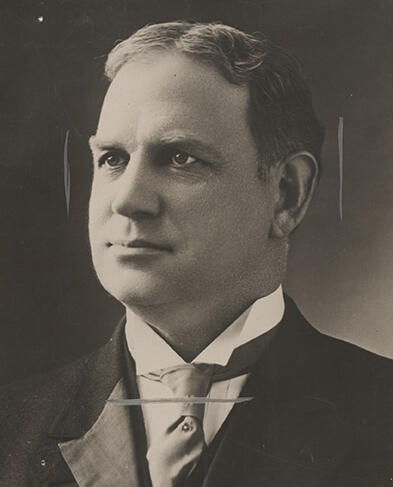
Here you will find contact information for Representative Henry A. Barnhart, including email address, phone number, and mailing address.
| Name | Henry A. Barnhart |
| Position | Representative |
| State | Indiana |
| District | 13 |
| Party | Democratic |
| Status | Former Representative |
| Term Start | December 2, 1907 |
| Term End | March 3, 1919 |
| Terms Served | 6 |
| Born | September 11, 1858 |
| Gender | Male |
| Bioguide ID | B000164 |
About Representative Henry A. Barnhart
Henry A. Barnhart (September 11, 1858 – March 26, 1934) was an American businessman and Democratic politician who served as a U.S. Representative from Indiana from 1907 to 1919, encompassing service in the Sixtieth through Sixty-fifth Congresses. Over six terms in office, he contributed to the legislative process during a significant period in American history, representing the interests of his Indiana constituents in the House of Representatives.
Barnhart was born near Twelve Mile, Cass County, Indiana, where he attended the local common schools. Seeking further education, he studied at Amboy Academy in Amboy, Indiana, and later at Wabash Normal Training School, an institution devoted to preparing teachers. This early focus on education and practical training shaped his initial professional pursuits and laid the groundwork for his later public service.
Before entering national politics, Barnhart pursued a varied career that reflected the economic and civic life of rural Indiana in the late nineteenth century. He worked as a teacher and farmer, occupations that connected him closely with the communities he would later represent. From 1885 to 1887 he served as surveyor of Fulton County, Indiana, gaining experience in local government and land administration. He also became a newspaper publisher, a role that placed him at the center of local public discourse, and he engaged in a range of business activities that established him as a prominent figure in his region.
Barnhart’s business career extended into banking and institutional management. He served as a director of the United States Bank Trust Co., reflecting his involvement in financial affairs and local economic development. In 1893 he was appointed a director of the Indiana State Prison, a position that gave him administrative experience in state institutions and exposed him to issues of criminal justice and prison management. He also worked as a hospital executive, further broadening his background in organizational leadership and public service.
Barnhart entered Congress as a Democrat during a transformative era in American politics. He was elected to the Sixtieth Congress to fill the vacancy caused by the death of Representative Abraham L. Brick, thereby beginning his congressional service on November 3, 1908. He was subsequently reelected to the Sixty-first and to the four succeeding Congresses, serving continuously until March 3, 1919. During these six terms, he participated in the democratic process in Washington, D.C., as the nation confronted issues of industrialization, progressive reform, and World War I. Throughout his tenure, he represented his Indiana district’s interests while contributing to national legislative debates as a member of the Democratic Party.
In 1918 Barnhart was an unsuccessful candidate for reelection to the Sixty-sixth Congress, bringing his congressional career to a close at the end of his term in March 1919. After leaving the House of Representatives, he remained active in public life and drew on his long experience in education, business, and politics by working as a lecturer. In this capacity he continued to engage with civic and political issues and to share his perspectives with audiences in Indiana and beyond.
Henry A. Barnhart died on March 26, 1934, in Rochester, Indiana. He was interred in the Mausoleum in Rochester, leaving behind a record of service that spanned local office, business leadership, institutional administration, and more than a decade in the United States Congress during a pivotal period in the nation’s history.