Senator Henry L. Bellmon
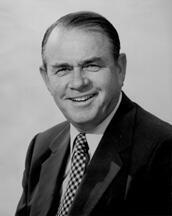
Here you will find contact information for Senator Henry L. Bellmon, including email address, phone number, and mailing address.
| Name | Henry L. Bellmon |
| Position | Senator |
| State | Oklahoma |
| Party | Republican |
| Status | Former Representative |
| Term Start | January 3, 1969 |
| Term End | January 3, 1981 |
| Terms Served | 6 |
| Born | September 3, 1921 |
| Gender | Male |
| Bioguide ID | B000351 |
About Senator Henry L. Bellmon
Henry Louis Bellmon (September 3, 1921 – September 29, 2009) was an American Republican politician from the State of Oklahoma who served as both the 18th and 23rd governor of Oklahoma and as a United States Senator from Oklahoma from 1969 to 1981. A World War II veteran and lifelong farmer, he was the first Republican to serve as Governor of Oklahoma and, after his direct predecessor George Nigh, only the second governor in state history to be reelected. Over a career spanning more than four decades, he became a central figure in the development of the modern Oklahoma Republican Party and a prominent voice on budgetary and education policy at both the state and federal levels.
Bellmon was born in Tonkawa, Oklahoma, and grew up in north-central Oklahoma, attending public schools and graduating from Billings High School in Billings, Oklahoma. He pursued higher education at Oklahoma A & M College (now Oklahoma State University), where he earned a bachelor’s degree in agriculture in 1942. His early life was rooted in farming, and the agricultural background he developed in Billings would remain a defining feature of his personal identity and public career, informing his later work on rural, economic, and resource issues.
Immediately after college, Bellmon entered military service during World War II. He served as a lieutenant in the United States Marine Corps from 1942 to 1946 and was assigned as a tank platoon leader in the Pacific Theater. He took part in four amphibious landings on Pacific islands, including the pivotal Battle of Iwo Jima. For his combat leadership and bravery, he was awarded the Silver Star and the Legion of Merit. Following his discharge from the Marine Corps, Bellmon returned to Oklahoma, resumed farming near Billings, and began to take an active interest in public affairs and Republican Party politics.
Bellmon’s political career began in the Oklahoma Legislature, where he served a single term in the Oklahoma House of Representatives from 1947 to 1949. In January 1947, he married Shirley Osborn; the couple remained married until her death in 2000. During the 1950s and early 1960s he emerged as a key organizer in a then-minority Republican Party, serving as State Republican Party Chairman in 1960. His organizational work helped lay the foundation for the GOP’s later electoral gains in Oklahoma and positioned him as a leading candidate for statewide office.
In 1962 Bellmon ran for governor and won a landmark victory, defeating Democrat Bill Atkinson with 392,316 votes (55.3 percent) to become Oklahoma’s first Republican governor since statehood in 1907. He was inaugurated on January 14, 1963, as the state’s 18th governor. During his first gubernatorial term he served as chairman of the Interstate Oil Compact Commission and as a member of the executive committee of the National Governors’ Association, reflecting his engagement with energy policy and interstate cooperation. His tenure also included controversial decisions, notably his 1965 pardon of convicted murderer Ernest Burkhart, who had been implicated in the Osage Indian murders. Under the state constitution then in force, Bellmon was barred from immediately succeeding himself and therefore did not run for reelection in 1966; Republican Dewey F. Bartlett was elected as his successor. Bellmon’s first term also coincided with Oklahoma’s final pre-Furman execution, when James French was electrocuted in 1966.
After leaving the governorship, Bellmon remained active in national politics. In 1968 he served as national chairman for Richard Nixon’s presidential election campaign. That same year he decided to seek federal office himself and ran for the United States Senate. A member of the Republican Party, he was elected to the Senate from Oklahoma in 1968, unseating incumbent Democratic Senator A. S. Mike Monroney, and began his first term on January 3, 1969. Henry Louis Bellmon served as a Senator from Oklahoma in the United States Congress from 1969 to 1981, contributing to the legislative process during two terms in office. His 1974 reelection campaign against Democratic Representative Ed Edmondson was extremely close; on election night he led by only 3,835 votes. Edmondson challenged the result, alleging irregularities in Tulsa County’s voting machines and straight-ticket voting procedures. Although the Oklahoma Supreme Court found problems with the voting process, it held that Edmondson could not demonstrate that the irregularities would have changed the outcome. Edmondson then appealed to the U.S. Senate in January 1975. The Senate initially voted to seat Bellmon without prejudice to the challenge, and after an investigation the Senate Rules and Administration Committee reported that it could not conclusively identify a winner. The full Senate ultimately voted to end the challenge and confirm Bellmon’s election, with nine Democrats joining all Republicans to seat him, even though Democrats held a 62–38 majority and seven Democrats were absent.
During his Senate career, Bellmon participated fully in the democratic process and represented the interests of his Oklahoma constituents during a significant period in American history, including the Vietnam War’s final years, the Watergate era, and the economic turbulence of the 1970s. He often adopted moderate positions that placed him at odds with many in the increasingly conservative Oklahoma Republican Party. He supported President Gerald Ford over Ronald Reagan in the 1976 Republican presidential nomination contest, despite the Oklahoma delegation’s commitment to Reagan. He opposed a proposed constitutional amendment to prohibit forced busing used to achieve racial desegregation in public schools and supported the Panama Canal treaties, which transferred control of the canal to Panama. In his second term he became the ranking Republican on the Senate Budget Committee and was a co-founder and co-chairman of the Committee for a Responsible Federal Budget, underscoring his interest in fiscal discipline and long-term budget policy. On August 25, 1975, in his capacity as Senator, Bellmon administered the oath of office to the newly elected principal chief of the Choctaw Nation, David Gardner. He was inducted into the Oklahoma Hall of Fame in 1976. Choosing not to seek a third Senate term, he declined to run for reelection in 1980 and was succeeded by Don Nickles, a more conservative Republican. His Senate service concluded on January 3, 1981.
After leaving the Senate, Bellmon continued to serve in state government and remained a prominent public figure. In 1982 Governor George Nigh, a Democrat, appointed him interim director of the Oklahoma Department of Human Services, reflecting bipartisan confidence in his administrative abilities. With the Republican Party seeking to regain the governorship after four consecutive Democratic terms following the Bartlett administration, party leaders urged Bellmon to run again for governor in 1986. He agreed and narrowly won the election in November 1986 with 431,762 votes (47.5 percent) over Democrat David Walters, who received 405,295 votes (44.5 percent). Bellmon thus returned to office as the 23rd governor of Oklahoma and served from January 12, 1987, to January 14, 1991. During his second gubernatorial tenure he chaired the Southern States Energy Board, continuing his long-standing involvement in energy and regional policy. He also oversaw Oklahoma’s first post-Furman execution when Charles Coleman was put to death by lethal injection in 1990, marking the state’s transition to a new method of capital punishment.
A major hallmark of Bellmon’s second governorship was his leadership on education reform. Working closely with Democrats in the Oklahoma Legislature and over the opposition of most Republicans, he championed and secured passage of House Bill 1017, a sweeping education reform package that increased funding, reduced class sizes, and imposed new standards and accountability measures on public schools. Although the state constitution had been amended in 1966 to allow governors to succeed themselves, Bellmon chose not to seek reelection in 1990, even though he would have been eligible for another term; lifetime eight-year term limits for governors were not enacted until 2010. The Republican candidate to succeed him, Bill Price, campaigned on repealing HB 1017 but was defeated by David Walters, whom Bellmon had narrowly defeated four years earlier.
In his later years, Bellmon returned to his agricultural business interests and remained active in education and public life. He taught at several Oklahoma institutions of higher learning, including Oklahoma City University, Central State University (now the University of Central Oklahoma), Oklahoma State University, and the University of Oklahoma, sharing his experience in government, policy, and agriculture with new generations of students. After the death of his first wife, Shirley, in 2000, Bellmon married a longtime friend, Eloise Bollenbach, in 2002. A profile published in The Oklahoman on March 1, 2009, reported that he was living with Eloise in Kingfisher, Oklahoma, and that despite suffering from Parkinson’s disease and a heart ailment, he continued to operate his family farm in Billings. He was posthumously inducted into the Oklahoma CareerTech Hall of Fame in 2011, recognizing his contributions to workforce and technical education. In 2009 the Tulsa Southside Rotary Club and Sustainable Tulsa, with the permission of Bellmon’s daughters, established the Henry Bellmon Sustainability Awards in his honor, reflecting his legacy in public service and responsible stewardship.
Henry Louis Bellmon died on September 29, 2009, in Enid, Oklahoma, at the age of 88, after a long struggle with Parkinson’s disease. He was buried at Union Cemetery in Billings, Oklahoma, near the community where he had grown up and maintained his farm. His long career as a legislator, governor, and United States Senator left a lasting imprint on Oklahoma’s political landscape, particularly in the areas of fiscal policy, education reform, and the development of a competitive two-party system in the state.