Representative Henry Harrison Bingham
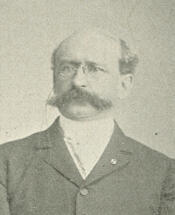
Here you will find contact information for Representative Henry Harrison Bingham, including email address, phone number, and mailing address.
| Name | Henry Harrison Bingham |
| Position | Representative |
| State | Pennsylvania |
| District | 1 |
| Party | Republican |
| Status | Former Representative |
| Term Start | March 18, 1879 |
| Term End | March 3, 1913 |
| Terms Served | 17 |
| Born | December 4, 1841 |
| Gender | Male |
| Bioguide ID | B000469 |
About Representative Henry Harrison Bingham
Henry Harrison Bingham (December 4, 1841 – March 22, 1912) was an American politician from Pennsylvania who served as a Republican member of the U.S. House of Representatives for Pennsylvania’s 1st congressional district from 1879 to 1912. Over the course of 17 consecutive terms, he represented his Philadelphia-based constituency during a significant period in American history, contributing to the legislative process as a member of the Republican Party and participating actively in the democratic governance of the post–Civil War and Gilded Age eras. His long tenure placed him among the more enduring figures in the House of Representatives of his time.
Bingham was born on December 4, 1841, in Philadelphia, Pennsylvania. He was educated in the public schools of Philadelphia and attended the Jefferson College (later Washington & Jefferson College) in Canonsburg, Pennsylvania, though his formal education was interrupted by the outbreak of the American Civil War. Growing up in a major urban and commercial center, he was exposed early to the political and economic currents that would later shape his public career.
With the onset of the Civil War, Bingham entered the Union Army, beginning a military career that would define his early adulthood and establish his national reputation. He served in the 140th Pennsylvania Volunteer Infantry and later on the staff of Major General Winfield S. Hancock. Bingham fought in several key engagements of the war, including the Battle of Gettysburg and the Battle of the Wilderness. At the Wilderness, on May 6, 1864, he displayed conspicuous gallantry in rallying broken troops and aiding in the rescue of wounded soldiers under heavy fire. For these actions he received the Medal of Honor, the United States military’s highest award for valor. He rose through the ranks during the conflict and was brevetted a brigadier general of volunteers for his meritorious service, placing him among the Union’s Civil War brevet generals.
After the war, Bingham returned to Philadelphia and studied law, gaining admission to the bar and beginning a legal and civic career closely tied to the city’s Republican organization. He became active in local politics and municipal administration, serving in various appointed and party positions that strengthened his influence in Philadelphia’s political life. His work in these roles, combined with his Civil War record and connections within the Republican Party, helped pave the way for his election to national office.
Bingham was first elected as a Republican to the U.S. House of Representatives in 1878 and took his seat in March 1879, representing Pennsylvania’s 1st congressional district. He would hold this seat continuously until his death in 1912, serving 17 terms in Congress. During this long period, he participated in debates and votes on issues arising from Reconstruction’s aftermath, industrial expansion, tariff policy, veterans’ affairs, and the growing role of the federal government in economic and social matters. As a senior Republican from an important industrial and commercial district, he was a reliable party man and a representative of urban and business interests, and he played a part in shaping legislation affecting both his Philadelphia constituents and the broader national economy. His service in Congress occurred during a transformative era that included the Gilded Age, the rise of large corporations, and the early stirrings of the Progressive Era, and he was repeatedly returned to office as a sign of his standing with voters and within the party.
Over the course of his congressional career, Bingham became one of the more experienced members of the House, participating in the institutional life of the chamber as well as in routine legislative work. He was involved in the consideration of measures important to veterans, reflecting his own military background, and supported policies consistent with the Republican emphasis on protective tariffs and industrial development. His long service also made him a familiar figure in the Capitol, and his name appears in contemporary accounts and memorial volumes that document the history of Congress in the late nineteenth and early twentieth centuries.
Henry Harrison Bingham died in office on March 22, 1912, while still serving as the representative for Pennsylvania’s 1st congressional district. His death placed him among the members of the United States Congress who died in office in the early twentieth century. The following year, in 1913, memorial addresses were delivered in the House of Representatives and the Senate honoring his life and public service; these were later published under the title “Henry H. Bingham, late a representative from Pennsylvania,” preserving tributes from his colleagues and providing a contemporary assessment of his career. His legacy endures in the records of Congress, in the rolls of Civil War Medal of Honor recipients, and in the lists of Union brevet generals who helped preserve the Union during the nation’s most severe crisis.