Representative Henry Sherman Boutell
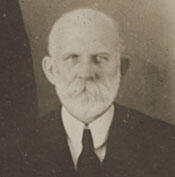
Here you will find contact information for Representative Henry Sherman Boutell, including email address, phone number, and mailing address.
| Name | Henry Sherman Boutell |
| Position | Representative |
| State | Illinois |
| District | 9 |
| Party | Republican |
| Status | Former Representative |
| Term Start | March 15, 1897 |
| Term End | March 3, 1911 |
| Terms Served | 7 |
| Born | March 14, 1856 |
| Gender | Male |
| Bioguide ID | B000672 |
About Representative Henry Sherman Boutell
Henry Sherman Boutell (March 14, 1856 – March 11, 1926) was an American lawyer, legislator, and diplomat who served as a Republican Representative from Illinois in the United States Congress from 1897 to 1911 and later as Envoy Extraordinary and Minister Plenipotentiary to Portugal under President William Howard Taft. He was born in Boston, Massachusetts, and was a grandson of the noted Congregational clergyman and abolitionist Rev. James Freeman Clarke. His family background and early environment exposed him to public affairs and intellectual life from a young age, influences that would shape his later career in law, politics, and diplomacy.
Boutell received his early education in the schools of Boston before moving west. He attended Northwestern University in Evanston, Illinois, graduating in 1874. He then pursued legal studies at Harvard Law School, where he received formal training in the law before returning to Illinois to begin his professional career. His education at two prominent institutions, one in the Midwest and one in New England, helped establish the connections and credentials that supported his entry into both the legal profession and public life.
After completing his legal studies, Boutell was admitted to the bar and commenced the practice of law in Chicago, Illinois. He built a successful legal practice in that rapidly growing city, gaining experience in commercial and corporate matters at a time when Chicago was emerging as a major national center of industry and trade. His professional standing and involvement in civic affairs led him into politics as a member of the Republican Party, which dominated Illinois politics in the post–Civil War era. Before his election to national office, he became known in local and state circles as a capable lawyer and party loyalist, positioning himself for higher responsibilities.
Boutell was elected as a Republican to the United States House of Representatives from Illinois and served seven consecutive terms, from March 4, 1897, to March 3, 1911. His service in Congress occurred during a significant period in American history marked by the Spanish–American War, the rise of American overseas interests, the Progressive Era, and major debates over tariffs, trusts, and regulatory policy. As a member of the House of Representatives, Henry Sherman Boutell participated in the democratic process and represented the interests of his constituents, contributing to the legislative process over the course of his fourteen years in office. During his tenure he served on important committees, including those dealing with appropriations and foreign affairs, and took part in deliberations on fiscal policy, military preparedness, and the expanding role of the United States on the world stage.
In 1911, at the close of his congressional service, Boutell was appointed by President William Howard Taft as Envoy Extraordinary and Minister Plenipotentiary to Portugal. In this diplomatic post he represented the United States in Lisbon during a period of political transition in Portugal, which had recently undergone the revolution of 1910 and the establishment of a republic. His appointment reflected both his long legislative experience and his party’s confidence in his judgment on international questions. As minister, he worked to maintain stable relations and protect American interests in a changing European political environment, applying his legal and legislative background to the conduct of diplomacy.
After his diplomatic service, Boutell returned to the United States and gradually withdrew from active public life, though he remained engaged in legal, educational, and civic activities. He maintained ties to Northwestern University and to professional organizations associated with the law and foreign affairs, and he continued to be regarded as an experienced voice on questions of public policy and international relations. Henry Sherman Boutell died on March 11, 1926, three days before his seventieth birthday. His career as a lawyer, seven-term Congressman from Illinois, and American minister to Portugal placed him among the notable public servants of his generation, active in both the legislative and diplomatic arenas during a formative era in United States history.