Representative Henry Leland Bowles
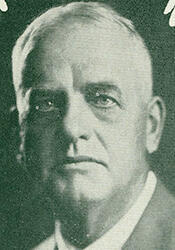
Here you will find contact information for Representative Henry Leland Bowles, including email address, phone number, and mailing address.
| Name | Henry Leland Bowles |
| Position | Representative |
| State | Massachusetts |
| District | 2 |
| Party | Republican |
| Status | Former Representative |
| Term Start | December 7, 1925 |
| Term End | March 3, 1929 |
| Terms Served | 2 |
| Born | January 6, 1866 |
| Gender | Male |
| Bioguide ID | B000700 |
About Representative Henry Leland Bowles
Henry Leland Bowles (January 6, 1866 – May 17, 1932) was an American politician and businessman who served as a Republican United States Representative from Massachusetts from 1925 to 1929. Over the course of two terms in the House of Representatives, he contributed to the legislative process during a significant period in American history, representing the interests of his Massachusetts constituents.
Bowles was born in Athens, Vermont, on January 6, 1866. He attended the district schools at Kendricks Corner and continued his education at Vermont Academy, an independent secondary school in his home state. His early years were marked by work and mobility in search of opportunity. At the age of eighteen he moved west to Osage, Iowa, where he engaged in agricultural pursuits, gaining firsthand experience in farming and rural economic life. Seeking further prospects, he later moved to California, where for four years he worked as a lumberjack, rancher, and farmer, occupations that exposed him to the developing economy and frontier conditions of the American West in the late nineteenth century.
After several years in the Midwest and on the West Coast, Bowles returned east and settled in Massachusetts. He worked in various businesses in the cities of Waltham, Salem, and Lynn, building experience in commerce and management. Maintaining ties to his native state, he served as a trustee of Vermont Academy, reflecting his continued interest in education and civic affairs. In 1898 he moved to Springfield, Massachusetts, where he established and operated a chain of restaurants. This enterprise made him a prominent local businessman and provided the economic foundation for his later public career. In December 1908 he married Edna Howard, further anchoring his personal and professional life in Springfield.
Bowles’s success in business and his civic engagement led to increasing involvement in state politics. A member of the Republican Party, he was elected to the Massachusetts Governor’s Council in 1913, and he returned to that body with additional terms in 1918 and 1919. In this role he participated in advising the governor and in overseeing various aspects of state administration. His standing within the Republican Party grew, and he was selected as a delegate to the Republican National Conventions in 1920 and 1924, taking part in the national deliberations that shaped the party’s presidential nominations and platform in the early twentieth century.
Bowles entered national office in 1925. He was elected as a Republican to the Sixty-ninth Congress to fill the vacancy caused by the death of Representative George B. Churchill, and he took his seat in the U.S. House of Representatives on September 29, 1925. He was subsequently reelected to the Seventieth Congress, serving continuously from September 29, 1925, to March 3, 1929. During these two terms in Congress, Bowles participated in the democratic process and contributed to the legislative work of the House at a time marked by post–World War I economic growth and evolving federal policy. As a member of the House of Representatives from Massachusetts, he represented the interests of his district’s constituents within the broader national debates of the 1920s. He chose not to be a candidate for renomination in 1928.
After leaving Congress, Bowles resumed his former business pursuits, returning to the private sector in Springfield. In 1928 he expanded his interests beyond New England by purchasing the Orange Grove Plantation on Saint Helena Island near Frogmore in Beaufort County, South Carolina, reflecting both his financial means and his continuing involvement in agricultural and land-based enterprises. He divided his attention between his established business activities in Massachusetts and his property in the South during his later years.
Henry Leland Bowles died in Springfield, Massachusetts, on May 17, 1932. He was interred in Springfield Cemetery, closing a life that spanned from rural Vermont in the mid-nineteenth century to national political service and business leadership in the early twentieth century.