Representative Henry Bruckner
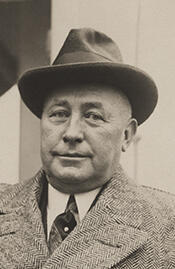
Here you will find contact information for Representative Henry Bruckner, including email address, phone number, and mailing address.
| Name | Henry Bruckner |
| Position | Representative |
| State | New York |
| District | 22 |
| Party | Democratic |
| Status | Former Representative |
| Term Start | April 7, 1913 |
| Term End | March 3, 1919 |
| Terms Served | 3 |
| Born | June 17, 1871 |
| Gender | Male |
| Bioguide ID | B000974 |
About Representative Henry Bruckner
Henry Bruckner (June 17, 1871 – April 14, 1942) was an American politician from New York who served three terms in the U.S. House of Representatives as a Democratic Representative from New York between 1913 and 1919. His congressional service, which spanned the Sixty-third, Sixty-fourth, and Sixty-fifth Congresses, took place during a significant period in American history marked by progressive-era reforms and the nation’s entry into World War I.
Bruckner was born in New York City on June 17, 1871. He attended the common and high schools of New York City, receiving a basic public education that prepared him for both business and public life. In 1892 he entered private enterprise, becoming engaged in the manufacture of mineral waters, a business pursuit that established his standing in the local commercial community and provided the foundation for his later involvement in public affairs.
Bruckner’s political career began at the state and municipal levels. A member of the Democratic Party, he was elected to the New York State Assembly, representing New York County’s 35th District, and served there in 1901. He subsequently held an important administrative post in New York City government as commissioner of public works for the Borough of the Bronx from 1902 to 1905. In that capacity he was involved in the development and maintenance of public infrastructure during a period of rapid urban growth, experience that would later inform his legislative interests in transportation and public works.
Bruckner was elected as a Democrat to the U.S. House of Representatives from New York and served three terms in Congress. He held office from March 4, 1913, until December 31, 1917, sitting in the Sixty-third, Sixty-fourth, and Sixty-fifth Congresses. His service in Congress occurred during a significant period in American history, as the federal government expanded its role in economic regulation and prepared for participation in World War I. As a member of the House of Representatives, Bruckner participated in the legislative process and represented the interests of his New York constituents. During the Sixty-fifth Congress he served as chairman of the Committee on Railways and Canals, a position that placed him at the center of debates over transportation policy and infrastructure at a time when efficient movement of goods and people was critical to both domestic commerce and wartime mobilization. He resigned his seat on December 31, 1917, thus concluding his formal congressional tenure, which is sometimes broadly referenced as extending from 1913 to 1919 in recognition of the three terms to which he was elected.
After leaving Congress, Bruckner resumed his former business pursuits in New York City, returning to the manufacture of mineral waters and expanding his interests into banking. He remained deeply involved in public life, however, and soon assumed one of the most prominent local offices in the city. From 1918 to 1934 he served as president of the Borough of the Bronx, overseeing borough administration through the post–World War I era, the prosperity of the 1920s, and the onset of the Great Depression. In this role he continued to influence public works, transportation, and urban development, helping to shape the modern Bronx.
Henry Bruckner died in the Bronx, New York, on April 14, 1942. He was interred at Woodlawn Cemetery in the Bronx, a resting place for many of the city’s notable figures. His legacy in New York City is reflected in the naming of one of the Bronx’s principal transportation arteries, the Bruckner Expressway, in his honor, commemorating both his long service in public office and his particular association with infrastructure and transportation policy.