Representative Henry Plummer Cheatham
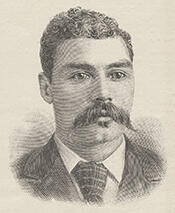
Here you will find contact information for Representative Henry Plummer Cheatham, including email address, phone number, and mailing address.
| Name | Henry Plummer Cheatham |
| Position | Representative |
| State | North Carolina |
| District | 2 |
| Party | Republican |
| Status | Former Representative |
| Term Start | December 2, 1889 |
| Term End | March 3, 1893 |
| Terms Served | 2 |
| Born | December 27, 1857 |
| Gender | Male |
| Bioguide ID | C000340 |
About Representative Henry Plummer Cheatham
Henry Plummer Cheatham (December 27, 1857 – November 29, 1935) was an African American educator, farmer, and Republican politician who represented North Carolina in the United States House of Representatives from 1889 to 1893. Born into slavery near Henderson, in what was then Granville County (later Vance County), North Carolina, he was the son of an enslaved woman and, according to most accounts, a white man from a local prominent family. Growing up during the Civil War and Reconstruction, Cheatham came of age in a period of profound social and political transformation for African Americans in the South, experiences that shaped his later commitment to education, public service, and civil rights.
After emancipation, Cheatham pursued an education at schools established for freedpeople in North Carolina. He attended public schools and then enrolled at Shaw University in Raleigh, one of the first historically Black colleges in the South, where he studied in the 1870s and early 1880s. At Shaw, he prepared for a career in teaching and public life, reflecting the broader postwar emphasis among African Americans on education as a pathway to advancement. Following his studies, he worked as an educator and also engaged in farming, occupations that connected him closely to the rural Black communities of eastern North Carolina that would later form the core of his political base.
Cheatham’s public career began at the local and state levels during the waning years of Reconstruction and the rise of Jim Crow. He served as a school principal and became involved in Republican Party politics in North Carolina’s Second Congressional District, an area with a substantial African American population. His work as an educator and farmer, combined with his growing political activity, helped establish him as a respected leader among both Black and some white constituents. By the late 1880s, he had emerged as a prominent Republican figure in the state, positioned to contest a congressional seat at a time when African American political participation was increasingly under attack.
In 1888, Cheatham was narrowly elected to Congress from North Carolina’s 2nd congressional district, defeating the incumbent Democrat Furnifold M. Simmons. Simmons would later become a leading architect of white supremacy campaigns in North Carolina and play a central role in securing a new state constitution that effectively disfranchised Black citizens. During the 1888 campaign, some North Carolina newspapers reported that Cheatham had allegedly told Black voters that Simmons and President Grover Cleveland would re-enslave them; other press outlets at the time dismissed these accounts as exaggerations or misrepresentations of Cheatham’s words. Nonetheless, his victory made him one of only five African Americans elected to Congress from the South in the Jim Crow era of the last decade of the nineteenth century, a period when disfranchisement and racial violence were sharply reducing Black voting and officeholding.
Cheatham served two consecutive terms in the U.S. House of Representatives, from March 4, 1889, to March 3, 1893. As a member of the House of Representatives and of the Republican Party, he participated actively in the legislative process and represented the interests of his constituents of both races in eastern North Carolina. He served on the House Committees on Education, Expenditures on Public Buildings, and Agriculture, the latter being one of the more powerful committees and of particular importance to his largely rural district. In Congress, he supported federal aid to education and backed the McKinley Tariff, aligning himself with key elements of the national Republican economic program. He was also a strong supporter of the Federal Elections Bill of 1890, introduced by Representative Henry Cabot Lodge, which sought federal enforcement to safeguard the voting rights of African Americans in the South. Although the Lodge bill narrowly passed the House, it died in the Senate, and Republicans were unable to secure such federal protections as the Southern Democratic voting bloc grew more powerful. Cheatham tended closely to local needs and introduced legislation on behalf of his district, but he did not succeed in getting his own bills enacted into law.
In the 1890 election, Cheatham successfully defended his seat, defeating Democrat James M. Mewborne by a vote of 16,943 to 15,713. Despite his personal victory, Democrats regained control of the House of Representatives nationwide, sharply reducing the prospects for federal civil rights measures. During the Fifty-second Congress (1891–1893), Cheatham was the only Black member of the House, as he had also been during the first half of the Fifty-first Congress, underscoring the extent to which African American representation had been curtailed in the post-Reconstruction South. His presence in Congress during these years symbolized both the persistence of Black political leadership and the mounting pressures of disfranchisement that would soon close this brief window of opportunity.
Cheatham’s congressional career came to an end after the 1892 elections. That year he sought a third term but was unsuccessful, in part because the North Carolina legislature had altered the boundaries of his congressional district. The redistricting, combined with competition from a Populist candidate who split the opposition vote, contributed to the victory of Democrat Frederick A. Woodard. Cheatham ran against Woodard again in 1894 but was again defeated. In 1896, he competed for the Republican nomination for the district against his brother-in-law, George Henry White. White secured the nomination and went on to win the seat, becoming the next, and last, African American congressman from North Carolina in the nineteenth century. After Cheatham, White, and the small group of Black southern representatives of that era left office, no African Americans would be elected to Congress from the South until 1972, and none from North Carolina until 1992, reflecting the long-term impact of Jim Crow disfranchisement.
In his later life, Cheatham continued to be associated with public service and African American advancement, drawing on his experience as an educator, farmer, and former congressman. He remained a notable figure in North Carolina and within Republican circles, representing a generation of Black leaders whose early gains in the post–Civil War period were gradually eroded by segregationist policies and voter suppression. Henry Plummer Cheatham died on November 29, 1935, closing a life that had spanned slavery, emancipation, Reconstruction, and the entrenchment of Jim Crow. His career in Congress, from 1889 to 1893, stands as a significant chapter in the history of African American political representation in the United States and in the history of North Carolina during a transformative and often turbulent era.