Representative Henry Asa Coffeen
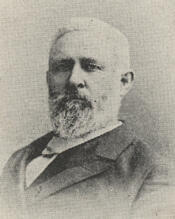
Here you will find contact information for Representative Henry Asa Coffeen, including email address, phone number, and mailing address.
| Name | Henry Asa Coffeen |
| Position | Representative |
| State | Wyoming |
| District | At-Large |
| Party | Democratic |
| Status | Former Representative |
| Term Start | August 7, 1893 |
| Term End | March 3, 1895 |
| Terms Served | 1 |
| Born | February 14, 1841 |
| Gender | Male |
| Bioguide ID | C000585 |
About Representative Henry Asa Coffeen
Henry Asa Coffeen (February 14, 1841 – December 9, 1912) was an American educator, civic leader, and politician who served as Wyoming’s United States Representative in the Fifty-third Congress from 1893 to 1895. A member of the Democratic Party, he represented the at-large congressional district of the newly admitted State of Wyoming and contributed to the legislative process during one term in office at a significant period in American history.
Coffeen was born on February 14, 1841, in Gallipolis, Gallia County, Ohio, to Alvah P. Coffeen and Olive Elizabeth Martin. During his childhood his family moved westward, first to Indiana and then, in 1853, to Homer, Illinois. He attended local country schools and pursued higher education at Abingdon College in Abingdon, Illinois, from which he was graduated from the scientific department. This academic training laid the foundation for his early professional life as a teacher and later as a college instructor.
Following his graduation, Coffeen engaged in teaching and entered the field of higher education. He became a member of the faculty of Hiram College in Hiram, Ohio, an institution noted for its emphasis on classical and scientific studies and its role in educating future public leaders. His work as an educator reflected his broader interest in intellectual development and civic improvement, themes that would recur throughout his later public career.
In 1884 Coffeen moved to Sheridan, in what was then the Wyoming Territory, where he quickly became involved in community and territorial affairs. Demonstrating a commitment to the region’s economic and social development, he organized the first agricultural fair in Wyoming in 1885, promoting modern farming practices and regional cooperation among settlers and ranchers. As the territory moved toward statehood, he emerged as a prominent Democrat and, in 1889, was selected as one of the Democratic delegates to the Wyoming constitutional convention, which drafted the state constitution to be submitted to Congress in support of Wyoming’s admission to the Union.
After Wyoming achieved statehood in 1890, Coffeen continued to build his public profile. In June 1893 he served as a delegate from Wyoming to the World’s Fair Congress of Bankers and Financiers held in Chicago in conjunction with the World’s Columbian Exposition, reflecting his engagement with national economic and financial issues. In the political sphere, he ran for Congress in 1892 and narrowly defeated Republican incumbent Clarence D. Clark, securing election as a Democrat to the United States House of Representatives. He served in the Fifty-third Congress from March 4, 1893, to March 3, 1895, participating in the democratic process and representing the interests of his Wyoming constituents during a period marked by economic turmoil and debates over monetary policy and western development. Seeking reelection in 1894, he was defeated in a landslide by Republican challenger Frank Wheeler Mondell, ending his congressional service after a single term.
Following his departure from Congress, Coffeen returned to private life in Sheridan, where he remained a respected figure in local civic and political circles. His later years were spent in Wyoming, where he continued to be associated with educational, agricultural, and community initiatives, drawing on his long experience as a teacher, organizer, and public servant.
Coffeen’s personal life included two marriages. His first wife, Harriet King, died on June 4, 1901. He later married Alice Dwight on June 28, 1904. Henry Asa Coffeen died on December 9, 1912, in Sheridan, Wyoming. His papers and family materials, preserved in the Coffeen family papers at the American Heritage Center at the University of Wyoming, document his role in the state’s early political history and his contributions to Wyoming’s transition from territory to statehood.