Senator Henry Dodge
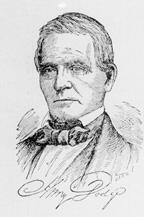
Here you will find contact information for Senator Henry Dodge, including email address, phone number, and mailing address.
| Name | Henry Dodge |
| Position | Senator |
| State | Wisconsin |
| Party | Democratic |
| Status | Former Representative |
| Term Start | May 31, 1841 |
| Term End | March 3, 1857 |
| Terms Served | 4 |
| Born | October 12, 1782 |
| Gender | Male |
| Bioguide ID | D000396 |
About Senator Henry Dodge
Moses Henry Dodge (October 12, 1782 – June 19, 1867) was an American politician, military officer, and territorial executive who became a prominent Democratic member of both the U.S. House of Representatives and the U.S. Senate, as well as Territorial Governor of Wisconsin and a veteran of the Black Hawk War. Born in Vincennes, in what was then the Indiana Territory, he was the son of Israel Dodge, a Revolutionary War veteran and early frontiersman, and Nancy Ann Hunter. He grew up on the American frontier, spending part of his youth in Kentucky and the Missouri country, where his family was involved in lead mining and land speculation. Through his father’s two marriages, Dodge became the half-brother of future Missouri Senator Lewis F. Linn, a relationship that later linked him to other leading figures in the politics of the trans-Mississippi West.
Dodge’s early life was closely tied to the expanding western frontier and to military service. In the War of 1812, he entered as a captain in the Missouri State Volunteers, commanding a mounted company that operated on the frontier. Over the course of the conflict he rose in responsibility and finished the war as a major general of the Missouri Militia. Among his most noted actions was his intervention in the summer of 1814 to save about 150 Miami Indians from almost certain massacre after their raid on the Boone’s Lick settlement, an episode that underscored both the volatility of frontier warfare and his emerging reputation as a capable, forceful commander. After the war he continued to be active in militia affairs and in the development of frontier communities, combining military leadership with interests in land and mineral resources.
In the late 1820s Dodge moved decisively into what would become Wisconsin. In early July 1827 he emigrated with his large family and slaves inherited from his father to the U.S. Mineral District in the upper Mississippi Valley. That same year he served as a commander of militia during the Red Bird uprising, helping to organize local defenses. In October 1827 he settled a large tract in what is now downtown Dodgeville, Wisconsin, then known as “Dodge’s Camp,” where he worked a substantial lead-mining claim until around 1830. He then moved several miles south to a forested area that came to be known as “Dodge’s Grove,” where he began constructing a large two-story frame house for his extended family. Despite the Northwest Ordinance of 1787 banning slavery in the entire Northwest Territory, including Wisconsin, Dodge brought five enslaved Black men—Toby, Tom, Lear, Jim, and Joe—from Missouri to labor in his lead mines. He was a slave owner, possessing the bodies and lives of these men, who worked as smelters long after he had promised to free them, a fact that has become a significant and troubling part of his historical legacy.
Dodge rose to wider prominence during the Black Hawk War of 1832. As colonel of the western Michigan Territory Militia, he rapidly organized a credible mounted fighting force in response to the conflict. Under his direction more than fifteen forts, fortified homes, and blockhouses were established in short order across the region. From these positions, Dodge and the mounted volunteers, together with four companies of territorial militia and one company of Illinois mounted rangers, took the field as the “Michigan Mounted Volunteers.” His command saw action in several of the war’s key engagements, including the battles of Horseshoe Bend, Wisconsin Heights, and Bad Axe. In June 1832 he accepted a commission as major of the Battalion of Mounted Rangers, a federal unit created by an act of Congress. Contemporary accounts suggest that Dodge’s conduct in battle was uncompromising; none of the 12 or 13 Native combatants shot at Horseshoe Bend survived. In the summer of 1832, he warned a delegation of Ho-Chunk chiefs, “You will have your country taken from you, your annuity money will be forfeited, and the lives of your people lost,” reflecting the harsh realities of U.S. Indian policy and frontier power dynamics. At the Battle of Bad Axe in August 1832, Dodge and his militia forces participated in, and contributed to, the massacre of nearly 1,000 Sauk men, women, and children as they attempted to cross the Mississippi River south of present-day La Crosse, Wisconsin, an event widely regarded as a tragic and brutal conclusion to the war.
Dodge’s military prominence and frontier leadership propelled him into territorial and then national politics. When the Wisconsin Territory was organized in 1836, he was appointed its first territorial governor, a position he held from 1836 to 1841 and again from 1845 to 1848. As Territorial Governor of Wisconsin, he oversaw the establishment of territorial institutions, the organization of counties and courts, and the management of land and Indian affairs during a period of rapid settlement and displacement of Native peoples. Between his gubernatorial terms, he served as the territory’s non-voting delegate to the U.S. House of Representatives, sitting in the Twenty-seventh and Twenty-eighth Congresses (1841–1845) as a Democratic member. In this role he advocated for the interests of the Wisconsin Territory, including land policy, infrastructure, and the terms of eventual statehood, while aligning himself with the broader Democratic Party positions of the era.
Upon Wisconsin’s admission to the Union in 1848, Dodge transitioned from territorial to state representation in the federal legislature. Henry Dodge served as a Senator from Wisconsin in the United States Congress from 1841 to 1857, and, as a member of the Democratic Party, he contributed to the legislative process during four terms in office. In fact, he was elected one of Wisconsin’s first two U.S. Senators and served in the Senate from June 8, 1848, to March 3, 1857. His service in Congress occurred during a significant period in American history marked by sectional conflict, debates over slavery and territorial expansion, and the approach of the Civil War. As a member of the Senate, Henry Dodge participated in the democratic process and represented the interests of his constituents, working on issues related to western development, public lands, and the organization of new territories. During part of his Senate tenure, from 1848 to 1855, he served concurrently with his son, Augustus C. Dodge, who was a U.S. Senator from Iowa. They were the first, and so far the only, father–son pair to serve at the same time in the United States Senate, an unusual familial and political distinction in congressional history.
Dodge’s family connections extended deeply into the political life of the trans-Mississippi West. In addition to his son Augustus’s Senate service from Iowa and his half-brother Lewis F. Linn’s tenure as a U.S. Senator from Missouri, his family was linked to other territorial leaders. James Clarke, who served as Governor of Iowa Territory, was his son-in-law, further intertwining the Dodge family with the leadership of emerging Midwestern states and territories. These relationships, combined with his own long record of military and political service, made Dodge a central figure in the network of Democratic politicians who shaped federal and territorial policy in the Old Northwest and Upper Mississippi Valley.
After leaving the Senate in 1857, Dodge retired from national public life. He spent his later years in the region he had helped to settle and govern, remaining a respected, if increasingly controversial, figure as views on Indian removal, frontier warfare, and slavery evolved in the years leading up to and following the Civil War. Moses Henry Dodge died on June 19, 1867, and was buried in Wisconsin. His life and career, encompassing frontier military command, territorial governance, and service in both houses of Congress, as well as his ownership of enslaved people and his role in violent campaigns against Native nations, have made him a subject of sustained historical study and reassessment.