Senator Henry Algernon du Pont
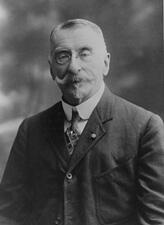
Here you will find contact information for Senator Henry Algernon du Pont, including email address, phone number, and mailing address.
| Name | Henry Algernon du Pont |
| Position | Senator |
| State | Delaware |
| Party | Republican |
| Status | Former Representative |
| Term Start | June 13, 1906 |
| Term End | March 3, 1917 |
| Terms Served | 2 |
| Born | July 30, 1838 |
| Gender | Male |
| Bioguide ID | D000559 |
About Senator Henry Algernon du Pont
Henry Algernon du Pont (July 30, 1838 – December 31, 1926) was an American military officer, businessman, and Republican politician from Delaware who served as a United States Senator from 1906 to 1917. A prominent member of the du Pont family, he combined a distinguished Civil War record, including receipt of the Medal of Honor, with a long career in railroading and public service. His senatorial tenure spanned a significant period in American history, during the administrations of Presidents Theodore Roosevelt, William H. Taft, and Woodrow Wilson.
Du Pont was born on July 30, 1838, at Eleutherian Mills, near Greenville, Delaware, the son of Henry du Pont and Louisa Gerhard du Pont. He was a grandson of Eleuthère Irénée du Pont, the French-born founder of E. I. du Pont de Nemours and Company, whose industrial enterprise shaped much of Delaware’s economic and social life. Raised in this influential family environment along the Brandywine, he was exposed early to both business and public affairs. He attended the University of Pennsylvania in Philadelphia before seeking a military education, reflecting both his family’s prominence and the growing national tensions that would soon erupt into civil war.
Du Pont entered the United States Military Academy at West Point, New York, and graduated first in his class in 1861, at the outset of the American Civil War. Upon graduation on May 6, 1861, he was commissioned a second lieutenant of engineers in the U.S. Army. Shortly thereafter, on May 14, 1861, he was promoted to first lieutenant in the 5th Regiment, U.S. Artillery. He initially served as a light artillery officer in the Union Army, assigned to the defenses of Washington, D.C., and New York Harbor. From July 6, 1861, to March 24, 1864, he was regimental adjutant of the 5th U.S. Artillery, performing key administrative duties until his promotion to captain. He subsequently became chief of artillery in the Army of West Virginia and served in General Philip Sheridan’s army in the Shenandoah Valley of northern Virginia.
Du Pont’s most notable military distinction came at the Battle of Cedar Creek, Virginia, on October 19, 1864. Then a captain in the 5th U.S. Artillery, he played a critical role in checking a Confederate advance at a moment when the Union line had been broken. For his “distinguished gallantry, and voluntary exposure to the enemy’s fire at a critical moment, when the Union line had been broken,” he was credited with encouraging his men to stand to their guns, checking the enemy’s advance, and bringing off most of his artillery pieces. For this action he received the Medal of Honor, issued on April 2, 1898. During the war he also received two brevets: to major, dated September 19, 1864, for gallant service in the battles of Opequon (Third Winchester) and Fisher’s Hill, and to lieutenant colonel, dated October 19, 1864, for distinguished service at Cedar Creek. After the war he continued as a career officer until resigning his commission on March 1, 1875. In the postwar years he became a companion of the Military Order of the Loyal Legion of the United States (MOLLUS), joining the District of Columbia Commandery and being assigned insignia number 10418.
At the age of 36, in 1874, du Pont married Mary Pauline Foster. The couple had two children, Henry Francis du Pont and Louise Evelina du Pont, and made their home at Winterthur, his estate near Greenville, Delaware. There he operated an experimental farm and developed the property that would remain closely associated with the family. The du Ponts were members of Christ Episcopal Church in Christiana Hundred, reflecting their social and religious ties within the local community. Winterthur would later gain national prominence when his son transformed it into a major cultural institution.
Following his resignation from the Army in 1875, du Pont returned full-time to Delaware and soon entered the railroad business. Within a few years he became president and general manager of the Wilmington & Northern Railroad Company, a position he held from 1879 until 1899. Over these two decades he oversaw the development and operation of a regional rail line that contributed to the transportation infrastructure of Delaware and neighboring states. His business career ran parallel to his growing involvement in Republican Party politics, and he emerged as a leading figure in both economic and political circles in the state. Throughout this period he continued to manage and improve his Winterthur estate, which later, beginning in 1951 under his son’s direction, became the Winterthur Museum, Garden and Library, recognized as a premier museum of American decorative arts.
Du Pont’s first direct bid for federal office came in 1895, when he sought election to the United States Senate by the Delaware General Assembly, which at that time chose U.S. Senators. He claimed to have been elected in May 1895 for the term that had begun March 4 of that year. The dispute centered on whether William T. Watson, the speaker of the Delaware Senate who had assumed the governorship upon the death of Governor Joshua H. Marvil on April 8, 1895, was entitled to cast a vote in the legislature’s joint session on May 9. Without Watson’s vote, du Pont would have been elected by a vote of 15 to 14; with his vote, the legislature was deadlocked. The Delaware Constitution prohibited the governor from sitting in the legislature, but questions arose as to whether Watson was actually governor or merely “exercising the office of governor.” Du Pont’s supporters filed a petition with the U.S. Senate Committee on Privileges and Elections in December 1895. Although the Republican-controlled committee found in du Pont’s favor, the Senate as a whole, on a party-line vote joined by Populists and a Silver Party member, refused to seat him, citing the right of a state legislature to determine its own membership. Du Pont submitted another petition in January 1897 without new evidence, and the committee rejected it, leaving the seat vacant.
Despite this setback, du Pont remained an active and influential Republican. On June 13, 1906, he was elected by the Delaware General Assembly to the United States Senate to fill the vacancy in the term beginning March 4, 1905. He thus entered the Senate during the 59th Congress and served with the Republican majority in the 59th, 60th, and 61st Congresses. During this period he contributed to the legislative process and represented the interests of Delaware’s constituents at a time of progressive-era reforms and expanding federal responsibilities. In the 61st Congress he served as chairman of the Committee on Expenditures in the Military Affairs Department, reflecting both his military background and his interest in oversight of defense-related spending. He was reelected in 1911 to a second term, serving with the Republican majority in the 62nd Congress and in the minority during the 63rd and 64th Congresses. In the 62nd Congress he again chaired the Committee on Expenditures in the War Department; in the 63rd Congress he was a member of the Committee on Military Affairs; and in the 64th Congress he served on the Committee on Transportation and Sale of Meat Products. His Senate service, which lasted most of two terms from June 13, 1906, to March 4, 1917, coincided with major national debates over regulation, preparedness, and America’s role in world affairs.
Du Pont’s final Senate campaign took place under the new system of popular election established by the Seventeenth Amendment. In the first popular election of a U.S. Senator in Delaware in 1916, he sought a third full term but was defeated by Democrat Josiah O. Wolcott, the state’s attorney general. His loss marked the end of his formal political career, though he remained a respected elder statesman in Delaware. In 1919 he was elected as an honorary member of the Delaware Society of the Cincinnati, underscoring his standing in military and patriotic circles. He was also an elected member of the American Philosophical Society, reflecting recognition of his broader civic and intellectual interests.
Henry Algernon du Pont spent his later years at Winterthur, where he continued to oversee his estate and maintain his involvement in civic affairs. He died at his home there on December 31, 1926, and was buried in the Du Pont de Nemours Cemetery at Greenville, Delaware. His son, Henry Francis du Pont, subsequently transformed Winterthur into the Winterthur Museum, Garden and Library, which became the nation’s premier museum of American decorative arts and a major research center. Du Pont’s Civil War service has been remembered not only through his Medal of Honor citation but also in popular culture; he was portrayed by David Arquette in the 2014 film “Field of Lost Shoes,” which depicted the Battle of New Market in May 1864. His life bridged the worlds of military service, industrial development, and national politics, and his career remains part of the historical record of Delaware and the United States Congress.