Senator Henry Clarence Dworshak
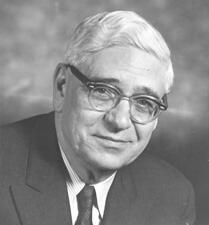
Here you will find contact information for Senator Henry Clarence Dworshak, including email address, phone number, and mailing address.
| Name | Henry Clarence Dworshak |
| Position | Senator |
| State | Idaho |
| Party | Republican |
| Status | Former Representative |
| Term Start | January 3, 1939 |
| Term End | January 3, 1963 |
| Terms Served | 7 |
| Born | August 29, 1894 |
| Gender | Male |
| Bioguide ID | D000585 |
About Senator Henry Clarence Dworshak
Henry Clarence Dworshak Jr. (August 29, 1894 – July 23, 1962) was a United States senator and congressman from Idaho who served over twenty-two years in the U.S. House of Representatives and the U.S. Senate. A member of the Republican Party, he was originally from Minnesota but became politically identified with Burley, Idaho, and represented Idaho in Congress during a significant period in American history. Over the course of seven terms in Congress, he participated actively in the legislative process and represented the interests of his constituents in both chambers.
Dworshak was born in Duluth, Minnesota, where he attended the local public schools. As a young man he learned the printer’s trade, acquiring technical skills that would shape his early career. With the entry of the United States into the First World War, he enlisted in the U.S. Army and served overseas in the American Expeditionary Forces. During the war he rose to the rank of sergeant in the Fourth Antiaircraft Machine Gun Battalion, gaining leadership experience and exposure to national service that later informed his public life. After returning from military duty, he remained in Duluth and managed a printing supply business, combining his trade expertise with business management.
In 1924, Dworshak moved west to Burley, Idaho, where he became publisher and editor of the Burley Bulletin, a semi-weekly newspaper in Cassia County. His work in journalism brought him into close contact with local civic affairs and public opinion, and he quickly emerged as a community leader. In 1931 he was elected president of the Idaho Editorial Association, a position that enhanced his visibility and influence in state affairs. He was also an active member of several civic and fraternal organizations, including the American Legion and Rotary International, and he belonged to the Elks and was a Freemason. These roles broadened his network and helped establish his reputation as a prominent public figure in Idaho.
Dworshak first sought national office in 1936, running as a Republican for the U.S. House of Representatives from Idaho’s 2nd congressional district. He was defeated in that race by the Democratic incumbent, D. Worth Clark. Two years later, in 1938, Clark ran successfully for the U.S. Senate, leaving the House seat open. Dworshak ran again for the 2nd district and this time won election to the House of Representatives. He was re-elected in 1940, 1942, and 1944, building a record as a conservative Republican legislator. His service in the House coincided with the later years of the Great Depression, the Second World War, and the immediate postwar period, during which he contributed to the legislative deliberations of the era.
Dworshak’s Senate career began under unusual circumstances. Republican Senator John Thomas of Idaho died in office in November 1945. In the ensuing political maneuvering, Democratic Governor Charles C. Gossett resigned so that his successor could appoint him to the vacant Senate seat. Gossett was appointed but then failed to secure his party’s nomination for the special election to complete the term. In the November 1946 special election, Dworshak, running as the Republican candidate, defeated Democratic state senator George Donart and entered the U.S. Senate. Two years later, however, in the 1948 general election, he was defeated for a full term by Democrat Bert H. Miller, a justice of the Idaho Supreme Court and former state attorney general, whom Dworshak had previously defeated ten years earlier.
Dworshak’s absence from the Senate was brief. Senator Miller died of a heart attack in October 1949 after only about nine months in office. Republican Governor C. A. Robins appointed Dworshak to succeed Miller in the Senate, returning him to the chamber. Dworshak then secured his position electorally, winning a special election in 1950 to complete the term. He was subsequently elected to full six-year Senate terms in 1954 and 1960, solidifying his role as one of Idaho’s leading Republican figures. Throughout his Senate service, he was known as a staunch isolationist in foreign policy, in the tradition of Idaho Senator William E. Borah, and he consistently opposed overseas intervention in U.S. affairs. On domestic issues, he was regarded as a staunchly conservative voice on Capitol Hill. In the area of civil rights, he voted in favor of the Civil Rights Act of 1957 and supported the 24th Amendment to the U.S. Constitution, which prohibited poll taxes in federal elections, but he did not cast a vote on the Civil Rights Act of 1960.
Dworshak continued to serve in the Senate until his death in office. On July 23, 1962, he died of a heart attack at his home in Washington, D.C. He was interred at Arlington National Cemetery, reflecting his status as both a military veteran and a long-serving member of Congress. Following his death, he was succeeded in the Senate by former Idaho Governor Len B. Jordan, who served from 1962 until January 1973. Dworshak’s legacy in Idaho is commemorated by several public institutions and landmarks, including Dworshak Dam on the North Fork of the Clearwater River near Orofino in northern Idaho and Dworshak Elementary School in Burley, underscoring the enduring impact of his long tenure in public service.