Representative Henry Ellenbogen
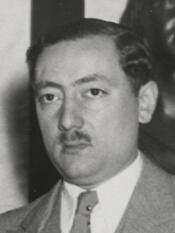
Here you will find contact information for Representative Henry Ellenbogen, including email address, phone number, and mailing address.
| Name | Henry Ellenbogen |
| Position | Representative |
| State | Pennsylvania |
| District | 33 |
| Party | Democratic |
| Status | Former Representative |
| Term Start | March 9, 1933 |
| Term End | January 3, 1939 |
| Terms Served | 3 |
| Born | April 3, 1900 |
| Gender | Male |
| Bioguide ID | E000111 |
About Representative Henry Ellenbogen
Henry Ellenbogen (April 3, 1900 – July 4, 1985) was an American lawyer, jurist, and Democratic politician who served as a member of the U.S. House of Representatives from Pennsylvania during the New Deal era. He represented his Pennsylvania district in Congress from 1933 to 1939, serving three terms in office and contributing to the legislative process at a time of profound economic and social change in the United States.
Ellenbogen was born into a Jewish family in Vienna, then part of Austria-Hungary, the son of Samson and Rose (née Franzos) Ellenbogen. Raised in a European urban center with a strong intellectual and legal tradition, he attended the University of Vienna Law School, where he began his formal training in law. Seeking broader opportunities, he immigrated to the United States and settled in Pittsburgh, Pennsylvania, a major industrial city whose labor and economic issues would later shape his professional and political concerns.
After arriving in Pittsburgh, Ellenbogen continued his education at Duquesne University. He received his A.B. degree in 1921 and his J.D. degree in 1924, completing the academic foundation for a legal career in his adopted country. He was admitted to the bar and established himself as an attorney in Pittsburgh. In addition to his legal practice, he developed a reputation as a writer and commentator, publishing numerous articles on economic, social, and legal problems, which reflected his interest in public policy and reform. His expertise in labor and economic issues led to his appointment as an arbitrator and public panel chairman by the National War Labor Board and the Third Regional War Labor Board in cases involving labor disputes, roles that underscored his standing as a mediator in industrial conflicts.
Ellenbogen entered national politics as a member of the Democratic Party during the early years of Franklin D. Roosevelt’s presidency. He was first elected as a Democrat to the Seventy-third Congress, beginning his service in 1933. At the time of his election, there was uncertainty about his eligibility to serve in the House of Representatives because he had been a citizen of the United States for only six years, rather than the seven years required by the Constitution. Despite this question, he was ultimately seated and began voting in the second session of the Seventy-third Congress in January 1934. He was subsequently re-elected to the Seventy-fourth and Seventy-fifth Congresses, serving continuously through the mid-1930s. During these three terms in office, from 1933 to 1939, he participated in the democratic process and represented the interests of his Pennsylvania constituents as Congress addressed the challenges of the Great Depression and the implementation of New Deal legislation.
In 1938, while still in his third term, Ellenbogen was elected judge of the Court of Common Pleas of Allegheny County, Pennsylvania. He resigned from Congress that year to assume his judicial duties, marking a transition from legislative service to a long career on the bench. He was reelected as a judge in November 1947 and again in 1957, reflecting sustained public confidence in his judicial performance. From 1963 to 1966, he served as presiding judge of the court, a position that placed him at the head of one of Pennsylvania’s most important trial courts and highlighted his prominence in the legal community of Allegheny County.
In his personal life, Ellenbogen married Rachel “Rae” Savage. The couple had two daughters: Naomi Feigelson Chase, who became an author, and Judith Specter. His wife, who was herself active in his political life—including a notable role in his early campaigns—died in 1981. Ellenbogen remained connected to both his Jewish heritage and the civic life of Pittsburgh throughout his career, and his family’s papers and records have been preserved in archival collections documenting Jewish and political history in the region.
After retiring from the bench, Ellenbogen became a resident of Miami, Florida. He lived there during his later years until his death on July 4, 1985. He was buried in West View Cemetery of the Rodef Shalom Congregation in the Squirrel Hill neighborhood of Pittsburgh, symbolically returning to the city where he had built his legal, political, and judicial career and where he had long been a prominent figure in both civic and Jewish communal life.