Representative Henry Ivory Emerson
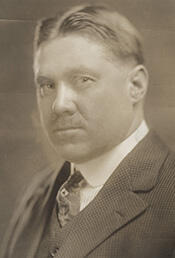
Here you will find contact information for Representative Henry Ivory Emerson, including email address, phone number, and mailing address.
| Name | Henry Ivory Emerson |
| Position | Representative |
| State | Ohio |
| District | 22 |
| Party | Republican |
| Status | Former Representative |
| Term Start | December 6, 1915 |
| Term End | March 3, 1921 |
| Terms Served | 3 |
| Born | March 15, 1871 |
| Gender | Male |
| Bioguide ID | E000171 |
About Representative Henry Ivory Emerson
Henry Ivory Emerson (March 15, 1871 – October 28, 1953) was a Republican member of the United States House of Representatives from Ohio who served three consecutive terms in Congress from 1915 to 1921. His congressional career spanned a period of profound national change, including the First World War and the early years of the Progressive Era’s influence on federal policy. Over the course of his public life, Emerson combined legal practice, municipal service, and national legislative work while maintaining close ties to the Cleveland, Ohio, community that formed the base of his political support.
Emerson was born in Litchfield, Kennebec County, Maine, on March 15, 1871. During his childhood he moved with his parents to Lewiston, Maine, an industrial and commercial center where he attended the public schools. In Lewiston he pursued the study of law, laying the foundation for a professional career that would later support his entry into politics. His early years in Maine, marked by education in the public school system and independent legal study, prepared him for formal legal training and eventual relocation to the Midwest.
In 1892 Emerson moved to Cleveland, Ohio, a rapidly growing city whose expanding economy and civic life offered opportunities for an ambitious young attorney. He enrolled at the Cincinnati Law School and was graduated in 1893. That same year he was admitted to the bar and commenced the practice of law in Cleveland. As a practicing attorney, he became part of the city’s professional and political circles, building a reputation that would lead to elective office. His legal work in Cleveland provided him with experience in municipal issues and the concerns of urban constituents, experience that would later inform his legislative perspective.
Emerson entered public office at the local level, serving as a member of the Cleveland City Council in 1902 and 1903. In this role he participated in the governance of a major industrial city at a time when questions of urban infrastructure, public services, and regulatory reform were increasingly prominent. His council service helped establish him as a Republican figure in Cleveland politics and gave him practical experience in legislative procedure and constituent representation. These early years in municipal government formed a bridge between his legal practice and his subsequent national service.
Building on his local prominence, Emerson was elected as a Republican to the Sixty-fourth, Sixty-fifth, and Sixty-sixth Congresses, serving in the U.S. House of Representatives from March 4, 1915, to March 3, 1921. As a Representative from Ohio, he participated in the legislative process during a significant period in American history, which included U.S. entry into World War I, wartime mobilization, and the immediate postwar transition. During his three terms in office he took part in debates and votes that shaped national policy, representing the interests of his Ohio constituents in the House of Representatives and contributing to the broader democratic process. His tenure reflected the priorities of the Republican Party in this era, including attention to economic development and national preparedness.
Emerson’s congressional service ended when he was an unsuccessful candidate for renomination in 1920, concluding his tenure in the House at the close of the Sixty-sixth Congress on March 3, 1921. After leaving Congress, he returned to Cleveland and resumed the practice of law, reestablishing himself in the profession that had first brought him public recognition. In his post-congressional years he remained identified with the legal and civic life of the Cleveland area, continuing to reside in the region that had long been his home.
In his personal life, Emerson married Nettie Naumann in Cleveland on December 25, 1894. The couple remained married until her death on August 15, 1913. On February 19, 1917, he remarried, taking as his wife Lillian McCormick, who was originally from Ontario, reflecting cross-border family ties common in the Great Lakes region. Emerson was a member of the Methodist Church, and his religious affiliation formed part of his social and community identity in Cleveland and its suburbs.
Henry Ivory Emerson died in East Cleveland, Ohio, on October 28, 1953. He was interred in Lake View Cemetery in Cleveland, a resting place for many of the city’s notable figures. His life traced a path from rural Maine to urban Ohio, encompassing legal practice, municipal office, and three terms in the United States Congress during a transformative period in the nation’s history.