Representative Henry Richard Gibson
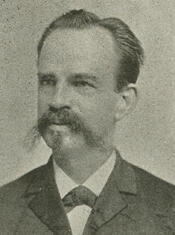
Here you will find contact information for Representative Henry Richard Gibson, including email address, phone number, and mailing address.
| Name | Henry Richard Gibson |
| Position | Representative |
| State | Tennessee |
| District | 2 |
| Party | Republican |
| Status | Former Representative |
| Term Start | December 2, 1895 |
| Term End | March 3, 1905 |
| Terms Served | 5 |
| Born | December 24, 1837 |
| Gender | Male |
| Bioguide ID | G000161 |
About Representative Henry Richard Gibson
Henry Richard Gibson (December 24, 1837 – May 25, 1938) was an American attorney, jurist, author, and Republican politician who represented Tennessee’s 2nd congressional district in the United States House of Representatives from 1895 to 1905. Over the course of five consecutive terms in Congress, he participated actively in the legislative process and represented the interests of his East Tennessee constituents during a period of significant political and economic change in American history. In addition to his decade of congressional service, he was a state chancery court judge, a delegate to Tennessee’s 1870 constitutional convention, and an influential writer and editor of legal texts on both federal and state law.
Gibson was born on December 24, 1837, and came of age in the antebellum South, an environment that shaped his early outlook and later public career. Details of his early family life and upbringing are less extensively documented than his professional achievements, but his youth coincided with the growing sectional tensions that would culminate in the Civil War. This formative context, together with his subsequent legal training, prepared him for a career in which questions of constitutional authority, federal–state relations, and the reconstruction of Southern political institutions would loom large.
Pursuing higher education in law, Gibson trained for the bar and embarked on a legal career that quickly established his reputation for careful reasoning and command of statutory and constitutional issues. His work as an attorney brought him into contact with a wide range of civil and criminal matters, and he developed a particular interest in the structure and operation of state courts and the evolving body of federal jurisprudence. This legal foundation not only underpinned his later judicial service but also informed his contributions as an author and editor of legal treatises, which were used by practitioners and students seeking guidance on complex questions of federal and state law.
Gibson’s prominence in Tennessee public life began to grow in the years following the Civil War, as the state grappled with the challenges of Reconstruction and the reorganization of its government. In 1870 he served as a delegate to Tennessee’s constitutional convention, which produced a new state constitution to replace the wartime charter and to redefine the legal and political framework of postwar Tennessee. His participation in that convention placed him at the center of debates over suffrage, the judiciary, and the balance of power between state and local authorities, and it marked his emergence as a significant Republican voice in a region where his party often faced strong opposition.
Building on his legal and constitutional experience, Gibson was appointed or elected to serve as a state chancery court judge, a position that entrusted him with the adjudication of equity cases involving property rights, contracts, estates, and other matters requiring the application of principles of fairness beyond the strict letter of the law. His tenure on the chancery bench further enhanced his standing as a jurist and deepened his familiarity with the practical administration of justice in Tennessee. During this period he continued to write and edit legal works, contributing to the professional literature that guided lawyers and judges in interpreting both state statutes and federal law.
In 1895 Gibson entered national politics as a member of the United States House of Representatives, representing Tennessee’s 2nd district as a Republican. He served five consecutive terms, remaining in office until 1905. His decade in Congress coincided with the closing of the American frontier, the rise of industrial capitalism, and the nation’s emergence as an international power following the Spanish–American War. Within this context, Gibson took part in the full range of legislative responsibilities expected of a House member: deliberating on national policy, voting on appropriations and regulatory measures, and advocating for the economic and infrastructural interests of his East Tennessee constituency. His legal background informed his approach to legislation, particularly in areas touching on constitutional questions, federal jurisdiction, and the relationship between the national government and the states.
Gibson’s congressional service unfolded during a transformative era that saw the consolidation of the two-party system in the post-Reconstruction South and the gradual redefinition of the Republican Party’s role in Southern politics. As a Republican from Tennessee, he occupied a distinctive position, working to secure federal attention and resources for his district while navigating the complex partisan dynamics of the region. Throughout his five terms, he contributed to the democratic process by representing the concerns of his constituents in matters such as transportation, commerce, and the administration of federal law, and by participating in debates that helped shape the legislative record of the late nineteenth and early twentieth centuries.
After leaving Congress in 1905, Gibson returned to the practice of law and to his work as a legal scholar and commentator. He continued to write and edit books on federal and state law, drawing on his combined experience as attorney, judge, and legislator to clarify legal doctrines and procedures for the benefit of the bar and the bench. His later years were marked by the perspective of a man who had witnessed, and in various capacities helped to shape, the evolution of Tennessee and the nation from the antebellum period through Reconstruction and into the modern industrial age. Henry Richard Gibson died on May 25, 1938, having lived more than a century and leaving a legacy as a lawyer, judge, lawmaker, and author whose career spanned some of the most consequential decades in American history.