Senator Henry Clay Hansbrough
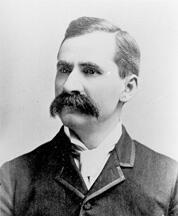
Here you will find contact information for Senator Henry Clay Hansbrough, including email address, phone number, and mailing address.
| Name | Henry Clay Hansbrough |
| Position | Senator |
| State | North Dakota |
| Party | Republican |
| Status | Former Representative |
| Term Start | December 2, 1889 |
| Term End | March 3, 1909 |
| Terms Served | 4 |
| Born | January 30, 1848 |
| Gender | Male |
| Bioguide ID | H000169 |
About Senator Henry Clay Hansbrough
Henry Clay Hansbrough (January 30, 1848 – November 16, 1933) was a United States politician who served as the first United States Representative from North Dakota and later as a Senator from North Dakota. A member of the Republican Party for most of his public career, he represented the interests of his constituents in Congress during a significant period in American history, contributing to the legislative process over multiple terms in office.
Hansbrough was born in the historic Creole House in the village of Prairie du Rocher, Randolph County, Illinois. His parents, Elisha Hansbrough and Sarah Hagan, named him in honor of Henry Clay, the prominent statesman, who attended their wedding and suggested that they name their first son after him. Hansbrough attended the common schools in his youth, but his formal education was interrupted when the Civil War caused his school to close, limiting his early academic opportunities.
In 1867, Hansbrough’s family moved west to San Jose, California. There he learned the art of printing, a trade that would shape his early career and later political prominence. He worked as a printer in San Jose and subsequently in Baraboo, Wisconsin, gaining practical experience in the newspaper business. During this period he was employed at the San Jose Daily Independent and later at the San Francisco Chronicle, positions that exposed him to public affairs, journalism, and the mechanics of political communication.
Seeking new opportunities, Hansbrough moved to Dakota Territory, where he became a pioneer in the regional press. In 1881 he established the Grand Forks News in Grand Forks, and in 1883 he founded the Inter-Ocean at Devils Lake. Through these newspapers he became an influential voice in territorial politics and development, helping to shape public opinion in the years leading up to North Dakota’s admission to the Union. His prominence as a Republican newspaperman and community leader provided the platform for his entry into elective office.
Upon North Dakota’s admission as a state in 1889, Hansbrough was elected as the first United States Representative from North Dakota. He served in the House of Representatives as a Republican, representing the new state’s interests in the national legislature. Later in 1889 he entered the United States Senate from North Dakota, beginning a Senate career that extended until 1909. Over this twenty-year span—encompassing four terms in office—he participated actively in the democratic process during a transformative era marked by western development, agricultural expansion, and the early stirrings of the Progressive movement. As a Senator, Henry Clay Hansbrough contributed to the legislative process and represented the interests of his constituents in North Dakota and the broader region.
During his years in Washington, D.C., Hansbrough became a friend and political associate of Theodore Roosevelt, then a rising and later dominant figure in the Republican Party. Known as something of a “maverick” within his party, Hansbrough did not always adhere strictly to partisan lines. After leaving the Senate following an unsuccessful bid for reelection in 1909, he increasingly broke with Republican orthodoxy. He eventually announced his support for Democrat Woodrow Wilson, reflecting his evolving political views and his willingness to cross party lines when he believed policy or principle required it.
In his later life, Hansbrough resumed his former business pursuits in Devils Lake, North Dakota, returning to the newspaper and related enterprises that had first established his reputation. His political independence became more pronounced in the 1920s. In the presidential election of 1928, he supported the Democratic nominee, Alfred E. Smith, over the Republican candidate, Herbert Hoover. During the early years of the Great Depression, he also expressed support for President Franklin D. Roosevelt’s farm programs, aligning himself with efforts to provide relief and reform for the agricultural sector that had long been central to his state’s economy.
Hansbrough spent his final years living in several different states. After his period back in North Dakota, he moved to Florida, then to New York, and finally settled in Washington, D.C., in 1927. He remained in the nation’s capital for the remainder of his life, maintaining his interest in public affairs and agricultural policy. Henry Clay Hansbrough died in Washington, D.C., on November 16, 1933, closing a long career that had spanned frontier journalism, statehood politics, and two decades of service in the United States Congress.