Senator Henry Drury Hatfield
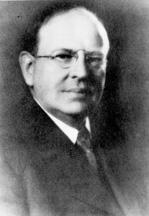
Here you will find contact information for Senator Henry Drury Hatfield, including email address, phone number, and mailing address.
| Name | Henry Drury Hatfield |
| Position | Senator |
| State | West Virginia |
| Party | Republican |
| Status | Former Representative |
| Term Start | April 15, 1929 |
| Term End | January 3, 1935 |
| Terms Served | 1 |
| Born | September 15, 1875 |
| Gender | Male |
| Bioguide ID | H000342 |
About Senator Henry Drury Hatfield
Henry Drury Hatfield (September 15, 1875 – October 23, 1962) was an American physician and Republican politician who served as the 14th governor of West Virginia and later as a United States senator from that state. He held a term in the U.S. Senate from 1929 to 1935, contributing to the legislative process during one term in office and representing the interests of his West Virginia constituents during a significant period in American history.
Hatfield was born on September 15, 1875, in Sidney, Logan County, West Virginia, the second son of Elias Hatfield and Elizabeth Chafin Hatfield. He was a nephew of William Anderson “Devil Anse” Hatfield, a central figure in the Hatfield–McCoy feud, and thus was connected by family to one of the most famous Appalachian clan conflicts of the late nineteenth century. Raised in the rugged coalfields region of southern West Virginia, he grew up in an environment shaped by both the emerging coal industry and the legacy of that family history.
Hatfield pursued higher education with an early focus on medicine. He attended Franklin College in New Athens, Ohio, and then studied medicine at the University of Louisville, from which he graduated in 1895. He continued his medical training at New York University, earning an additional medical degree in 1904. In 1895 he married South Carolina “Carrie” Bronson, establishing a family life that would accompany his parallel careers in medicine and public service.
Beginning his professional life as a physician, Hatfield first worked for the Pocahontas Fuel Company, serving the health needs of coal miners and their families in the region. He was health commissioner of Mingo County, West Virginia, from 1895 to 1900, where he oversaw public health measures in a rapidly industrializing area. Simultaneously, from 1895 to 1913 he served as a surgeon for the Norfolk and Western Railway, tending to industrial and transportation-related injuries. Between 1899 and 1913 he was chief surgeon of a hospital in the coalfields, further solidifying his reputation as a capable and dedicated physician. His first non-medical public position was as road commissioner of McDowell County, West Virginia, from 1900 to 1905, where he helped oversee infrastructure development in a county undergoing swift economic growth. From 1906 to 1912 he served as a member of the McDowell County court, marking his deeper entry into local governance.
A Republican, Hatfield advanced from local to state politics in the early twentieth century. He was elected to the West Virginia Senate from the 6th district, serving from 1908 to 1912. During this period he rose quickly in influence and was chosen president of the West Virginia Senate, holding that leadership post from January 30, 1911, to January 24, 1913. On March 14, 1913, he assumed office as the 14th governor of West Virginia, serving until March 5, 1917. His governorship coincided with intense labor unrest in the coalfields, most notably the Paint Creek–Cabin Creek strike of 1912, which he inherited upon taking office. Hatfield intervened in the dispute by declaring martial law, seizing weapons, and ordering the arrest of some strikers, actions that drew criticism from labor advocates. At the same time, he sought a negotiated settlement, pardoning labor leader Mary “Mother” Jones and other imprisoned union figures and helping to bring the strike to a close. As governor he also signed into law West Virginia’s first workers’ compensation program, a significant reform in the state’s industrial relations. His administration was criticized by some conservative newspapers for what they termed “unnecessary” tax increases, reflecting tensions over his progressive-leaning social and economic policies. At the end of his gubernatorial term he initially stepped back from elective office, though he would later return to public life.
During World War I, Hatfield served as a noncombatant in the United States Army Medical Corps from 1917 to 1919. He was assigned as head of American Base Hospital No. 36, where he oversaw medical care for U.S. military personnel, and he was mustered out of service with the rank of major. In addition to his military and state service, he remained active in national Republican politics, serving as a delegate to the Republican National Conventions of 1916, 1932, 1944, 1948, and 1952, thereby maintaining a long-standing role in shaping party affairs over several decades.
Hatfield returned to high national office when he was elected as a Republican to the United States Senate from West Virginia, serving from March 4, 1929, to January 3, 1935. His single term in the Senate coincided with the onset of the Great Depression, a period of profound economic turmoil in the United States. As a senator, he was a member of the Senate Committee on Immigration, participating in deliberations over federal immigration policy at a time of economic crisis and shifting public attitudes. Throughout his tenure he took part in the democratic process and contributed to the legislative work of the Senate while representing the interests of his West Virginia constituents during this critical era. He was defeated in his bid for reelection in 1934, bringing his congressional service to a close after one term.
After leaving the Senate, Hatfield settled in Huntington, West Virginia. There he owned farmland and operated a hospital, returning to his medical roots while remaining a prominent figure in the community. He was a member of the Methodist Church, reflecting his religious affiliation and social outlook. His family connections extended into the business world; his daughter married Benjamin Franklin Fairless, a leading American steel executive. Henry Drury Hatfield died in Huntington on October 23, 1962, at the age of 87, and was buried in Woodmere Cemetery, closing a long life that bridged medicine, state reform, military service, and national legislative office.