Representative Henry Harrison Hathorn
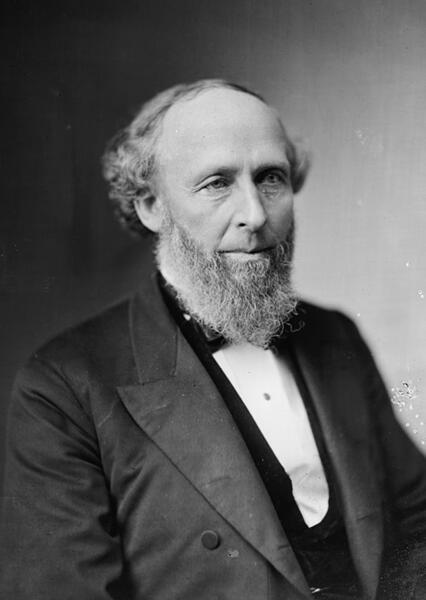
Here you will find contact information for Representative Henry Harrison Hathorn, including email address, phone number, and mailing address.
| Name | Henry Harrison Hathorn |
| Position | Representative |
| State | New York |
| District | 20 |
| Party | Republican |
| Status | Former Representative |
| Term Start | December 1, 1873 |
| Term End | March 3, 1877 |
| Terms Served | 2 |
| Born | November 28, 1813 |
| Gender | Male |
| Bioguide ID | H000347 |
About Representative Henry Harrison Hathorn
Henry Harrison Hathorn (November 28, 1813 – February 20, 1887) was an American businessman and Republican U.S. Representative from New York who served in the United States Congress from 1873 to 1877. Over the course of two terms in the House of Representatives, he contributed to the legislative process during a significant period in American history, representing the interests of his constituents as a member of the Republican Party.
Born on November 28, 1813, Hathorn came of age in the early decades of the nineteenth century, a time of rapid economic and territorial expansion in the United States. Details of his early life and family background are sparse in the surviving public record, but his later prominence as a businessman and public official suggests that he was drawn early to commercial pursuits and local affairs. Growing up in New York, he would have been influenced by the state’s emerging role as a commercial hub following the opening of the Erie Canal and the growth of trade and industry in the region.
Hathorn established himself as a businessman before entering national politics, building a career that provided both the financial foundation and public visibility that often preceded congressional service in the nineteenth century. His business activities placed him among the class of local leaders who were closely involved with the economic development of their communities, and this experience informed his later public service. As a businessman in New York, he would have been directly engaged with the issues of transportation, commerce, and regional development that were central to the state’s prosperity.
By the early 1870s, Hathorn had become active in Republican Party politics, aligning himself with the party that had led the Union during the Civil War and was then guiding the nation through Reconstruction. Elected as a Republican to the United States House of Representatives, he began his congressional service in 1873. His tenure coincided with the Forty-third and Forty-fourth Congresses, a period marked by debates over Reconstruction policy, civil rights, economic recovery following the Panic of 1873, and the continuing integration of the postwar South into the national political and economic system.
During his two terms in office, from 1873 to 1877, Hathorn participated in the democratic process as a member of the House of Representatives and took part in the legislative work of the era. As a Representative from New York, he represented the interests of his constituents in a state that was central to national finance, industry, and transportation. While the detailed record of his specific committee assignments and sponsored measures is limited in the brief public summaries that survive, his service placed him within the broader Republican effort to shape federal policy in the years immediately following the Civil War.
After leaving Congress in 1877, Hathorn returned to private life and to the business pursuits that had defined his career before his election to national office. Like many nineteenth-century legislators, he treated congressional service as a period of public duty rather than a lifelong profession, resuming his role in local and commercial affairs in New York. His post-congressional years unfolded against the backdrop of the Gilded Age, as the nation experienced rapid industrialization, urban growth, and increasing political contention over economic and social policy.
Henry Harrison Hathorn died on February 20, 1887. His life spanned from the early republic through the Civil War and Reconstruction into the dawn of the modern industrial United States. Remembered as both a businessman and a Republican U.S. Representative from New York, he exemplified the nineteenth-century pattern of local commercial leadership translating into a period of national legislative service during a transformative era in American history.