Senator Henry Peter Haun
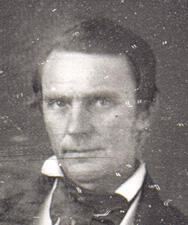
Here you will find contact information for Senator Henry Peter Haun, including email address, phone number, and mailing address.
| Name | Henry Peter Haun |
| Position | Senator |
| State | California |
| Party | Democratic |
| Status | Former Representative |
| Term Start | December 5, 1859 |
| Term End | March 3, 1861 |
| Terms Served | 1 |
| Born | January 18, 1815 |
| Gender | Male |
| Bioguide ID | H000353 |
About Senator Henry Peter Haun
Henry Peter Haun (January 18, 1815 – June 6, 1860) was an American lawyer, judge, farmer, and Democratic U.S. Senator from California. He served as a Senator from California in the United States Congress from 1859 to 1861, contributing to the legislative process during one term in office. He was appointed by California Governor John B. Weller to serve out the remaining four months of Senator David C. Broderick’s term following Broderick’s death in a duel in 1859, and as a member of the Senate he participated in the democratic process during a significant period in American history, representing the interests of his California constituents.
Haun was born on January 18, 1815, at Haun’s Mill near Lexington, Kentucky, to John Haun and Katherine Winter Haun. Raised in a frontier setting in central Kentucky, he came of age in a region that was rapidly developing politically and economically in the early nineteenth century. His family’s mill and local standing provided him with the opportunity to pursue formal education at a time when such opportunities were limited in rural Kentucky.
Haun attended Transylvania University in Lexington, one of the leading institutions of higher learning in the West at that time, and studied law. He graduated and was admitted to the bar in 1839, beginning the legal career that would underpin his later judicial and political service. Soon after his admission to the bar, he was elected Prosecuting Attorney of Scott County, Kentucky, a position that placed him in public office early in his professional life and gave him experience in criminal prosecution and county legal affairs.
Seeking broader opportunities on the expanding American frontier, Haun moved west to Clinton County, Iowa, where he entered into legal practice with his brother, W. G. Haun. His abilities and growing reputation led to his election in 1846 as a delegate to the Iowa Constitutional Convention, where he participated in framing the fundamental law for the new state of Iowa. This experience in constitution-making and state formation further developed his understanding of public law and governance. On October 27, 1848, he married his cousin, Catherine Haun. The couple would later have two children, Kate, born in 1851, and David Rose, born in 1853.
In the spring of 1849, during the California Gold Rush, Haun traveled overland with his family to the Pacific Coast, joining the large migration of Americans seeking new prospects in California. They settled in Oroville, California, in January 1850, where Haun combined legal work with farming and quickly became involved in the organization of local government in the newly admitted state. He was elected the first County Judge of Yuba County, California, serving from 1851 to 1854. In that role he helped establish the county’s judicial institutions and adjudicated disputes in a rapidly growing mining and agricultural region.
Haun’s judicial and political standing in California led to his selection for national office. On October 29, 1859, Governor John B. Weller appointed him to fill the vacancy in the United States Senate created by the death of Senator David C. Broderick, who had been killed in a duel earlier that year. Haun took his seat and served as a Democratic Senator from November 3, 1859, to March 4, 1860. During this brief but notable period in Congress, which occurred on the eve of the Civil War, he contributed to the legislative process and represented California’s interests in debates shaped by sectional tensions and the national controversy over slavery. He was succeeded in the Senate by Milton S. Latham at the expiration of Broderick’s term.
After completing his service in Washington, D.C., Haun returned to California. His health declined shortly after his return, and he died on June 6, 1860, in Marysville, California, at the age of 45, only a few days after coming back from the nation’s capital. His life and that of his family have been documented in various historical sources, including Catherine Haun’s well-known Gold Rush diary, featured in “Women’s Diaries of the Westward Journey,” and in the Haun Collection archive, which spans more than a century of the Haun family’s history from the Gold Rush through the Civil War and into the early twentieth century and is housed at the Plumas County Museum in Quincy, California. His career and role in early California politics and law have also been noted in reminiscences such as Stephen Johnson Field and George C. Gorham’s “Personal Reminiscences of Early Days in California,” as well as in the official Biographical Directory of the United States Congress.