Senator John Heinz
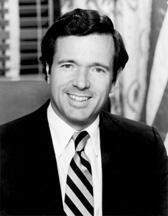
Here you will find contact information for Senator John Heinz, including email address, phone number, and mailing address.
| Name | John Heinz |
| Position | Senator |
| State | Pennsylvania |
| Party | Republican |
| Status | Former Representative |
| Term Start | January 21, 1971 |
| Term End | January 3, 1993 |
| Terms Served | 11 |
| Born | October 23, 1938 |
| Gender | Male |
| Bioguide ID | H000456 |
About Senator John Heinz
Henry John Heinz III (October 23, 1938 – April 4, 1991) was an American businessman and Republican politician who served in the United States Congress from 1971 until his death in 1991, including service as a United States senator from Pennsylvania from 1977 to 1991. An heir to the Heinz family fortune, he was known for his moderate-to-liberal Republican record, his advocacy for the elderly and for the steel industry, and his leadership on issues of Social Security, pensions, health care, and trade. Over the course of his six terms in Congress—first in the House of Representatives and then in the Senate—he participated actively in the legislative process and represented the interests of his Pennsylvania constituents during a significant period in American political and economic history.
Heinz was born on October 23, 1938, in Pittsburgh, Pennsylvania, the only child of Joan (Diehl) Heinz and H. J. “Jack” Heinz II, heir to the H. J. Heinz Company. His parents divorced in 1942, and he moved with his mother to San Francisco, California, following her marriage to U.S. Navy Captain Clayton Chot “Monty” McCauley. Although he was raised and primarily resided in San Francisco throughout his childhood, he frequently spent summers in Pittsburgh with his father, maintaining close ties to his native city and the family business. He was a fourth cousin of future President Donald Trump; their great-grandfathers were first cousins who emigrated from Kallstadt, Germany.
Heinz graduated from Phillips Exeter Academy in 1956 and went on to Yale University, where he majored in history, arts, and letters, graduating in 1960. While at Yale, art historian Theodore Stebbins was among his roommates. He continued his education at Harvard Business School, receiving his M.B.A. in 1963. During a summer break from Harvard, he met his future wife, Teresa Simões Ferreira, a Portuguese-born student at the University of Geneva. Following his graduation from Harvard Business School, Heinz entered the United States Air Force Reserve in 1963, serving on active duty that year and remaining in the Reserve until 1969.
Before seeking elective office, Heinz gained experience in both politics and business. He served as an assistant to Pennsylvania Republican U.S. Senator Hugh Scott and played an active role as assistant campaign manager in Scott’s re-election campaign. In the private sector, he worked in the financial and marketing division of the H. J. Heinz Company from 1965 to 1970, gaining familiarity with corporate management and international business. After leaving the company, he taught business at Carnegie Mellon University’s Graduate School of Industrial Administration (now part of Heinz College) until 1971, further grounding himself in economic and managerial issues that would later inform his legislative work.
Heinz entered elective politics in 1971 after the death of Representative Robert Corbett, who had represented Pennsylvania’s 18th congressional district. Winning the Republican primary, Heinz captured the seat in a special election on November 2, 1971. He was re-elected to the U.S. House of Representatives in 1972 and 1974. During his tenure in the House, he cultivated a moderate record in the tradition of Pennsylvania Republican senators Hugh Scott and Richard Schweiker, focusing on pragmatic solutions rather than ideological positions. In 1974, he declined an opportunity to challenge Democratic Governor Milton Shapp, choosing instead to continue building his congressional career. His service in the House marked the beginning of his two decades in Congress, a period that coincided with major national debates over the economy, energy, foreign policy, and social programs.
In December 1975, Heinz announced that he would not seek re-election to the House but would instead run for the United States Senate seat being vacated by retiring Senate Minority Leader Hugh Scott. In the 1976 Republican primary, he faced Philadelphia District Attorney Arlen Specter. The campaign unfolded in the wake of the Supreme Court’s decision in Buckley v. Valeo, which loosened restrictions on campaign spending and benefited Heinz, who was able to draw on substantial personal and family resources. During the race, he came under criticism for having accepted $6,000 in illegal corporate contributions from Gulf Oil; Heinz returned the funds, described the episode as an accident, and denied legal culpability. He defeated Specter in the primary, performing especially well in western Pennsylvania, and went on to face Democratic Representative William Green III in the general election. Green criticized Heinz’s wealth and campaign spending, but Heinz prevailed in November 1976 and took office in January 1977. He was re-elected to the Senate by wide margins in 1982 and 1988, solidifying his position as one of Pennsylvania’s most prominent Republican leaders.
In the Senate, Heinz developed a reputation as a moderate-to-liberal Republican and an energetic legislator. He served on the Committee on Banking, Housing, and Urban Affairs and the Committee on Finance, and he was a member of the National Commission on Social Security Reform, the National Commission on Health Care Reform, the Northeast Coalition, and the Steel Caucus. He chaired the Subcommittee on International Finance and Monetary Policies, the Special Committee on Aging, and the Republican Conference Task Force on Job Training and Education. The New York Times later noted that he built a solid record as “a persistent defender of the nation’s growing elderly population and of the declining steel industry,” and that he was instrumental in advancing legislation that put the Social Security system on a sounder financial footing, strengthened laws governing retirement policies, pension plans, health insurance, and nursing homes, and promoted trade policies that encouraged American exports while protecting key domestic industries such as steel from unfair foreign competition. He was elected chairman of the National Republican Senatorial Committee for two separate terms, from 1979 to 1981 and again from 1985 to 1987, playing a central role in his party’s Senate campaign strategy.
Heinz’s voting record reflected both his party affiliation and his independent streak. He voted in favor of establishing Martin Luther King Jr. Day as a federal holiday and supported the Civil Rights Restoration Act of 1987, including voting to override President Ronald Reagan’s veto of that legislation. He also voted in favor of the nomination of Robert Bork to the United States Supreme Court. Throughout his Senate career, he was viewed as a legislator who combined concern for social equity with a pro-business, pro-trade outlook, and he was often mentioned as a Republican with national potential. By 1991, he had begun evaluating a possible bid for governor of Pennsylvania, a move that some advisers regarded as a potential stepping stone toward a future campaign for the presidency. His congressional service, spanning from his first election to the House in 1971 through his Senate tenure until 1991, took place during a transformative era in American politics and economics, and he was widely regarded as an influential voice within the Republican Party.
On April 4, 1991, Heinz’s career and life were cut short in a mid-air collision over Lower Merion Township, Pennsylvania. He was aboard a Piper Aerostar aircraft operated by the Sun Company Aviation Department when the pilot reported a problem with the landing gear. A Bell 412 helicopter, also operated by Sun, was dispatched to inspect the plane in flight. As the helicopter maneuvered for a closer look above Merion Elementary School, it collided with Heinz’s plane, causing both aircraft to lose control and crash. Heinz, all others aboard the two aircraft, and two children on the ground at the school were killed. The National Transportation Safety Board investigation concluded that the accident resulted from poor judgment by the pilots of both aircraft. Following a funeral service at Heinz Chapel in Pittsburgh and a memorial service in Washington, D.C., attended by President George H. W. Bush and Vice President Dan Quayle, Heinz was interred in the Heinz family mausoleum at Homewood Cemetery in the Point Breeze neighborhood of Pittsburgh. At the Washington service, his longtime friend Senator Tim Wirth of Colorado recalled that Heinz “really believed he could make the world a better place, such a contrast to the jaded resignation of our time,” and noted that “he could send the Senate leadership up a wall faster than anyone I’ve seen.” Heinz’s son André spoke of his father’s devotion, saying, “Dad, I am so grateful for the time we had, and I miss you and I love you.”
In the years following his death, numerous institutions and honors were established to commemorate Heinz’s public service and philanthropic legacy. The Tinicum Wildlife Preserve near Philadelphia was renamed the John Heinz National Wildlife Refuge at Tinicum, a 1,200-acre refuge that includes the largest remaining freshwater tidal marsh in Pennsylvania and provides habitat for a wide variety of plants and animals native to southeastern Pennsylvania. In 1991, he was elected posthumously to the American Philosophical Society. In 1993, his family created the Heinz Awards, which recognize individual innovation and achievement in five categories, and one of the Jefferson Awards for Public Service—honoring “Greatest Public Service by an Elected or Appointed Official”—was named in his honor. Several major institutions bear his name, including the Senator H. John Heinz III Archives at Carnegie Mellon University Libraries, the Heinz College at Carnegie Mellon University in Pittsburgh, the H. John Heinz III Center for Science, Economics and the Environment in Washington, D.C., the Senator John Heinz History Center in Pittsburgh, and the H. J. Heinz Campus of the U.S. Department of Veterans Affairs Pittsburgh Healthcare System. His widow, Teresa Heinz, remained active in philanthropy and public life and, in 1995, married his former Senate colleague, future Democratic presidential nominee and Secretary of State John Kerry.