Representative Henry Thomas Helgesen
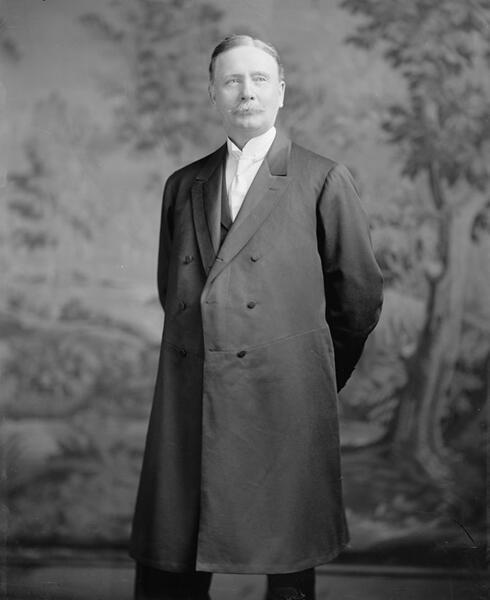
Here you will find contact information for Representative Henry Thomas Helgesen, including email address, phone number, and mailing address.
| Name | Henry Thomas Helgesen |
| Position | Representative |
| State | North Dakota |
| District | 1 |
| Party | Republican |
| Status | Former Representative |
| Term Start | April 4, 1911 |
| Term End | March 3, 1919 |
| Terms Served | 4 |
| Born | June 26, 1857 |
| Gender | Male |
| Bioguide ID | H000459 |
About Representative Henry Thomas Helgesen
Henry Thomas Helgesen (June 26, 1857 – April 10, 1917) was a Republican U.S. Representative from North Dakota who served in the United States Congress from 1911 until his death in 1917, during a significant period in American political and social history. Over the course of four terms in office, he contributed to the legislative process in the House of Representatives and represented the interests of his North Dakota constituents.
Helgesen was born near Decorah, Winneshiek County, Iowa, on June 26, 1857. He was educated in the public schools of the area and pursued further studies at the John Breckenridge Normal Institute and the J.R. Slack Business College in Decorah. This combination of general, teacher-training, and business education provided him with a foundation for both commercial and public service careers. His early life in Iowa, in a largely rural and developing region, helped shape his later interest in agriculture and local governance.
In 1887 Helgesen moved to Milton, in what was then Dakota Territory and is now North Dakota, where he established himself as a businessman and farmer. He engaged in the mercantile and lumber business and also in agricultural pursuits, reflecting the economic base of the young territory. With the admission of North Dakota to the Union in 1889, Helgesen quickly became involved in the new state’s public affairs. He served as the first North Dakota commissioner of agriculture and labor from 1889 to 1892, an office newly created to oversee and promote the state’s vital farming and labor interests. His work in this role placed him at the center of efforts to develop North Dakota’s agricultural economy in its formative years.
Helgesen’s commitment to public service extended to local and educational institutions. He served as a member of the board of education of Milton, North Dakota, from 1893 to 1896, acting as president of the board in 1893 and 1894. He later became a member of the board of regents of the University of North Dakota, serving two separate terms from 1897 to 1901 and from 1907 to 1913. Through these positions he played a part in shaping public education at both the community and state levels, contributing to the governance and development of North Dakota’s principal public university. His growing prominence in state affairs led him to seek national office, and he was an unsuccessful candidate for election to the Sixty-first Congress in 1908.
Helgesen was subsequently elected as a Republican to the Sixty-second Congress and to the three succeeding Congresses, serving as a Representative from North Dakota from March 4, 1911, until his death on April 10, 1917. His service in Congress thus spanned the Sixty-second through the Sixty-fifth Congresses, a period that included the Progressive Era and the early years of World War I. As a member of the House of Representatives, Henry Thomas Helgesen participated in the democratic process and contributed to the legislative work of the national government while representing the interests of his North Dakota constituents in Washington, D.C.
The most notable and controversial aspect of Helgesen’s congressional career was his involvement in the North Pole exploration dispute between Dr. Frederick A. Cook and Robert E. Peary. Between 1911 and 1916 he emerged as a key figure in congressional activity supporting Cook’s claim to have been the first explorer to reach the North Pole and in pressing for reconsideration of the promotion of Peary to the rank of rear admiral. Research by historian William R. Hunt later showed that Helgesen’s Washington staff included an aide, Ernest C. Rost, a professional photographer and friend of Dr. Cook, who was in fact a hired lobbyist for Cook. In 1915 Helgesen read into the Congressional Record various pamphlets and newspaper articles defending Cook and challenging Peary’s priority. However, after Cook departed on a trip to Asia the following year, Helgesen publicly denounced him as a fraud. At about the same time, Cook was being sued for nonpayment of salary allegedly owed to Rost, though it cannot be definitively determined whether this legal dispute influenced Helgesen’s change of position. His further activity in the matter ceased with his death in April 1917.
Henry Thomas Helgesen died in office in Washington, D.C., on April 10, 1917, while still serving as a member of the Sixty-fifth Congress. His death placed him among the members of the United States Congress who died in office in the first half of the twentieth century. He was interred in Phelps Cemetery in his native Decorah, Iowa, bringing his career full circle from his Iowa birthplace to national office and back to his home community for burial.