Senator Henry French Hollis
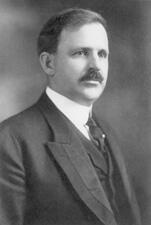
Here you will find contact information for Senator Henry French Hollis, including email address, phone number, and mailing address.
| Name | Henry French Hollis |
| Position | Senator |
| State | New Hampshire |
| Party | Democratic |
| Status | Former Representative |
| Term Start | April 7, 1913 |
| Term End | March 3, 1919 |
| Terms Served | 1 |
| Born | August 30, 1869 |
| Gender | Male |
| Bioguide ID | H000727 |
About Senator Henry French Hollis
Henry French Hollis (August 30, 1869 – July 7, 1949) was a United States senator from New Hampshire, a member of the Democratic Party, and a regent of the Smithsonian Institution. He was born in Concord, New Hampshire, and was a nephew of noted American sculptor Daniel Chester French, a connection that placed him in a family with significant artistic and public prominence.
Hollis attended public schools in New Hampshire and also studied under private tutors, receiving a broad early education that prepared him for professional and public life. As a young man, he engaged in civil engineering for the Chicago, Burlington & Quincy Railroad in 1886 and 1887, gaining practical experience in a major industry of the era. He then enrolled at Harvard University, from which he graduated in 1892. After Harvard, he studied law, was admitted to the bar in 1893, and commenced the practice of law in his native city of Concord, New Hampshire.
Building a legal career in Concord, Hollis quickly became active in Democratic politics in a state then largely dominated by Republicans. He was an unsuccessful candidate for election to the United States House of Representatives in 1900, and he ran unsuccessfully as the Democratic candidate for Governor of New Hampshire in both 1902 and 1904. These early campaigns, though unsuccessful, established him as a leading figure in his party and helped lay the groundwork for his later election to national office.
Hollis was elected as a Democrat to the United States Senate from New Hampshire for the term beginning March 4, 1913, and he served from March 13, 1913, until March 3, 1919. His single term in the Senate coincided with a significant period in American history, encompassing the Progressive Era and the First World War. As a senator, Henry French Hollis contributed to the legislative process during this one term in office, participating in the democratic process and representing the interests of his New Hampshire constituents. During his service he was chairman of the Senate Committee on Enrolled Bills, overseeing the final preparation of legislation passed by Congress. A member of the Democratic Party, he aligned with the majority under President Woodrow Wilson. Hollis declined to be a candidate for renomination in 1918, thereby concluding his Senate career at the end of his term in 1919.
In addition to his senatorial duties, Hollis held several important national and international assignments during and immediately after World War I. From 1914 to 1919, he served as a regent of the Smithsonian Institution, participating in the governance of one of the nation’s leading scientific and cultural establishments. In 1918 he was the United States representative to the Interallied War Finance Council, a body coordinating financial policies among the Allied powers during the war. The following year, in 1919, he served as a member of the United States Liquidation Commission for France and England, dealing with the settlement of wartime financial obligations. That same year he commenced the practice of international law, extending his legal work into the growing field of cross-border finance and diplomacy.
Hollis’s post-Senate career continued to reflect his international orientation. In 1922 he was appointed to the International Bank of Bulgaria, further demonstrating his involvement in international financial and legal affairs in the postwar period. He maintained his professional activities for many years, drawing on his experience in law, finance, and public service.
Henry French Hollis died on July 7, 1949. He was interred in Blossom Hill Cemetery in Concord, New Hampshire, returning in death to the city where he had been born, educated in the law, and launched on a career that took him from state politics to the United States Senate and to significant roles in international finance and governance.