Senator Henry Johnson
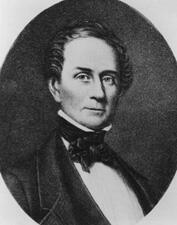
Here you will find contact information for Senator Henry Johnson, including email address, phone number, and mailing address.
| Name | Henry Johnson |
| Position | Senator |
| State | Louisiana |
| Party | Whig |
| Status | Former Representative |
| Term Start | January 1, 1818 |
| Term End | March 3, 1849 |
| Terms Served | 6 |
| Born | September 14, 1783 |
| Gender | Male |
| Bioguide ID | J000137 |
About Senator Henry Johnson
Henry Johnson, a prominent Louisiana politician of the early nineteenth century, was born on September 14, 1783, in Virginia. Little is recorded about his earliest years, but like many Southern political figures of his generation, he came of age in the post-Revolutionary United States, a period marked by rapid territorial expansion and the political organization of new states. At some point in his youth or early adulthood, Johnson moved to the lower Mississippi Valley, where the evolving political and legal institutions of the newly acquired Louisiana territory offered opportunities for ambitious young lawyers and planters. By the time Louisiana entered the Union in 1812, Johnson had established himself sufficiently to begin a long public career in his adopted state.
Details of Johnson’s formal education are sparse, but his subsequent legal and political roles indicate that he received a sound training in the law and in public affairs, most likely through the customary combination of private study and apprenticeship common to the era. His legal background and familiarity with both Anglo-American and, in Louisiana’s case, civil-law traditions would have been essential in a state whose legal system blended French, Spanish, and American influences. This grounding in law and governance prepared him for a series of increasingly responsible offices as Louisiana transitioned from a territorial society to a fully integrated state within the federal Union.
Johnson’s rise in Louisiana politics culminated in his election as governor of Louisiana, a post he held from December 18, 1824, to January 14, 1828. As governor, he presided over a period of growth and consolidation in the young state, dealing with issues of internal development, the organization of state institutions, and the management of relations between the diverse populations of Louisiana, including Creole, Anglo-American, and enslaved communities. His gubernatorial tenure placed him among the leading public figures of the Gulf South and helped establish his reputation on the national stage. In addition to his executive service, Johnson was part of a broader cohort of Henry Johnsons active in American politics during the nineteenth century, including Henry U. Johnson, a U.S. representative from Indiana, and Henry V. Johnson, later mayor of Denver, Colorado, though these men were distinct individuals who served in different states and eras.
Henry Johnson’s national prominence is most closely associated with his long service in the United States Congress as a Senator from Louisiana. According to existing records, he served in the United States Senate from 1817 to 1849, a span that would encompass six terms in office and place him at the center of federal policymaking during a transformative period in American history. During these years, the nation grappled with questions of territorial expansion, the balance between free and slave states, and the evolving powers of the federal government. A member of the Whig Party, Johnson contributed to the legislative process and participated in debates characteristic of the Whig agenda, including support for internal improvements, a more active role for Congress in economic development, and a cautious approach to executive power. As a senator, he represented the interests of his Louisiana constituents in matters ranging from commerce along the Mississippi River to the regulation of slavery in new territories.
Johnson’s senatorial career unfolded against the backdrop of major national events, including the aftermath of the War of 1812, the Missouri Compromise era, the rise and fall of the Second Bank of the United States, and the intensifying sectional disputes that would eventually lead to the Civil War. Within this context, his repeated return to office over six terms indicates sustained political support at home and a recognized role in the national legislative arena. As a Whig senator from a Southern, slaveholding state, he occupied a complex position, balancing regional economic and social interests with a party platform that often drew its strongest backing from commercial and industrial constituencies in the North. His participation in the democratic process during these decades contributed to the shaping of federal policy in a period of rapid national change.
After his long tenure in Congress, Johnson’s public life gradually receded as younger political figures emerged in both Louisiana and the nation at large. Nonetheless, his earlier service as governor and his extended representation of Louisiana in the Senate left a durable imprint on the state’s political history. He belonged to a generation of Southern leaders who helped integrate their states into the federal system while navigating the tensions inherent in a rapidly expanding republic. His career also stands alongside that of other contemporaneous Henry Johnsons in public life—such as Henry Johnson (Wisconsin treasurer), Henry F. Johnson of the Wisconsin State Assembly, and Henry Lincoln Johnson, an African-American Republican politician of a later era—illustrating how frequently the name appeared in American political records, though each of these men followed distinct paths.
Henry Johnson died on September 4, 1864, in Pointe Coupee Parish, Louisiana. His death came in the midst of the Civil War, a conflict that would decisively transform the Union he had served for decades. By the time of his passing, Louisiana had seceded and become a battleground in the struggle over slavery and federal authority—issues that had hovered in the background of his own long career in national and state politics. Johnson’s life thus spanned from the early national period through the crisis of disunion, and his service as governor of Louisiana and as a long-tenured U.S. senator from that state secured his place in the political history of both Louisiana and the United States.